
A Friendly Hello and First Impressions
Szia! (SEE-yah). This is a friendly "Hello" in Hungarian. K?sz?n?m! (KUR-sur-nurm). This is a warm "Thank you". People say it with a smile. Learning reading about Hungary starts with these unique, melodic words.
Hungary is a landlocked country in Central Europe. Its shape looks like a round, flat bowl. The bowl holds the Great Hungarian Plain. The country is in Europe. Austria, Slovakia, and Romania are its neighbors. The Danube River flows right through the capital. The land is mostly flat with gentle hills. It is a country of warm waters and wide skies.
People call it the "Land of Thermal Baths". The country sits on hundreds of hot springs. Another nickname is the "Heart of Europe". It is in the very center of the continent. Are you ready to take a dip in history?
Deep Dive into Culture and Stories
Echoes of History
A saint and king founded the nation. His name was Stephen I. He became king in the year 1000. He brought Christianity to the Magyar tribes. The Pope sent him a royal crown. This crown became the Hungarian Crown. It is a national symbol. His story is a key part of learning reading about Hungary. It is a story of foundation and faith.
Another important time was the 1848 Revolution. The people fought for freedom from the Habsburg Empire. They wanted their own government. The revolution was led by Lajos Kossuth. It was defeated, but the spirit lived on. This event is a symbol of the fight for liberty.
A World of Useful Inventions
Hungary gave the world some clever inventions. The most famous is the Rubik's Cube. Ern? Rubik invented it in 1974. It is a 3D puzzle. Another invention is the ballpoint pen. L芍szl車 B赤r車 invented it in 1938. These inventions show Hungarian creativity. This is a fun part of learning reading about Hungary.
A Land of Plains and Springs
Hungary's geography is mostly flat. The Great Plain covers the center. The north has low mountains. Lake Balaton is in the west. It is the largest lake in Central Europe. The landscape is calm and open.
The climate is continental. Summers are warm. Winters are cold. The environment shapes life. People grow wheat, corn, and sunflowers. They also grow paprika peppers. Traditional houses in the plain are long and white. They have thatched roofs. The main exports are cars, machinery, and medicine.
A special animal is the Hungarian grey cattle. It has long, curved horns. The national animal is the Turul. This is a mythical bird of prey. The national bird is the saker falcon. The national flower is the tulip. It is not native, but loved. The national tree is the oak. It stands for strength.
Landmarks of Water and Stone
Visit the Hungarian Parliament Building. It is in Budapest, on the Danube River. It is one of the oldest legislative buildings in Europe. It is very large and beautiful. It has a tall central dome. A fun story says 40 kilograms of gold decorate it. The building is a symbol of the nation.
See the Fisherman's Bastion. It is in Budapest, on Castle Hill. It looks like a fairy-tale fortress. It has seven white towers. The towers represent the seven Magyar tribes. The view of the Danube is amazing. A legend says fishermen defended these walls. The site is romantic and peaceful.
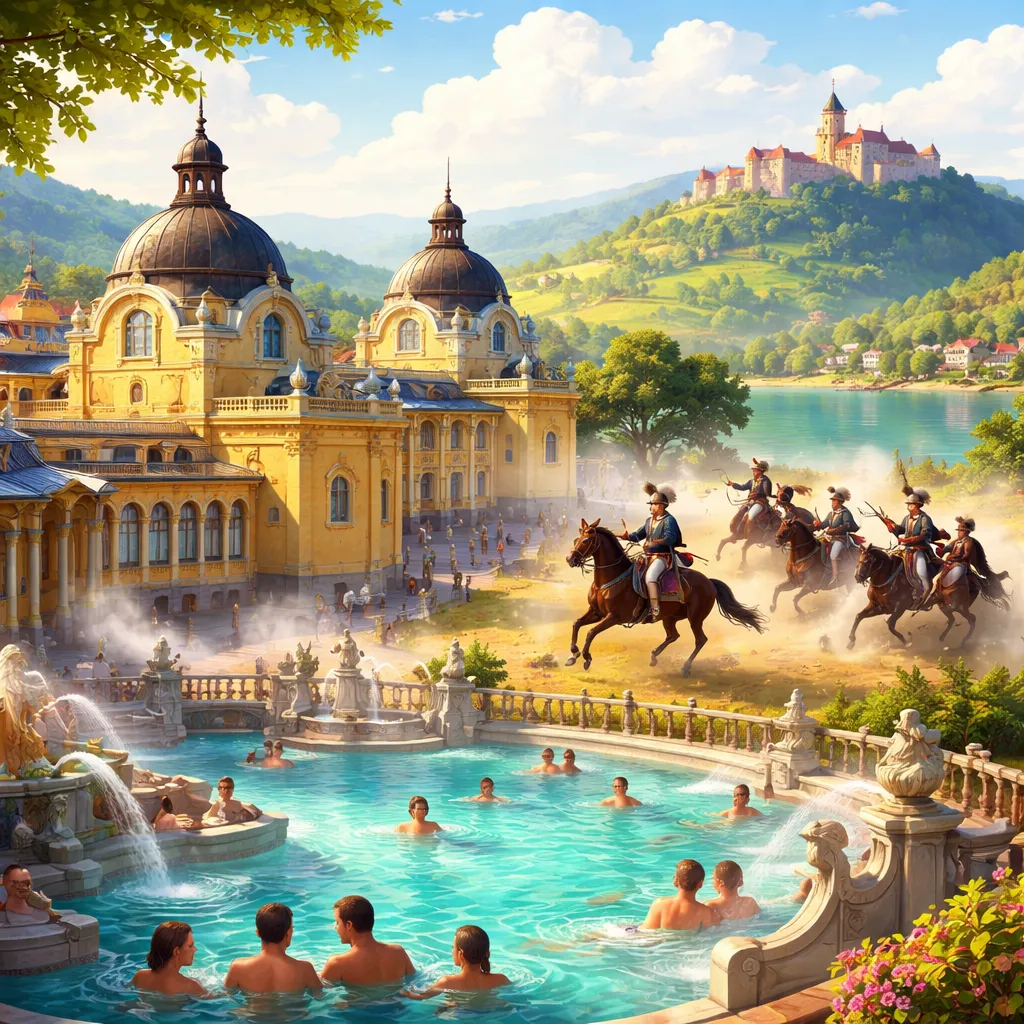
Another wonder is the Sz谷chenyi Thermal Bath. It is in Budapest's City Park. It is the largest medicinal bath in Europe. The water is warm and comes from a hot spring. People play chess on floating boards in the pool. The bath is a place for relaxation and fun.
Festivals of Fire and Spring
The biggest national holiday is March 15th. It celebrates the 1848 Revolution. There is a ceremony at the National Museum. People wear a cockade. The cockade is red, white, and green. These are the national colors. There are speeches and concerts.
Families go for walks in the city. They eat traditional cakes. The day is about freedom and national pride. It is a solemn but hopeful celebration.
A unique festival is Bus車j芍r芍s. It happens in the town of Moh芍cs. It is at the end of winter. People wear scary wooden masks and sheepskin coats. They make a lot of noise. They want to scare away winter. The festival ends with burning a coffin. The coffin symbolizes winter. The festival is wild and exciting.
Food and Flavors
The national dish is Goulash. It is a hearty soup or stew. It has beef, potatoes, and carrots. It is spiced with lots of paprika. Families eat it from a big pot. It is served with bread. It tastes savory, smoky, and warm. It is the taste of home.
You must try L芍ngos. It is a popular street food. It is deep-fried dough. It is topped with sour cream and cheese. People eat it hot at markets. A good l芍ngos is crispy, soft, and salty. It is the ultimate fairground snack.
A Culture of Music and Horses
Music is very important. Franz Liszt was a famous Hungarian composer. He was a piano virtuoso. The folk music is also special. It uses a unique scale. This love for music is a key part of learning reading about Hungary.
Hungary is famous for its horse riders. The "csik車s" are traditional herdsmen. They ride horses on the Great Plain. They can do amazing tricks. They are symbols of freedom and skill.
Tips for Young Explorers
Cultural Manners Matter
Hungarians can seem formal at first. Greetings are polite. A handshake is common. Say "J車 napot" (Good day) to adults. Use titles like "迆r" (Mr.) or "H?lgy" (Mrs.). This is respectful. Wait for the other person to invite you to use first names.
Punctuality is very important. Be on time for meetings. Being late is considered rude. Call if you are running late. This shows respect.
When visiting a home, bring a small gift. Flowers, wine, or chocolates are nice. Give an odd number of flowers. Do not give chrysanthemums. They are for funerals. Take off your shoes at the door unless told otherwise.
A Note on Staying Safe
Hungary is a very safe country. But be careful in big cities. Watch for pickpockets in tourist crowds. Keep your bag closed. Use common sense.
The thermal baths can be slippery. Walk carefully. Do not run. Follow the posted rules. Shower before entering the pool. This keeps the water clean for everyone.
A Tasty Stop
Look for "k邦rt?skal芍cs" at a market. It is a spit cake. The dough is wrapped around a cylinder. It is roasted over coals. It is rolled in sugar. It tastes like cinnamon and sugar. Eat it warm. The cake is sweet, crunchy, and delicious. It is a traditional treat.
Healthy and Happy Travels
Tap water is safe to drink in Budapest. In some smaller towns, ask first. Bottled water is widely available. Carry a refillable bottle. This saves plastic and money.
Walk a lot. Hungarian cities are very walkable. Wear comfortable shoes. You will explore beautiful bridges and parks. Your feet will thank you.
Be prepared for the weather. Summers can be hot. Winters can be very cold. Dress in layers. Always carry a light jacket or sweater.
Your Invitation to Explore
Start your journey with a puzzle. Try to solve a Rubik's Cube. Feel the challenge. Or, listen to a piece by Franz Liszt. Hear the fast, powerful piano. This is a wonderful way of learning reading about Hungary.
Visit a local market. Look for Hungarian paprika or a folk craft. Taste the spice. See the detailed embroidery. Imagine the hands that made it. You can also try drawing a horse running on the plain. Make it swift and free.
The world is a big, open book. Each country is a different chapter. Hungary's chapter is about thermal waters, horsemen, and hearty flavors. Open it with curiosity. Read about its history, heroes, and healing baths. Your curiosity is your guide.
Hungarian families share a pot of goulash. Friends relax together in a thermal bath. Children try to solve the Rubik's Cube. We all know these feelings. We love sharing meals. We enjoy relaxing with friends. We like to solve puzzles. Learning about Hungary shows us this. Our global family shares the same simple joys. Keep exploring, one page, one country, at a time. Your adventure has just begun.