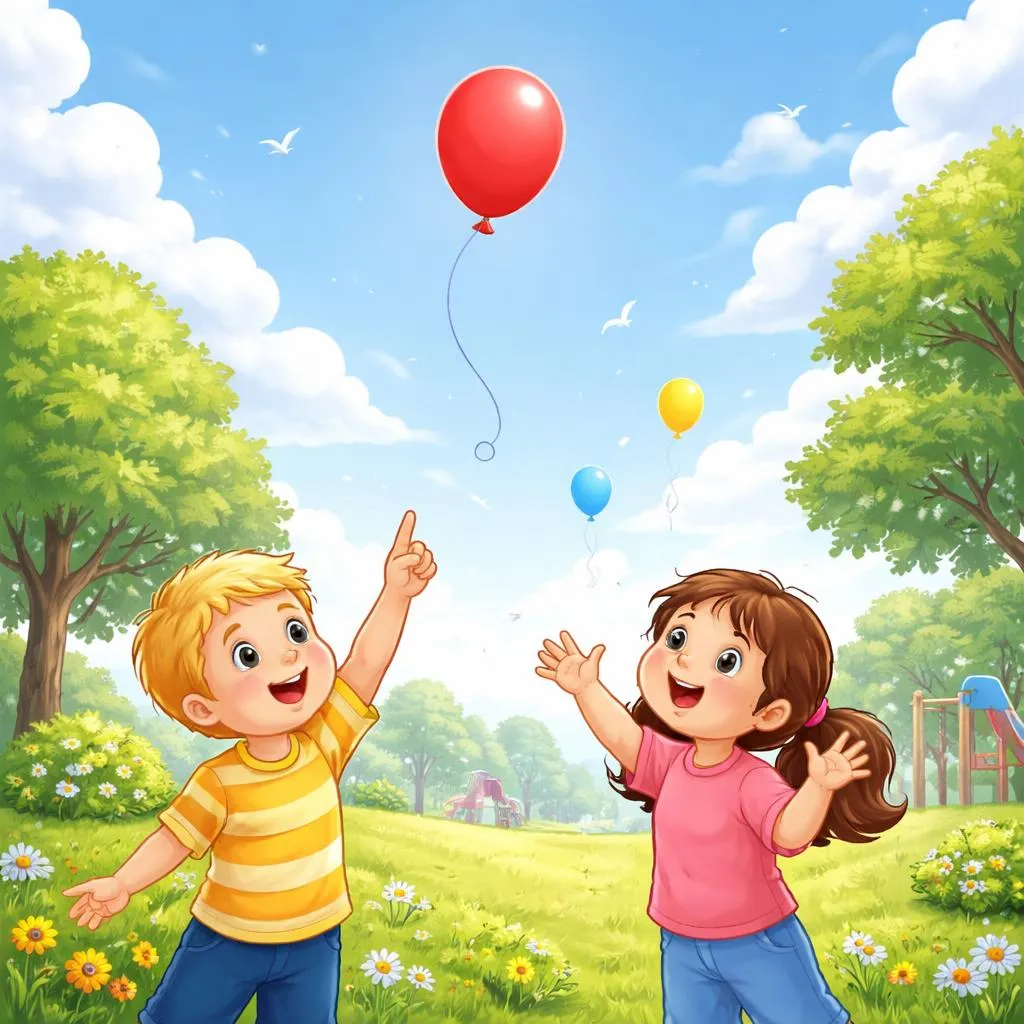

What Do These Expressions Mean? “It's flying” and “it's in the air” both describe something that is above the ground and moving through the sky. They tell someone that an object is not on the ground and is moving or staying up. Children say these words about birds, airplanes, balloons, or bugs. Both describe airborne things.
“It's flying” means the object is moving through the air using wings or force. A child says it when a bird flaps its wings. It focuses on the action.
“It's in the air” means the object is currently above the ground, not moving necessarily. A child says it when a balloon is floating. It focuses on the location.
These expressions seem similar. Both say “not on the ground.” Both describe air. But one is about active movement while one is about position.
What's the Difference? One is about movement. One is about position. “It's flying” means the object is actively moving through the air, usually with wings or engines. A bird, a plane, a kite. It implies action.
“It's in the air” means the object is suspended or located above ground. It could be still or moving. A floating leaf, a drone hovering, a speck of dust. It is about location.
Think of a bird soaring. “It's flying” is right. A floating soap bubble. “It's in the air” fits better. One is for active movement. One is for location.
One is for creatures and machines that can fly. The other is for any object above ground. “Flying” for a plane. “In the air” for a balloon. Use the first for action. Use the second for position.
Also, “flying” suggests the object is controlling its movement. A paper airplane is flying. A falling leaf is not flying; it's in the air.
When Do We Use Each One? Use “it's flying” for active, controlled air movement. Use it for birds, planes, insects, and kites. Use it when the object is propelling itself. It fits action talk.
Examples at home: “Look! The bird is flying.” “The airplane is flying high.” “The butterfly is flying from flower to flower.”
Use “it's in the air” for any suspended object. Use it for balloons, bubbles, dust, or floating seeds. Use it for location, not action. It fits position talk.
Examples for location: “The balloon is in the air.” “There’s a feather in the air.” “The smoke is in the air.”
Children can use both. “Flying” for action. “In the air” for location. Both describe the sky.
Example Sentences for Kids It's flying: “It's flying. It’s so high.” “The eagle is flying over the mountain.” “Look, a plane is flying.”
It's in the air: “The bubbles are in the air.” “There’s a leaf in the air.” “The smell of cookies is in the air.”
Notice “flying” is for moving with control. “In the air” is for location. Children learn both. One for action. One for place.
Parents can use both. A bird: “it's flying.” A balloon: “it's in the air.” Children learn different descriptions.
Common Mistakes to Avoid Some children say “flying” for a floating leaf. A leaf is not flying; it is drifting. Say “falling” or “floating.” Save “flying” for things that power their flight.
Wrong: “The leaf is flying.” Better: “The leaf is floating in the air.”
Another mistake: saying “in the air” for a bird mid-flap. That is correct, but “flying” is more precise. When the bird flaps, say “flying.” When it glides, either works.
Wrong: “The bird is in the air.” (not wrong, but vague) Better: “The bird is flying.”
Some learners think “in the air” means only outdoors. Smoke can be in the air inside too. “In the air” means not touching the ground. It works anywhere.
Also avoid saying “flying” for things that are thrown. A ball is thrown, not flying. Save “flying” for things that stay up by themselves.
Easy Memory Tips Think of “flying” as wings flapping. A bird. A plane. Active. For movement.
Think of “in the air” as a floating bubble. Still or drifting. Location. For position.
Another trick: remember the control. “Flying” = controls own movement. “In the air” = just located there. Control gets “flying.” Location gets “in the air.”
Parents can say: “Fly for a wing. Air for a floating thing.”
Practice at home. Bird: “it's flying.” Balloon: “it's in the air.”
Quick Practice Time Let us try a small exercise. Choose the better phrase for each situation.
A child watches a seagull flapping its wings over the ocean. a) “It's in the air.” b) “It's flying.”
A child watches a helium balloon that has floated up to the ceiling and is staying there. a) “It's flying.” b) “It's in the air.”
Answers: 1 – b. A bird flapping wings and moving actively fits “flying.” 2 – b. A balloon hovering at the ceiling fits the location “in the air.”
Fill in the blank: “When I see a helicopter moving across the sky, I say ______.” (“It's flying” is the action-focused, controlled-movement choice.)
One more: “When I see dust motes floating in a sunbeam, I say they are ______.” (“In the air” fits the location-focused, still-or-drifting description.)
The sky is full of motion. “It's flying” celebrates action. “It's in the air” notices location. Teach your child both. A child who learns both sees the world above with wonder.
Wrap-up “It's flying” describes active, controlled movement through the air, like a bird, plane, or insect. “It's in the air” describes the location of any object suspended above the ground, whether moving or still. Use “it's flying” for birds, planes, and kites. Use “it's in the air” for balloons, bubbles, feathers, and dust. Both phrases describe things not on the ground. A child who learns both can tell you if something is flying high or simply floating.