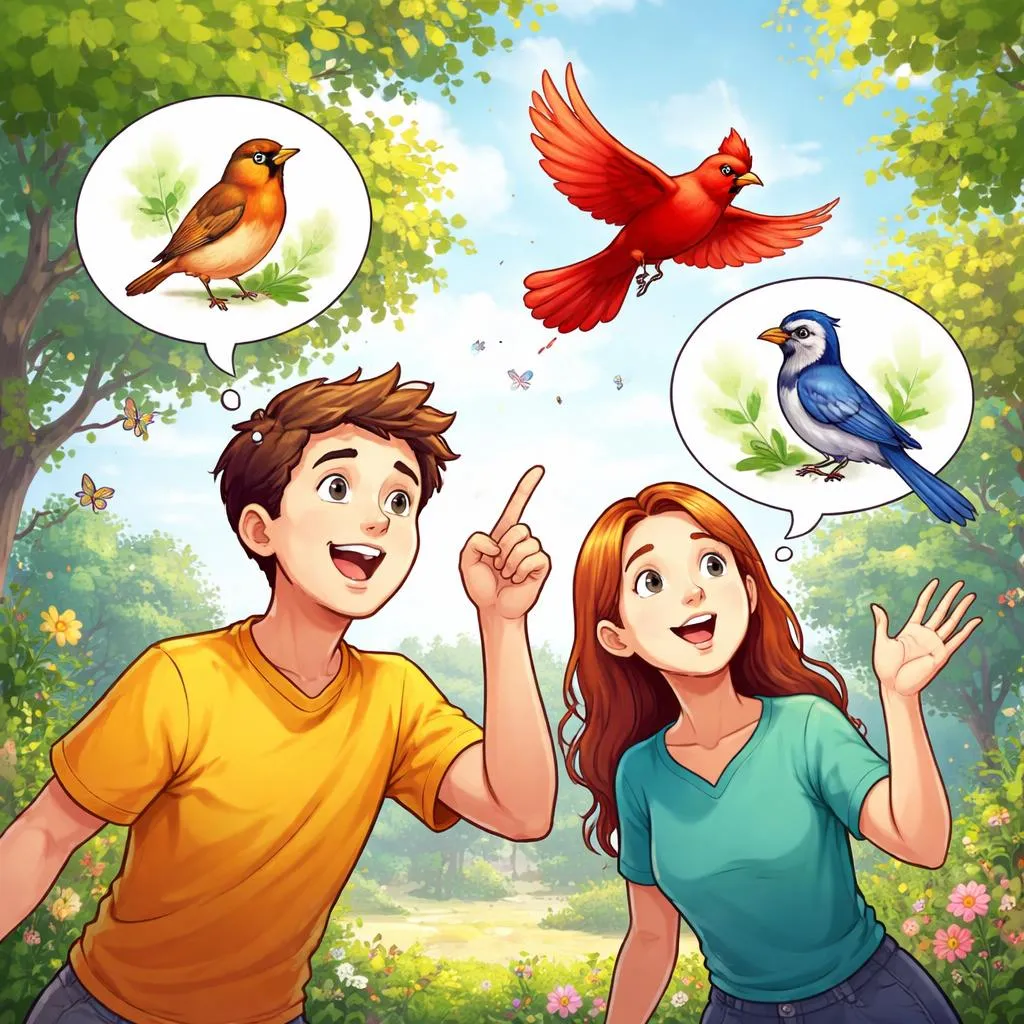

What Do These Expressions Mean? “It's a bird” and “an avian” both identify the same kind of animal: a feathered creature that flies. They tell someone that the winged animal in the sky or on a branch is a bird. Children know this animal from parks, windows, and stories. Both name the animal.
“It's a bird” is the common, everyday word for the animal. A child says it when spotting a pigeon or a robin. It is warm and simple.
“An avian” is the scientific or formal word for the bird family. A child might hear it in a science book or from an ornithologist (bird scientist). It sounds very grown-up.
These expressions seem similar. Both refer to the same kind of animal. Both are correct. But one is for daily talk while one is for science.
What's the Difference? One is for everyday talk. One is for science or formal use. “It's a bird” is what you say at the window. It is friendly and natural. Children learn it first.
“An avian” is for biology class or when discussing the scientific class of animals with feathers. You might say “avian flu” or “avian species.” It is less common in daily life. A child saying “it's an avian” sounds like a little scientist.
Think of a child watching a sparrow. “Look at the bird” is right. “Look at the avian” would sound very strange. One is for love. One is for textbooks.
One is for all people. The other is for older children. “Bird” is for toddlers. “Avian” is for school reports. Use the first for speaking. Use the second for writing.
Also, “avian” is almost always used as an adjective. “Avian species,” “avian flu.” It is rarely used as a noun. “It's a bird” is a noun. “It's an avian” as a noun is unusual.
When Do We Use Each One? Use “it's a bird” for everyday conversation. Use it at home, in the park, or at the zoo. Use it to name anything with feathers that flies. It fits daily life.
Examples at home: “Look, it's a bird. It's a cardinal.” “It's a bird, not a plane.” “That's a bird. It's building a nest.”
Use “an avian” very rarely. Use it in science lessons or formal reports. Use it as an adjective, not a noun. Children almost never need to use this word.
Examples for science: “The avian species includes eagles and sparrows.” (adjective) “Avian dinosaurs had feathers.” “We studied avian migration in class.”
Most children should just say “it's a bird.” It is clear, natural, and friendly. “Avian” is good to understand for reading science. But for identifying a bird, “bird” is best.
Example Sentences for Kids It's a bird: “It's a bird. It's flying high.” “It's a bird. Listen to it sing.” “Look, it's a bird on the fence.”
An avian: “The avian family includes eagles and owls.” (science) “We learned about avian migration.” (school) “Dinosaurs that flew are called avian dinosaurs.” (science)
Notice “it's a bird” is normal and sweet. “An avian” is very formal and rare for a noun. Children learn both. One for life. One for science class.
Parents can use “it's a bird” every day. Save “avian” for vocabulary lessons. “Avian means ‘related to birds.’ A bird is an avian animal.” Learning happens in small moments.
Common Mistakes to Avoid Some children say “an avian” for any bird in the yard. That sounds very odd. A sparrow is a bird, not “an avian.” Save “avian” for the adjective form.
Wrong: “I saw an avian in the tree.” Right: “I saw a bird in the tree.”
Another mistake: using “avian” as a noun all the time. It is rare as a noun. Most people say “bird.” Teach the word as an adjective.
Wrong: “Is that an avian?” Better: “Is that a bird?” or “That is an avian species.”
Some learners forget that “avian” is a science word. Your friend will not know what it means. Use “bird” with friends. Use “avian” in a science report.
Also avoid using fancy words to show off. Kind communication is better than fancy words. Say “bird” to a child. They will understand.
Easy Memory Tips Think of “it's a bird” as a feather floating down. Soft. Common. Beautiful. For daily talk.
Think of “avian” as a science textbook with a picture of an eagle. Facts. Feathers. Flight. For school and science.
Another trick: remember the word type. “Bird” is a noun. “Avian” is an adjective. Noun gets “bird.” Adjective gets “avian.”
Parents can say: “Bird for a chirp. Avian for a science blurb.”
Practice at home. See a robin: “it's a bird.” Write a science report: “avian species.”
Quick Practice Time Let us try a small exercise. Choose the better phrase for each situation.
A child points to a blue jay on the feeder outside the window. a) “It's an avian.” b) “It's a bird. It's a blue jay.”
A child is writing a science report about different classes of animals. a) “A bird has feathers.” b) “An avian has feathers.” (adjective use)
Answers: 1 – b. A common bird at a feeder fits the everyday “bird.” 2 – a or b. “Avian” as an adjective is fine in science writing.
Fill in the blank: “When I see a pigeon in the park, I say ______.” (“It's a bird” is the warm, friendly, everyday choice.)
One more: “In biology class, we studied ______ anatomy, which means the anatomy of birds.” (“Avian” fits the formal, scientific, adjective-based language.)
Birds are everywhere. “It's a bird” shares the joy. “Avian” teaches the science. Teach your child both. A child who knows both will love nature and understand biology.
Wrap-up “It's a bird” is the everyday, warm word for feathered flying animals. “Avian” is a scientific adjective meaning ‘related to birds,’ rarely used as a noun. Use “it's a bird” for sparrows, robins, and eagles in daily life. Use “avian” as an adjective in science class or formal reports. Both words relate to our feathered friends. A child who learns both can talk about birds at home and in science class.