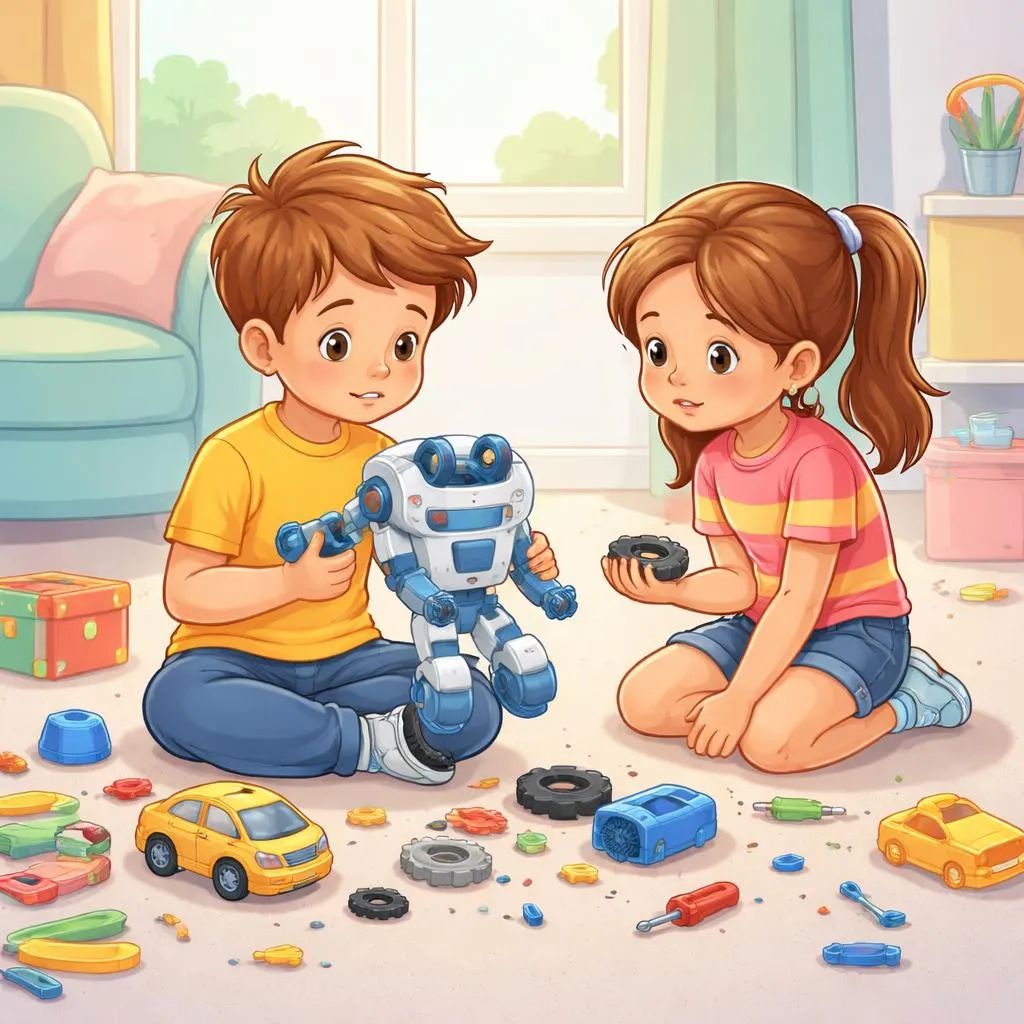

What Do These Expressions Mean? “It failed” and “it didn’t work” both mean that an attempt, plan, or device did not achieve its goal. They tell someone that the effort was unsuccessful. Children hear these words when a toy stops working, a tower falls, or a solution doesn’t fix the problem. Both describe disappointment.
“It didn’t work” is a gentle, common phrase for when something is not successful. A child says it when a light bulb doesn’t turn on. It is soft and factual.
“It failed” means the same thing, but it is a stronger, more final word. It can feel like a judgment. A child saying it sounds serious. It is correct but harsher.
These expressions seem similar. Both mean “not successful.” Both describe an outcome. But one is gentle while one is strong and final.
What's the Difference? One is gentle and factual. One is strong and final. “It didn’t work” is for everyday unsuccessful attempts. It is soft and kind. It is the natural phrase for children.
“It failed” is stronger. It can sound like a judgment or a big deal. It is used for more serious failures. It is less common in child speech.
Think of a child trying to start a toy car. It doesn’t move. “It didn’t work” is right. “It failed” would sound too harsh for a toy. One is for small attempts. One is for big ones.
One is for everyday disappointment. The other is for serious or formal failure. “It didn’t work” for a game. “It failed” for a test or a mission. Use the first for gentle honesty. Use the second for serious talk.
Also, “failed” can feel like blame. “Didn’t work” feels like a simple fact.
When Do We Use Each One? Use “it didn’t work” for most everyday attempts. Use it for toys, recipes, plans, and small projects. Use it to be gentle. It fits daily talk.
Examples at home: “It didn’t work. Let’s try again.” “The glue didn’t work. We need more.” “My idea didn’t work. I’ll think of another.”
Use “it failed” rarely. Use it for more serious failures or formal talk. Use it to teach the word. Children almost never need to say this word.
Examples for seriousness: “The experiment failed.” (science) “The mission failed.” (formal) “The test failed.” (serious)
Most children should just say “it didn’t work.” It is clear, gentle, and natural. “It failed” is good to understand for reading. But for everyday mishaps, “it didn’t work” is best.
Example Sentences for Kids It didn't work: “It didn’t work. Let’s try something else.” “I pressed the button, but it didn’t work.” “My plan didn’t work this time.”
It failed: “The experiment failed.” (science) “My attempt to climb the tree failed.” (serious) “The rocket launch failed.” (formal)
Notice “it didn’t work” is gentle and common. “It failed” is strong and serious. Children learn both. One for home. One for formal talk.
Parents can use both. Toy not working: “it didn’t work.” Science project: “it failed.” Children learn different failure words.
Common Mistakes to Avoid Some children say “it failed” for every small mishap. That sounds too dramatic. A spilled cup didn’t fail; it spilled. Use “didn’t work” for small things.
Wrong: “My shoe untied. It failed.” Better: “My shoe untied. I’ll tie it again.”
Another mistake: thinking “it didn’t work” means you are a failure. The attempt failed, not you. Separate the action from your worth.
Wrong: “I didn’t work, so I’m a failure.” Better: “My idea didn’t work. I’ll try a new idea.”
Some learners forget that “failed” can sound harsh. Be kind with your words. “Didn’t work” is almost always kinder.
Also avoid using “failed” to describe a person. “You failed” is hurtful. Say “the test was hard” or “let’s try again.”
Easy Memory Tips Think of “it didn’t work” as a gentle sigh. Oh well. Try again. For everyday.
Think of “it failed” as a red X on a test. Serious. Final. For formal failure.
Another trick: remember the weight. “Didn’t work” = light. “Failed” = heavy. Light gets “didn’t work.” Heavy gets “failed.”
Parents can say: “Didn’t work for a try. Failed for a goodbye.”
Practice at home. Toy: “it didn’t work.” Experiment: “it failed.”
Quick Practice Time Let us try a small exercise. Choose the better phrase for each situation.
A child tries to build a block tower. It falls over. a) “It failed.” b) “It didn’t work. I’ll try again.”
A science experiment in a lab does not produce the expected result. a) “It didn’t work.” b) “The experiment failed.”
Answers: 1 – b. A falling block tower fits the gentle “it didn’t work.” 2 – a or b. “Failed” is more formal and fits a lab experiment.
Fill in the blank: “When my child’s simple plan doesn’t work, they say ______.” (“It didn’t work” is the gentle, everyday, kind choice.)
One more: “When a formal science experiment does not succeed, the scientist says ______.” (“It failed” fits the formal, serious, outcome-focused description.)
Failure is just data. “It didn’t work” teaches us to try again. “It failed” teaches us to learn. Teach your child both. A child who learns both will not fear trying.