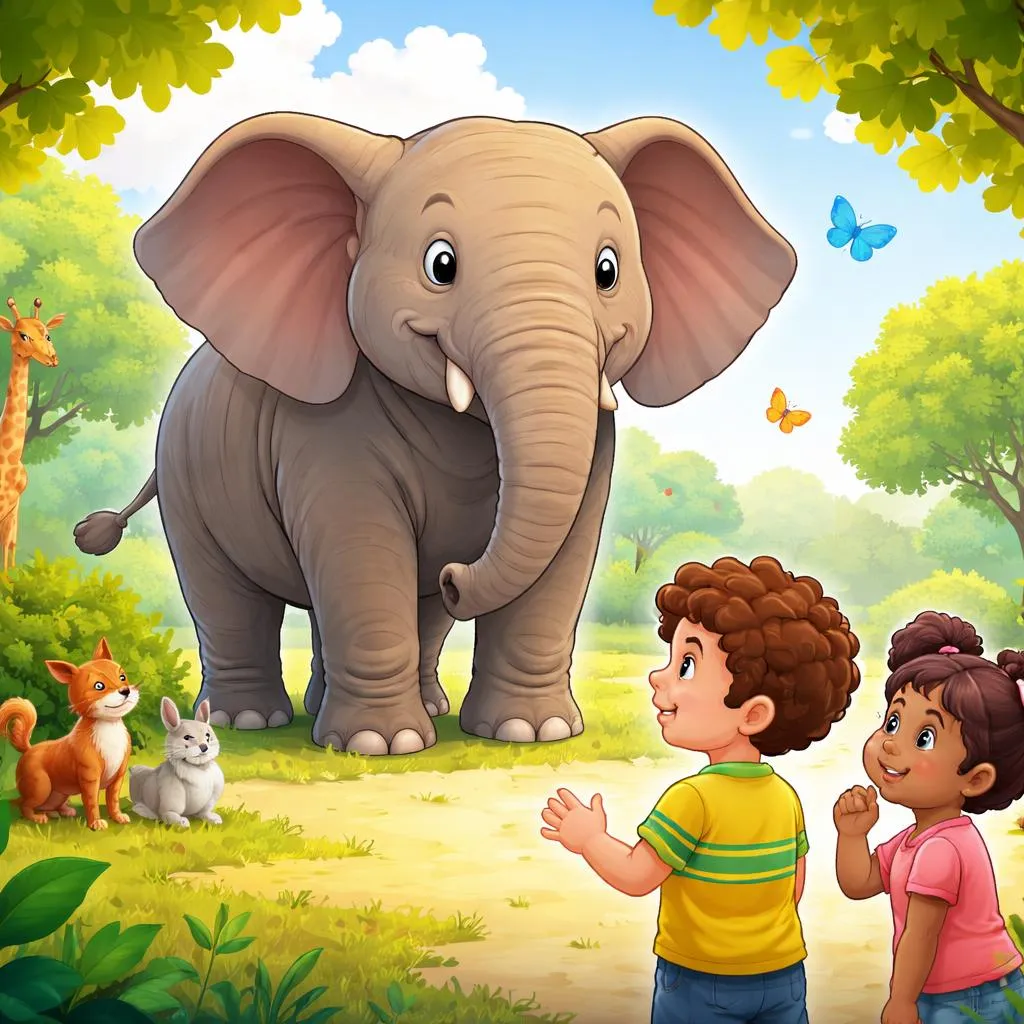

What Do These Expressions Mean? “It's big” and “it's large” both mean that something has great size, not small. They tell someone that an object, animal, or space measures above average. Children say these words about elephants, trucks, houses, or pizzas. Both describe size.
“It's big” is the common, everyday word for great size. A child says it when seeing a huge balloon. It is warm and simple.
“It's large” also means great size, but it is slightly more formal. It might be used in writing or in more careful speech. It is less common in excited child talk. It sounds a little grown-up.
These expressions seem similar. Both say “not small.” Both describe size. But one is for everyday talk while one is for more formal or careful speech.
What's the Difference? One is for excited, everyday talk. One is for more formal or measured speech. “It's big” is what a child shouts at a parade. It is natural and direct. It can also mean important (“a big deal”).
“It's large” is more often used for measurements or formal descriptions. A clothing size is large. A large soda. It is less emotional. Children say “big” much more often.
Think of a child seeing a giant stuffed bear. “That’s so big!” is perfect. “That’s large” would sound flat. One is for excitement. One is for facts.
One is for emotional reaction. The other is for objective measurement. “Big” feels impressed. “Large” feels like data. Use the first for feelings. Use the second for facts.
Also, “big” can be used for importance (“a big decision”). “Large” is not used that way. Choose the right word for the meaning.
When Do We Use Each One? Use “it's big” for most everyday size descriptions. Use it for animals, buildings, cakes, and feelings. Use it to express surprise or awe. It fits excited talk.
Examples at home: “Look at that big dog!” “This pizza is big. We can share it.” “That’s a big help. Thank you.”
Use “it's large” for more formal or factual descriptions. Use it for clothing sizes, statistical measurements, or written descriptions. Use it to be precise. It fits formal or careful talk.
Examples for formality: “The large box is in the hallway.” “She wears a large shirt.” “The population is large.”
Children can use both. “Big” for everyday. “Large” for formal. Both are correct.
Example Sentences for Kids It's big: “It's big! It’s bigger than me.” “That’s a big car.” “I have a big backpack.”
It's large: “This is a large cup of water.” “The sofa is large enough for all of us.” “He ordered a large popcorn.”
Notice “big” is excited and warm. “Large” is calm and factual. Children learn both. One for wonder. One for description.
Parents can use both. A puppy: “it's big.” A clothing size: “it's large.” Children learn different contexts.
Common Mistakes to Avoid Some children use “large” for everything to sound grown-up. It sounds stiff. A cookie is big, not large. Save “large” for measurements.
Wrong: “I want a large cookie.” (fine, but “big” is warmer) Right: “I want a big cookie.”
Another mistake: using “big” for clothing sizes. “I need a big shirt” is fine, but “large” is the standard size name. Use “large” for size labels.
Wrong: “I wear a big.” Right: “I wear a large.”
Some learners forget that “big” can mean important. “A big day” is not the same as “a large day.” Teach the different meanings.
Also avoid saying “it's big” to mean “it's old.” “Big brother” means older brother. That is a different meaning. Context matters.
Easy Memory Tips Think of “big” as a child spreading arms wide. “Sooo big!” Excited and emotional.
Think of “large” as a size label on a shirt tag. Large. Factual. For measurements.
Another trick: remember the feeling. “Big” is exciting. “Large” is factual. Exciting gets “big.” Factual gets “large.”
Parents can say: “Big for a wow. Large for a now.”
Practice at home. A huge cake: “it's big.” A size label: “it's large.”
Quick Practice Time Let us try a small exercise. Choose the better phrase for each situation.
A child sees a giant elephant at the zoo for the first time. a) “It's large.” b) “It's big! Wow!”
A child is sorting laundry and sees a shirt with an L on the tag. a) “This shirt is big.” b) “This shirt is large.”
Answers: 1 – b. A zoo elephant is a moment of wonder. “It's big!” 2 – b. A clothing size tag fits the factual “large.”
Fill in the blank: “When I see a huge scoop of ice cream, I shout ______.” (“It's big” is the excited, emotional, everyday choice.)
One more: “When I buy a pizza for a party, I order the ______ size.” (“Large” fits the factual, measured, size-label language.)
Size words tell a story. “It's big” shares excitement. “It's large” shares facts. Teach your child both. A child who knows both can describe the world with precision and joy.
Wrap-up “It's big” is the warm, excited, everyday word for great size, often used for emotional reactions. “It's large” is a more factual, formal word for size, often used for measurements and clothing labels. Use “it's big” for animals, buildings, and surprises. Use “it's large” for sizes on tags, statistical data, and formal descriptions. Both words describe the opposite of small. A child who learns both size words can talk about everything from a big hug to a large pizza.