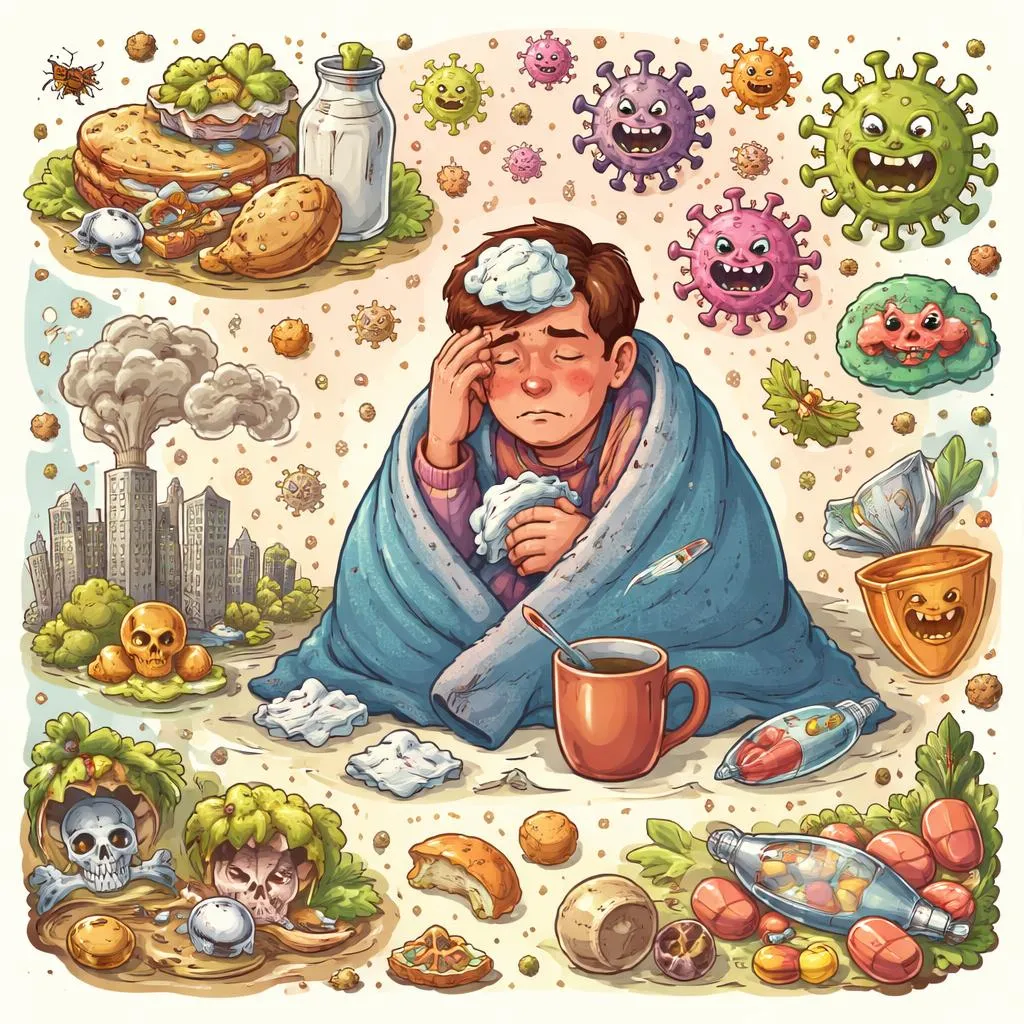

A stomach ache can make you feel sick. A cold is a common sickness. The words “sick, sickness, sicken, sickly” all come from one family. Each word talks about illness or poor health. But each one has a different job in a sentence. Learning this family helps children describe how they feel and understand health. Let us explore these four words together.
What Does “Same Word, Different Forms” Mean? One core idea can grow into many word shapes. The meaning stays the same at the heart. But the word changes its ending for a new role. For example, “sick” is an adjective. “Sickness” is a noun. “Sicken” is a verb. “Sickly” is an adjective. Knowing these four forms helps a child talk about health clearly and kindly.
Personal Pronouns Change Their Form Pronouns change from “he” to “him” or “his”. Our word family changes by adding suffixes, not by changing person. Think of “sick” as the state of being unwell. “Sickness” turns that state into a thing. “Sicken” turns the state into an action. “Sickly” describes a person or thing that often seems sick. Each form answers a simple question. How do you feel? Sick. What do you have? Sickness. What does something do? Sicken. What kind of appearance? Sickly.
From Verb to Noun to Adjective to Adverb – One Family, Many Words This family has adjectives, a noun, and a verb. Let us start with the adjective “sick”. Adjective: Sam felt sick after eating too much candy. “Sick” means unwell or ill.
Next is the noun “sickness”. Noun: The sickness spread through the classroom. “Sickness” names the condition of being ill.
Then we have the verb “sicken”. Verb: The bad smell sickened everyone in the room. “Sicken” means to make someone feel ill or disgusted.
Finally the adjective “sickly”. Adjective: The sickly plant needed more sunlight. “Sickly” describes someone or something that looks weak or unwell. This family has no common adverb form. We can say “sickly” as an adverb rarely, but that is advanced.
One Root, Many Roles – How Words Grow from Actions to Qualities The Old English word “seoc” meant ill or weak. From this root, we built a health family. “Sick” kept the main adjective meaning. Adding -ness made the noun “sickness” (the state of being sick). Adding -en made the verb “sicken” (to become or make sick). Adding -ly made the adjective “sickly” (looking sick). Children can see the same pattern in other families. For example, “well, wellness, wellen (rare), wellly (rare)”. A better example is “weak, weakness, weaken, weakly”. Learning patterns helps kids understand health words.
Same Meaning, Different Jobs – Is It a Verb or a Noun? Look at each word’s job carefully. “Sick” is an adjective. Example: The sick child stayed home from school.
“Sickness” is a noun. Example: Travel sickness bothers some people.
“Sicken” is a verb. Example: The rotten food sickened the dog.
“Sickly” is an adjective. Example: The sickly kitten needed a vet. Each form has one clear job. That makes this family easier to learn. The only challenge is remembering two adjectives: sick and sickly. “Sick” means currently ill. “Sickly” means often ill or looking ill.
Adjectives and Adverbs – When Do We Add -ly? “Sickly” already ends with -ly, but it is an adjective. That confuses some children. Remind them: “Sickly describes a noun. It is not an adverb.” Example: a sickly child (child is the noun). We do not say “He ran sickly” as an adverb. Instead we use “sickly” only as an adjective. The true adverb from this family is rare. We can say “sickeningly” from “sickening”, but that is a different family. For young learners, focus on using “sick” and “sickly” as adjectives correctly. Teach “sick” for temporary illness. Teach “sickly” for a long-term weak appearance.
Watch Out for Tricky Spelling Changes (Double Letters, y to i, and More) “Sick” has a double c? No, it has a ck at the end. That counts as two letters but one sound. Add -ness to make “sickness”. Sick + ness = sickness (keep the ck). Add -en to make “sicken”. Sick + en = sicken (keep the ck). Add -ly to make “sickly”. Sick + ly = sickly (keep the ck). No letters lost. No letters changed. A common mistake is writing “sik” instead of “sick”. Say “Sick has a ck, like sock and kick.” Another mistake is “sickness” spelled “sikness”. Remind your child: “Sick has ck. Sickness keeps the ck.” Another mistake is confusing “sicken” (verb) with “chicken” (animal). Say “Sicken has no ch. It starts with s.”
Let’s Practice – Can You Choose the Right Form? Try these sentences with your child. Read each one aloud. Pick the correct word from the family.
I feel ______. I need to rest. Answer: sick (adjective)
The ______ lasted for three days. Answer: sickness (noun)
The dirty water might ______ the animals. Answer: sicken (verb)
The ______ plant dropped all its leaves. Answer: sickly (adjective)
A ______ stomach kept her home from school. Answer: sick (adjective)
Motion ______ makes some people dizzy in cars. Answer: sickness (noun)
Violent movies can ______ some viewers. Answer: sicken (verb)
The ______ child missed many days of school. Answer: sickly (adjective)
Please wash your hands so you do not get ______. Answer: sick (adjective)
The ______ of the bird worried the zookeeper. Answer: sickness (noun)
After the practice, ask your child one question. Is this word a feeling, a condition, an action, or a long-term description? That simple question teaches grammar and health vocabulary together.
Tips for Parents – Help Your Child Learn Word Families in a Fun Way Use real moments of illness to teach gently. When your child feels unwell, say “You feel sick.” Then say “This sickness will pass soon.” Never use sickness words to scare a child.
Use a story about a weak plant to teach “sickly”. Water a houseplant together. If one leaf turns yellow, say “This leaf looks sickly.” Then say “Let us help it get better.”
Use a strong smell to teach “sicken”. Open a jar of pickles. Say “Some smells can sicken people.” Then close the jar. Say “But not you. You are strong.”
Play “fill in the blank” during quiet moments. Say “I feel ______. My throat hurts.” (sick) Say “The ______ spread quickly in winter.” (sickness) Say “Spoiled milk can ______ you.” (sicken) Say “The ______ cat slept all day.” (sickly)
Read a story about a doctor or a hospital. Ask “Who is sick in this story?” Ask “What sickness do they have?”
Turn a drawing activity into a word lesson. Draw a child resting in bed. Label “sick”. Draw a thermometer. Label “sickness”. Draw a dirty spoon with a frown. Label “sicken”. Draw a drooping flower. Label “sickly”.
When your child makes a mistake, stay calm. If they say “I have a sick,” say “Almost. You have a sickness. Sick describes how you feel. Sickness is the name of the condition.” Then say “I feel sick. I have a sickness.”
If they say “This food sicklies me,” say “Close. The food sickens me. Sickly is an adjective for how something looks.”
Write the four words on sticky notes. Put them in the bathroom near the hand soap. Each time you wash hands, say “We wash to avoid sickness.”
Remember that health words need a gentle touch. Never make a child feel bad for being sick. Use these words to comfort and inform. Soon your child will say “I feel sick” clearly. They will name a sickness like a cold or flu. They will know that bad smells can sicken someone. And they will describe a sickly plant in the garden. That is the power of learning one small word family with care.