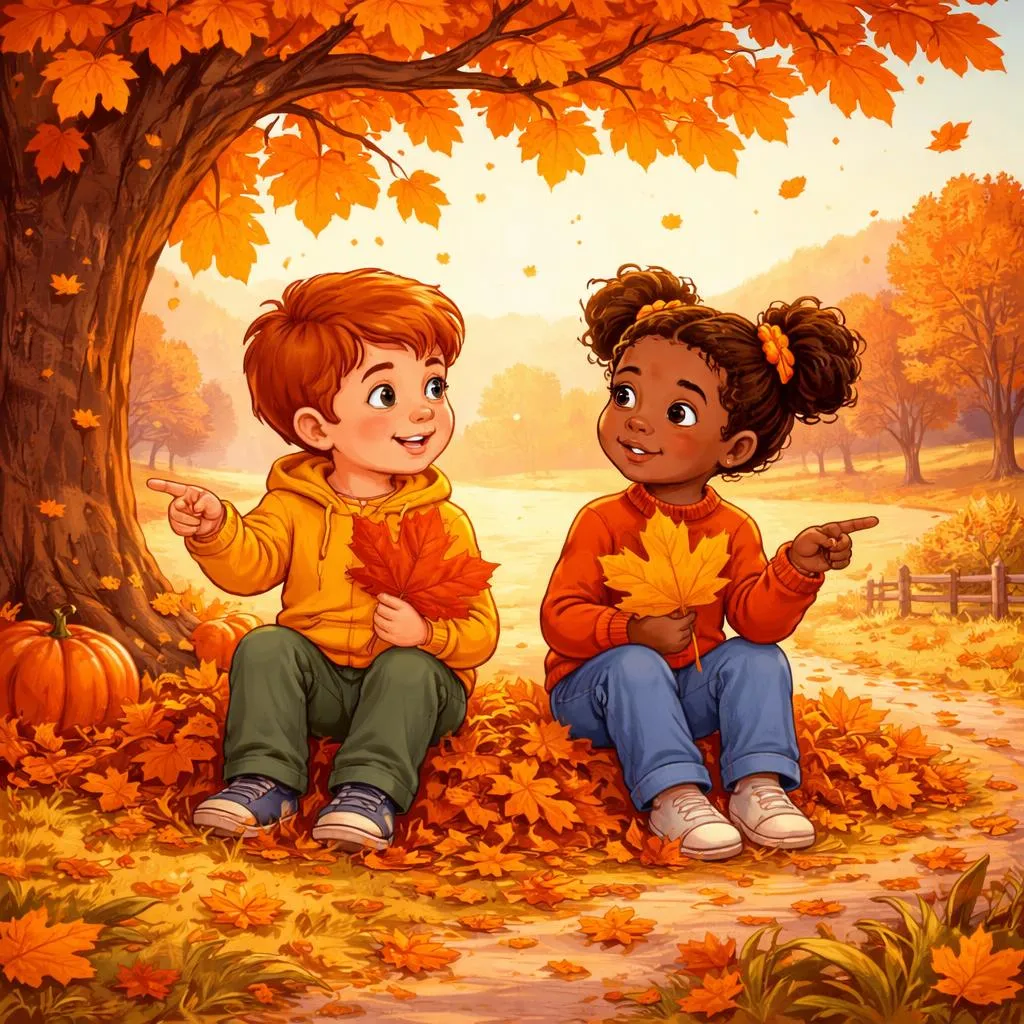

What Do These Expressions Mean? “In autumn” and “during fall” both mean the season between summer and winter. They tell someone that an event happens in the months of September, October, and November (or the local autumn season). Children hear these words when talking about leaves changing, pumpkins, or cooler weather. Both describe the season.
“In autumn” is a common phrase for the fall season. A child says it when asking “Do leaves fall in autumn?” It is natural and correct.
“During fall” means the same thing. “Fall” is another name for the autumn season, especially in American English. It is shorter and very common in daily speech. It is not formal or poetic.
These expressions seem similar. Both mean “in the season of autumn/fall.” Both answer “when?” But one uses the word “autumn” and one uses the word “fall.” They are the same in meaning.
What's the Difference? There is very little difference. They are synonyms. “Autumn” is more common in British English and feels a bit more formal or poetic. “Fall” is more common in American English and is very everyday.
“In autumn” can be used in any context. “During fall” is also fine. Both are correct. The choice often depends on where you live.
Think of a child asking about pumpkin patches. “Do we go in autumn?” is right. “Do we go during fall?” is also right. Both are natural.
One is not better than the other. “Autumn” might appear in books more often. “Fall” is what many Americans say in conversation. Use whichever your family prefers.
Also, “during fall” uses the preposition “during,” which is slightly more formal than “in.” But the difference is very small.
When Do We Use Each One? Use “in autumn” or “in fall” for everyday conversation. Both are standard. Use them for weather, holidays, and activities. They fit daily life.
Examples at home: “In autumn, the leaves change color.” “In fall, we wear jackets.” “We pick apples in autumn.”
Use “during fall” or “during autumn” for slightly more descriptive or formal moments. They are less common in quick speech but still fine. They fit writing or storytelling.
Examples for description: “During fall, the air gets crisp.” “During autumn, we harvest pumpkins.” “During fall, the days get shorter.”
Children can use both. “In autumn” and “in fall” are everyday. “During fall” and “during autumn” are a bit more descriptive. All are correct.
Example Sentences for Kids In autumn: “In autumn, I see squirrels gathering nuts.” “We go back to school in autumn.” “In autumn, the days are cool.”
During fall: “During fall, we rake leaves.” “The animals prepare for winter during fall.” “During fall, we drink hot cider.”
Notice both phrases are common. “Autumn” and “fall” mean the same season. Children learn both names for the season.
Parents can use both. Talking: “in autumn” or “in fall.” Writing: “during autumn” or “during fall.” Children learn different words for the same season.
Common Mistakes to Avoid Some children think “autumn” and “fall” are different seasons. They are the same. Fall is just another name for autumn. Teach that both words mean the same time of year.
Wrong: “First autumn, then fall.” Right: “Autumn is another name for fall.”
Another mistake: using “in fall” to mean “fall down.” “In fall” is the season. “To fall” is the action. Context makes the meaning clear.
Wrong: “I fell in fall.” (confusing) Better: “I fell down in the fall.” or “I slipped during autumn.”
Some learners think “during” is always more correct. It is not. “In” is fine. Use whichever sounds natural to you.
Also avoid saying “in autumn” when you mean “in the autumn of a specific year.” “In autumn 2020” is fine. But “in autumn” alone means every autumn.
Easy Memory Tips Think of “autumn” as a leaf with the word “autumn” written on it. A bit poetic. Another name.
Think of “fall” as a leaf falling from a tree. Short. Direct. Very common.
Another trick: remember the region. “Autumn” in the UK. “Fall” in the US. Both are correct everywhere.
Parents can say: “Autumn and fall are one and all.”
Practice at home. Talk about the season: “in autumn” or “in fall.” Write a story: “during autumn” or “during fall.”
Quick Practice Time Let us try a small exercise. Choose the better phrase for each situation.
A child asks about when Halloween happens. a) “In autumn.” b) “During fall.”
A child is writing a poem about harvest time. a) “In autumn, the fields are gold.” b) “During fall, the fields are gold.”
Answers: 1 – a or b. Both are correct. “In autumn” or “in fall” are common. 2 – a or b. Both work. “During” is a bit more descriptive.
Fill in the blank: “When I talk about the season before winter, I say ______.” (“In autumn” or “in fall” are both natural, everyday choices.)
One more: “When I write a story about pumpkins and cooler weather, I say ______.” (“During autumn” or “during fall” fit the descriptive, storytelling language.)
Autumn and fall are the same. “In autumn” or “in fall” are for talking. “During autumn” or “during fall” are for describing. Teach your child both names. A child who learns both can speak and write about the colorful season.