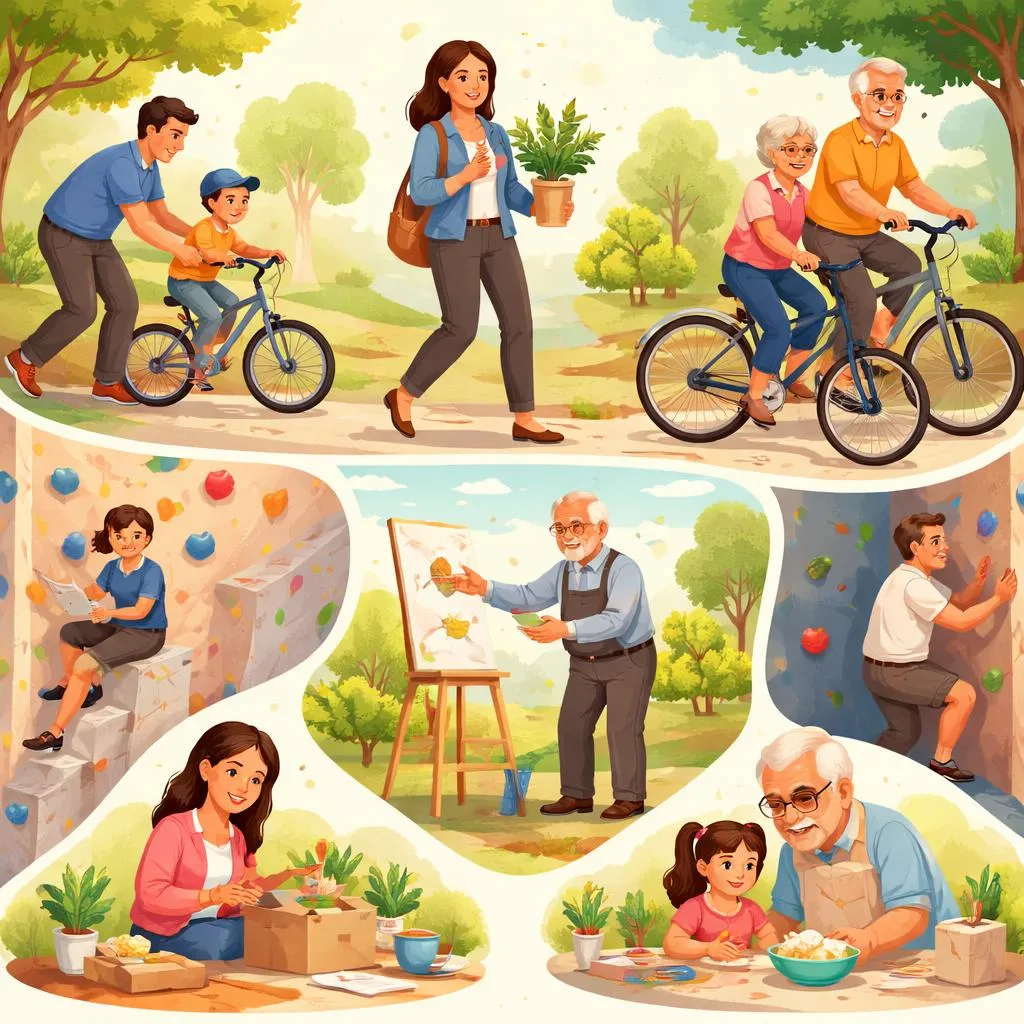

Fun Introduction
Last Saturday, Mia visited her grandma’s house. She saw grandma’s silver hair. Grandma smiled and said she had aged gracefully. Later, Mia found her old teddy bear. Its fur had grown old and thin. Both had changed over time. But aging felt natural and slow. Growing old felt worn and tired. Mia wondered about the difference. She asked her dad. Dad explained with a warm hug. Aging is a gentle journey. Growing old is a harder path. Let’s learn together.
Word Breakdown
Core Principle
We reject boring dictionary definitions. We use pictures in your mind. We add functions and memory hooks. This helps you remember forever.
Age To Do
Image: Imagine a tree trunk with rings. Each ring marks a year. That is age to do. It means passing time with grace and wisdom.
Function: It is for natural time passage. Like age with laughter and stories. Or age like a fine book.
Sensory Description: You see gentle lines on faces. You hear soft, wise voices. Your heart feels calm.
Memory Anchor: A tree with many rings. See the quiet growth? That is age to do.
Grow Old To Do
Image: Think of an old swing set in the rain. Its chains creak and rust. That is grow old to do. It means wearing down from use and weather.
Function: It is for becoming worn or less useful. Like grow old and forget names. Or grow old and move slowly.
Sensory Description: You hear squeaky sounds. You feel stiffness in joints. Your body feels heavy.
Memory Anchor: A rusty swing set swaying alone. See the tired metal? That is grow old to do.
Advanced Comparison
Age is positive and dignified. Grow old is negative and weary. Age adds character. Grow old loses function. Use age for time well spent. Use grow old for things worn out.
Scene Comparison
Scene One happens at home. Leo watches his grandpa age with pride. Grandpa tells stories of his youth. This is age to do—gaining wisdom.
Scene Two takes place in the attic. Emma finds an old doll. Its dress has grown old and torn. This is grow old to do—becoming worn.
Scene Three occurs at school. Ben sees his teacher age with experience. She guides them kindly. Meanwhile, the classroom computer has grown old. It runs very slow. Notice the shift. Aging brings richness. Growing old brings decline.
Pitfalls Deep Reminder
Mistake One is saying “My grandma grew old with beautiful silver hair.” Why wrong? Silver hair is aging gracefully. Growing old sounds sad and broken. Funny result? Grandma thinks you called her worn out. Correct phrase is My grandma aged with beautiful silver hair. Memory trick: Age is for dignity.
Mistake Two is saying “The ancient tree aged and fell apart.” Why wrong? Falling apart is growing old. Aging is sturdy and strong. Funny result? Tree feels insulted by weakness. Correct phrase is The ancient tree grew old and fell apart. Memory trick: Grow old is for decay.
Mistake Three is saying “I want to grow old with many adventures.” Why wrong? Adventures make you age well. Growing old is for things that break. Funny result? You imagine becoming a rusty robot. Correct phrase is I want to age with many adventures. Memory trick: Age is for lively journeys.
Mistake Four is saying “My favorite shoes aged and have holes.” Why wrong? Holes mean shoes grew old. Aging is for valuable things. Funny result? Shoes think they are priceless antiques. Correct phrase is My favorite shoes grew old and have holes. Memory trick: Grow old is for worn items.
Interactive Exercises
Read each sentence. Pick age or grow old.
I hope to ___ with kindness and joy. (age/grow old)
The leather sofa has ___ and become saggy. (age/grow old)
We watched the wise owl ___ in the forest. (age/grow old)
The plastic toy ___ and turned yellow. (age/grow old)
She will ___ into a wonderful storyteller. (age/grow old)
Act with a friend. Use the phrases.
Scene A: Graceful Aging
A: I want to age like a wise oak tree.
B: With deep roots and strong branches.
Scene B: Worn Out Growing Old
A: This old bike has grown old.
B: The tires are flat and cracked.
Spot the Mistake
Which sentence sounds odd? Explain why.
Sentence: My grandpa grew old with fascinating tales.
Reason: Tales come from aging well. Use age instead.
Sentence: The ancient coin aged and crumbled to dust.
Reason: Crumbling is growing old. Use grow old instead.
Sentence: I hope to grow old with a heart full of love.
Reason: Love makes you age gracefully. Use age instead.
Create Sentences
Use both phrases.
Age to do: I age with every new experience.
Grow old to do: My sneakers grow old from daily play.
Bonus Challenge
Your beloved pet gets gray fur. Does it age or grow old? Answer: Age. It gains wisdom with years.
Rhyme Time
Age it wise, grow old it frail.
One tells stories, one tells tale.
With grace? Choose age.
Worn and slow? Grow old to wail.
Homework Task
Pick one activity. Complete it this week. Share with family.
Option One: Observation Journal. Get a small notebook. Draw three pictures. Write a sentence under each.
Picture One: Someone ages well. Sentence: My grandma ages with a bright smile.
Picture Two: Something grows old. Sentence: My old backpack grew old and torn.
Picture Three: Another ages well. Sentence: The oak tree ages with dignity.
Show your journal to a parent. Explain the differences.
Option Two: Role Play. With a parent, act out moments. Use phrases correctly.
You: Mom, I will age with curiosity and wonder.
Parent: Keep exploring new things.
You: Dad, this tool has grown old and rusty.
Parent: Time to replace it with a new one.
Practice until it feels natural.
Option Three: Sharing Time. Tomorrow at school, tell a friend. Describe one age and one grow old. Say: Yesterday I saw my teacher age with pride. My toy car grew old and broke. Ask your friend about theirs.
Life Practice
Week Challenge: Try one task. Complete within seven days. Share your success.
Task One: Observation Log. For three days, note age and grow old moments. Draw icons.
Day One: Age with wisdom. Draw a book icon.
Day Two: Grow old with wear. Draw a shoe icon.
Day Three: Age with stories. Draw a photo icon.
Show your log to your teacher. Place it on the classroom wall.
Task Two: Action Demo. Use both phrases in real actions.
Step One: Point to a grandparent. Say: I want to age like you, with kindness.
Step Two: Point to an old toy. Say: This has grown old from lots of play.
Demonstrate to a sibling. Explain the difference.
Task Three: Social Mission. Use phrases with others.
Age with a friend’s grandparent. Say: I hope to age with such grace!
Grow old with a worn-out ball. Say: This ball grew old from our games.
Record a short voice message. Send it to your teacher.
Task Four: Creative Story. Write a short tale. Include both phrases.
Title: The Timeless Clock.
Story: The clock aged with ticking stories. Its gears grew old and slowed. Yet it still chimed.
Share your story in class.
Remember, practice makes perfect. Use these phrases often. Soon they will feel easy.