
Fun Introduction
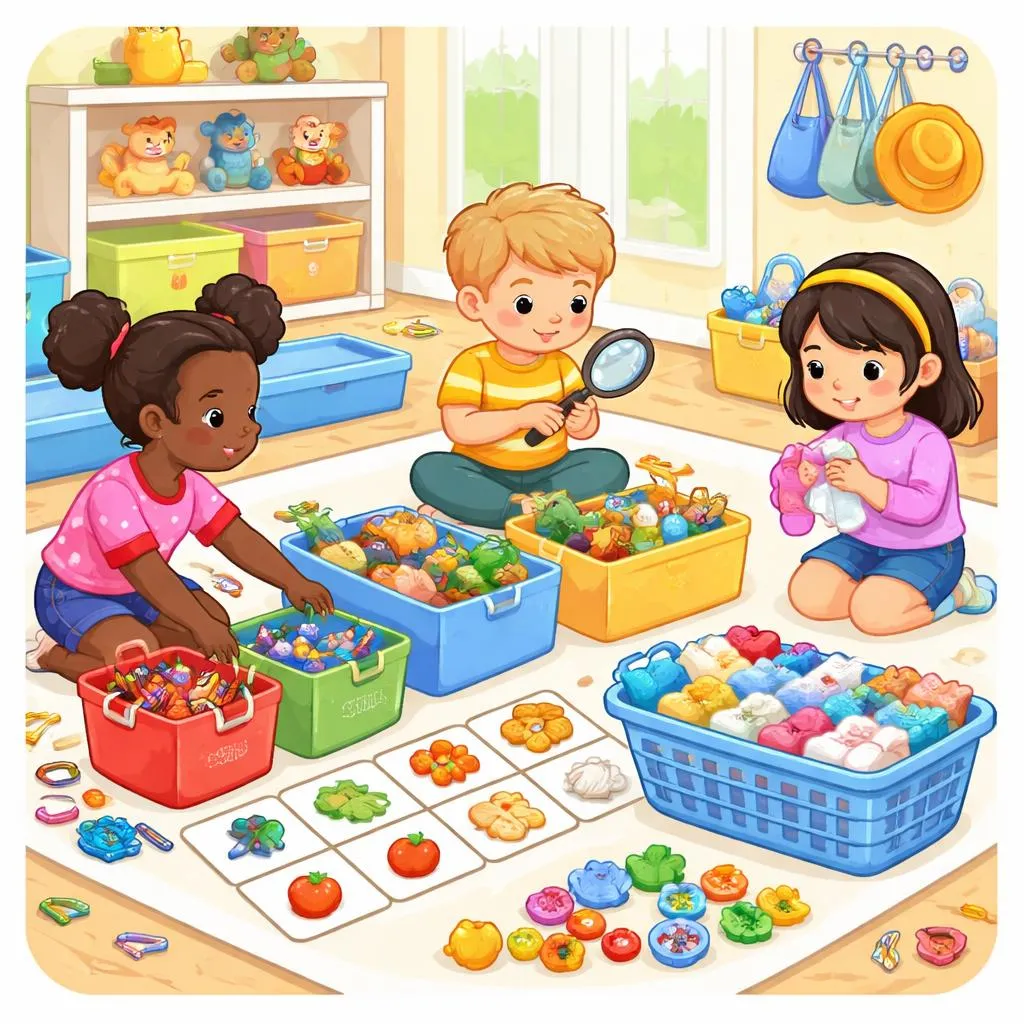
Last Tuesday, Mia played with her rock collection. She sorted the shiny ones. They glittered in sunlight. Later, Mia classified her books by color. Red books went together. Both actions organized things. But sorting arranged simply. Classifying grouped by rules. Mia wondered about the difference. She asked her dad. Dad smiled and explained. Sorting puts in order. Classifying uses categories. Let’s learn together.
Mia felt excited in her room. Dust danced in sunbeams. She held a smooth quartz. She placed it with other sparkly rocks. Then she classified her comics. Superheroes in one pile. Animals in another. Her dad nodded. He said sorting is basic. Classifying is scientific. Mia understood now.
Word Breakdown
Core Principle
We reject boring dictionary definitions. We use pictures in your mind. We add functions and memory hooks. This helps you remember forever.
Sort To Do
Image: Imagine sorting your socks into pairs. You match each left and right. That is sort to do. It means arranging in simple order.
Function: It is for organizing quickly. Like sort toys. Or sort cards.
Sensory Description: You see neat rows. You feel items slide. Your hands move fast.
Memory Anchor: A drawer with folded socks. See the pairs? That is sort to do.
Classify To Do
Image: Think of classifying animals into groups. Mammals, birds, fish. That is classify to do. It means grouping by rules.
Function: It is for systematic organization. Like classify plants. Or classify stars.
Sensory Description: You see clear categories. You feel logical order. Your brain makes connections.
Memory Anchor: A chart with animal groups. See the headings? That is classify to do.
Advanced Comparison
Sort arranges simply. Classify groups by rules. Sort uses basic order. Classify uses systems. Use sort for everyday. Use classify for science.
Scene Comparison
Scene One happens in the bedroom. Leo sorts his Lego bricks. He puts all red ones together. The pile grows. This is sort to do—simple arrangement.
Scene Two takes place in the classroom. Emma classifies leaves for science. She groups by shape. Oak, maple, pine. This is classify to do—systematic grouping.
Scene Three occurs at home. Ben sorts his trading cards. He orders by number. Mia classifies her rock collection. She groups by type. Notice the shift. Sorting is basic. Classifying is detailed.
Pitfalls Deep Reminder
Mistake One is saying “I classified my socks by color.” Why wrong? Socks are sorted. Classifying is for complex groups. Funny result? Socks demand scientific names. Correct phrase is I sorted my socks. Memory trick: Sort simple items.
Mistake Two is saying “I sorted animals into mammals and reptiles.” Why wrong? Animals need classifying. Sorting is too basic. Funny result? Lion gets mixed with lizard. Correct phrase is I classified animals. Memory trick: Classify complex things.
Mistake Three is saying “I classified my crayons by size.” Why wrong? Crayons are sorted. Classifying uses categories. Funny result? Crayons rebel. Correct phrase is I sorted my crayons. Memory trick: Sort by single feature.
Mistake Four is saying “I sorted planets by distance from sun.” Why wrong? Planets need classifying. Sorting is too simple. Funny result? Earth orbits Mercury. Correct phrase is I classified planets. Memory trick: Classify scientific topics.
Interactive Exercises
Read each sentence. Pick sort or classify.
I will ___ my coins by value. (sort/classify)
She ___ insects into butterflies and beetles. (sort/classify)
We ___ the books on the shelf. (sort/classify)
He ___ his rocks by hardness. (sort/classify)
They ___ the buttons by color. (sort/classify)
Act with a friend. Use the phrases.
Scene A: Sorting Simply
A: I need to sort these now.
B: Put them in straight lines.
Scene B: Classifying Systematically
A: I will classify these items.
B: Create clear groups with rules.
Spot the Mistake
Which sentence sounds odd? Explain why.
Sentence: I classified my socks into pairs.
Reason: Socks are sorted. Use sort instead.
Sentence: I sorted animals into groups.
Reason: Animals need classifying. Use classify instead.
Sentence: I classified my pencils by length.
Reason: Pencils are sorted. Use sort instead.
Create Sentences
Use both phrases.
Sort to do: I sort my cards by number.
Classify to do: I classify my rocks by type.
Bonus Challenge
You have a mix of buttons. Do you sort or classify them? Answer: Sort. Simple arrangement.
Rhyme Time
Sort to arrange, classify to group.
One makes rows, one makes a loop.
Simple order? Choose sort.
Scientific rule? Classify, do not abort.
Homework Task
Pick one activity. Complete it this week. Share with family.
Option One: Observation Journal. Get a small notebook. Draw three pictures. Write a sentence under each.
Picture One: You sort something. Sentence: I sorted my stickers by theme.
Picture Two: You classify something. Sentence: I classified my shells by shape.
Picture Three: You sort something else. Sentence: I sorted my books by size.
Show your journal to a parent. Explain the differences.
Option Two: Role Play. With a parent, act out moments. Use phrases correctly.
You: Mom, I will sort my laundry by color.
Parent: Separate whites from darks.
You: Dad, I will classify my rocks.
Parent: Group them by mineral type.
Practice until it feels natural.
Option Three: Sharing Time. Tomorrow at school, tell a friend. Describe one sort and one classify. Say: Yesterday I sorted my cards. I classified my leaves. Ask your friend about theirs.
Life Practice
Week Challenge: Try one task. Complete within seven days. Share your success.
Task One: Observation Log. For three days, note sort and classify moments. Draw icons.
Day One: Sort toys. Draw a toy icon.
Day Two: Classify rocks. Draw a rock icon.
Day Three: Sort buttons. Draw a button icon.
Show your log to your teacher. Place it on the classroom wall.
Task Two: Action Demo. Use both phrases in real actions.
Step One: Sort quickly. Say: I sort to arrange simply.
Step Two: Classify carefully. Say: I classify to group by rules.
Demonstrate to a sibling. Explain the difference.
Task Three: Social Mission. Use phrases with others.
Sort to help a friend. Say: I sort your pencils by color.
Classify to help a friend. Say: I classify your bugs for science.
Record a short voice message. Send it to your teacher.
Task Four: Creative Story. Write a short tale. Include both phrases.
Title: The Rock Museum.
Story: I sorted my shiny rocks. Then I classified them by type. My museum looked great!
Share your story in class.
Remember, practice makes perfect. Use these phrases often. Soon they will feel easy.