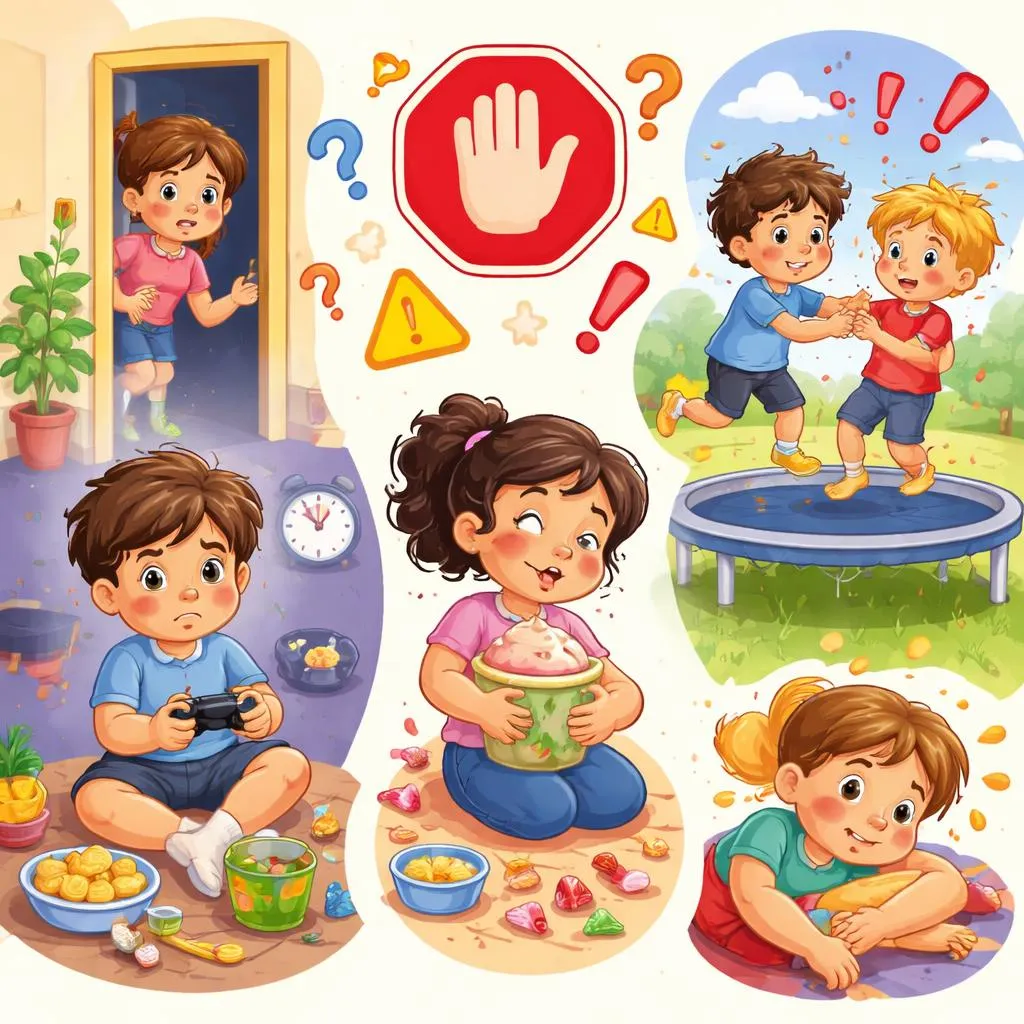

Fun Introduction
Last Tuesday, Mia played tag at recess. She ran fast to catch her friend. Suddenly, she saw a bee buzzing near her face. Mia stopped to avoid the bee. Her feet froze instantly. Later, Mia ceased to play video games. Her mom said it was time for dinner. Mia turned off the console completely. Both actions meant not moving anymore. But stopping was quick and sudden. Ceasing was complete and final. Mia wondered about the difference. She asked her dad. Dad smiled and explained. Stopping is for brief pauses. Ceasing is for permanent endings. Let’s learn together.
Word Breakdown
Core Principle
We reject boring dictionary definitions. We use pictures in your mind. We add functions and memory hooks. This helps you remember forever.
Stop To Do
Image: Imagine a car hitting the brakes suddenly. Tires screech to a halt. That is stop to do. It means halting immediately.
Function: It is for quick interruptions. Like stop to let a cat pass. Or stop to tie your shoe.
Sensory Description: You hear a sharp sound. You feel a jolt. Your body becomes still.
Memory Anchor: A stop sign on the road. See the bold red octagon? That is stop to do.
Cease To Do
Image: Think of a candle flame blowing out. Darkness replaces light completely. That is cease to do. It means ending something entirely.
Function: It is for permanent endings. Like cease to argue with your sister. Or cease to eat candy after dinner.
Sensory Description: You feel emptiness. You hear silence. Your habit disappears.
Memory Anchor: A candle with no flame. See the smoke fading? That is cease to do.
Advanced Comparison
Stop is temporary and reversible. Cease is permanent and final. Stop pauses an action. Cease ends it forever. Use stop for quick breaks. Use cease for lasting changes.
Scene Comparison
Scene One happens on the sidewalk. Leo stops to pet a fluffy dog. He pats its head gently. Then he continues walking home. This is stop to do—brief pause.
Scene Two takes place in the living room. Emma ceases to watch TV after eight o’clock. She turns it off for the night. No more screens until tomorrow. This is cease to do—complete ending.
Scene Three occurs at the park. Ben stops to drink water during soccer. He takes three quick sips. Mia ceases to kick the ball when the game ends. She leaves the field. Notice the shift. Stopping is momentary. Ceasing is absolute.
Pitfalls Deep Reminder
Mistake One is saying “I ceased to play outside when the rain started.” Why wrong? Rain needs stopping temporarily. Ceasing is too permanent. Funny result? You think you can never play outside again. Correct phrase is I stopped playing outside when the rain started. Memory trick: Stop for weather changes.
Mistake Two is saying “I stopped eating cookies forever because I got a stomachache.” Why wrong? Stomachaches need ceasing permanently. Stopping is too temporary. Funny result? You eat cookies again tomorrow. Correct phrase is I ceased eating cookies after that stomachache. Memory trick: Cease for health warnings.
Mistake Three is saying “The music ceased when the teacher walked in.” Why wrong? Teachers need stopping temporarily. Ceasing is too final. Funny result? Music thinks it is banned forever. Correct phrase is The music stopped when the teacher walked in. Memory trick: Stop for interruptions.
Mistake Four is saying “I stopped brushing my teeth at night.” Why wrong? Teeth need ceasing bad habits. Stopping is too weak. Funny result? Cavities think they won. Correct phrase is I ceased skipping tooth brushing at night. Memory trick: Cease for good habits.
Interactive Exercises
Read each sentence. Pick stop or cease.
I will ___ to help my grandma cross the street. (stop/cease)
She ___ to talk during the movie. (stop/cease)
We ___ to eat candy after Halloween. (stop/cease)
He ___ to listen when his name was called. (stop/cease)
They ___ to play video games on school nights. (stop/cease)
Act with a friend. Use the phrases.
Scene A: Quick Stopping
A: I need to stop right now.
B: What did you see?
Scene B: Complete Ceasing
A: I will cease this argument.
B: Good idea, let’s be friends.
Spot the Mistake
Which sentence sounds odd? Explain why.
Sentence: I ceased to play with toys when dinner was ready.
Reason: Dinner needs stopping temporarily. Use stop instead.
Sentence: I stopped biting my nails forever.
Reason: Nail biting needs ceasing permanently. Use cease instead.
Sentence: The alarm ceased when I pressed snooze.
Reason: Snooze needs stopping temporarily. Use stop instead.
Create Sentences
Use both phrases.
Stop to do: I stop to smell flowers in spring.
Cease to do: I cease to eat dessert after brushing.
Bonus Challenge
You see a red light while biking. Do you stop or cease? Answer: Stop. It is temporary.
Rhyme Time
Stop it quick, cease it done.
One pauses, the other is gone.
Brief break? Choose stop.
End it all? Cease non-stop.
Homework Task
Pick one activity. Complete it this week. Share with family.
Option One: Observation Journal. Get a small notebook. Draw three pictures. Write a sentence under each.
Picture One: You stop something. Sentence: I stopped to tie my shoe.
Picture Two: You cease something. Sentence: I ceased to shout at my brother.
Picture Three: You stop something else. Sentence: I stopped to watch a bird.
Show your journal to a parent. Explain the differences.
Option Two: Role Play. With a parent, act out moments. Use phrases correctly.
You: Mom, I will stop to help you carry bags.
Parent: Thank you, that is kind.
You: Dad, I will cease to leave my toys out.
Parent: Good, keep your room tidy.
Practice until it feels natural.
Option Three: Sharing Time. Tomorrow at school, tell a friend. Describe one stop and one cease. Say: Yesterday I stopped to pet a dog. I ceased to eat candy after lunch. Ask your friend about theirs.
Life Practice
Week Challenge: Try one task. Complete within seven days. Share your success.
Task One: Observation Log. For three days, note stop and cease moments. Draw icons.
Day One: Stop for a friend. Draw a hand icon.
Day Two: Cease a bad habit. Draw a crossed-out icon.
Day Three: Stop for safety. Draw a stop sign icon.
Show your log to your teacher. Place it on the classroom wall.
Task Two: Action Demo. Use both phrases in real actions.
Step One: Stop briefly. Say: I stop to be polite.
Step Two: Cease completely. Say: I cease to waste time.
Demonstrate to a sibling. Explain the difference.
Task Three: Social Mission. Use phrases with others.
Stop to help a friend. Say: I stop to wait for you.
Cease to bother a friend. Say: I cease to tease you now.
Record a short voice message. Send it to your teacher.
Task Four: Creative Story. Write a short tale. Include both phrases.
Title: The Magic Remote.
Story: I stopped the TV for dinner. Then I ceased to watch scary shows. What peace!
Share your story in class.
Remember, practice makes perfect. Use these phrases often. Soon they will feel easy.