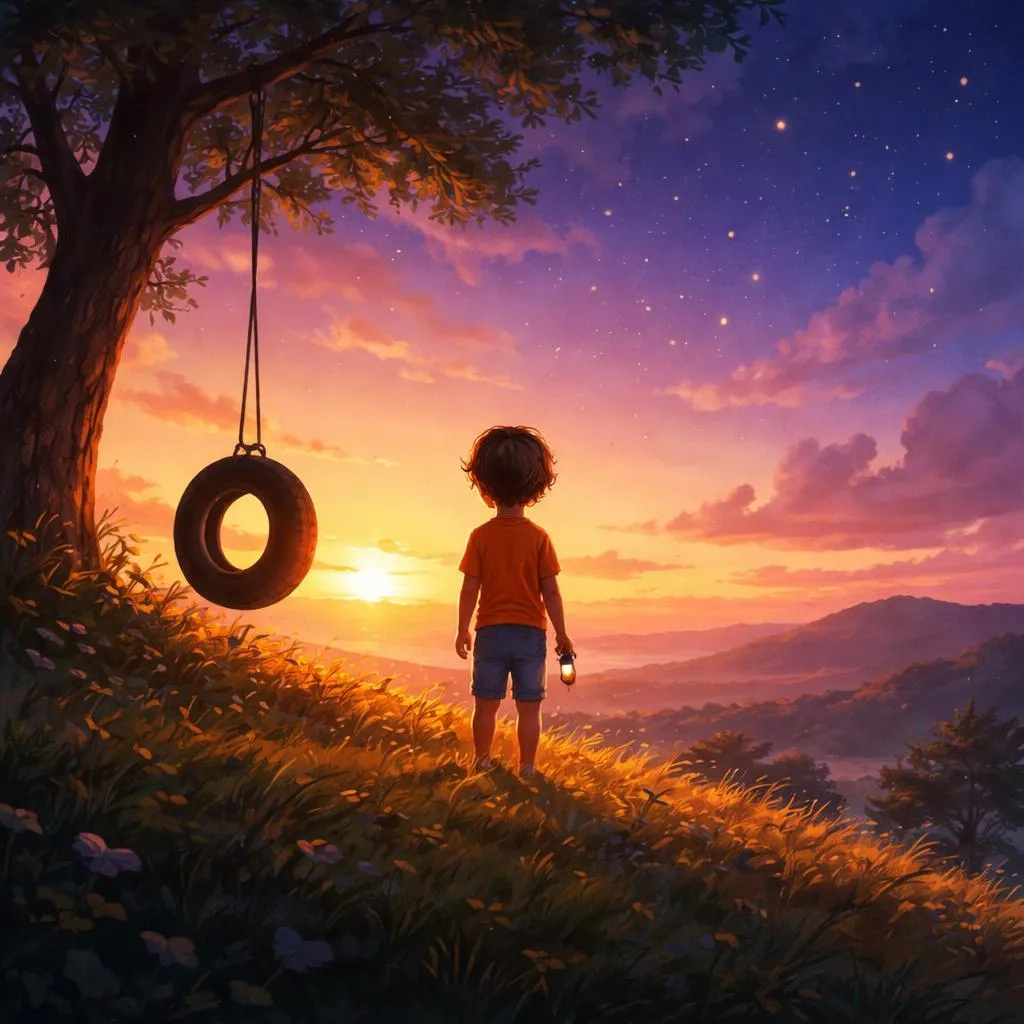

What Do These Expressions Mean? “It's evening” and “late day” both mean the time of day between afternoon and night. They tell a child that the sun is setting and darkness will come soon. Children hear these words at dinnertime, before baths, or during sunset. Both describe the end of the day.
“It's evening” means the period from late afternoon until bedtime. It is common and direct. A child says it when the sky turns orange. It is the everyday word.
“Late day” means the later part of the day, near sunset. It is less common. A parent might say it to describe the end of working hours. It sounds more generic.
These expressions seem similar. Both mean “the day is ending.” Both describe the transition to night. But one is the standard word while one is a more general phrase.
What's the Difference? One is the standard word for a specific time period. One is a general phrase for the end of the day. “It's evening” refers to the period from about 5 PM to 8 PM. It is a specific time block. It is the usual word.
“Late day” is not a fixed time phrase. It means “the later part of the day,” which could be afternoon or evening. It is less precise. It is rarely used by children.
Think of a child at 6 PM. “It's evening” is right. “It's late day” would sound unusual. One is natural. One is strange.
One is for the time after afternoon. The other is a vague description. “Evening” for dinner time. “Late day” for the end of a work shift. Use the first for daily life. Use the second for general description.
Also, “late day” can be used for the end of a business day. For a child, “evening” is best.
When Do We Use Each One? Use “it's evening” for the period after afternoon. Use it for sunset, dinner, and before bedtime. Use it as the opposite of “morning.” It fits daily talk.
Examples at home: “It's evening. Time to eat dinner.” “I like to read stories in the evening.” “The evening sky is so pretty.”
Use “late day” very rarely. Use it to mean “the end of the day” for general description. Use it when you don’t want to specify “afternoon” or “evening.” Children almost never need this phrase.
Examples for general talk: “We finish our work in the late day.” “The late day sun was warm.” “Birds sing less in the late day.”
Most children should just say “it's evening.” It is clear, natural, and specific. “Late day” is good to understand for reading. But for dinner time, “evening” is best.
Example Sentences for Kids It's evening: “It's evening. Let's call Grandma.” “Evening is my favorite time for a walk.” “The fireflies come out in the evening.”
Late day: “The late day sun makes long shadows.” “We pack up our picnic in the late day.” “The late day air is cooler.”
Notice “it's evening” is normal speech. “Late day” is less common and more general. Children learn both. One for home. One for reading.
Parents can use “evening” every day. Save “late day” for nature writing or general description. “In the late day, the colors change.” Learning happens in small moments.
Common Mistakes to Avoid Some children say “late day” for 3 PM. That is afternoon, not late day. Late day is near sunset. Use “afternoon” for 3 PM.
Wrong: “It's late day at 3 PM.” Better: “It's afternoon at 3 PM.”
Another mistake: using “evening” for late afternoon (4 PM). Evening usually starts around 5 or 6 PM. 4 PM is afternoon. Be precise.
Wrong: “It's evening at 4 PM.” Better: “It's afternoon at 4 PM.”
Some learners think “late day” is a standard time period. It is not. It is a general description. For a specific time, use “morning,” “afternoon,” or “evening.”
Also avoid saying “late day” at midnight. That is night, not day. Be accurate.
Easy Memory Tips Think of “evening” as a lamp turning on. Sunset. Dinner. Bedtime. Specific time.
Think of “late day” as a generic pointer. End of daylight. Vague. General description.
Another trick: remember the specificity. “Evening” = precise time block. “Late day” = vague description. Precise gets “evening.” Vague gets “late day.”
Parents can say: “Evening for a known hour. Late day for a general bower.”
Practice at home. At 6 PM: “it's evening.” Describing sunset: “the late day sky.”
Quick Practice Time Let us try a small exercise. Choose the better phrase for each situation.
A child looks outside at 7 PM. The sun has set. The family eats dinner soon. a) “It's late day.” b) “It's evening.”
A writer describes a picnic ending as the sun gets low, not giving an exact time. a) “It's evening.” b) “In the late day, we packed up.”
Answers: 1 – b. A specific evening hour (7 PM) fits the precise “evening.” 2 – b. A vague, general description of day's end fits “late day.”
Fill in the blank: “When I see the sunset and know dinner is coming, I say ______.” (“It's evening” is the specific, routine, daily-life choice.)
One more: “When a nature book describes the end of daylight without giving a clock time, it says ______.” (“Late day” fits the general, descriptive, non-specific language.)
The day ends gently. “It's evening” marks the time. “Late day” describes the feel. Teach your child both. A child who learns both can name the hour and sense the sunset.