
Introduction to J.K. Rowling
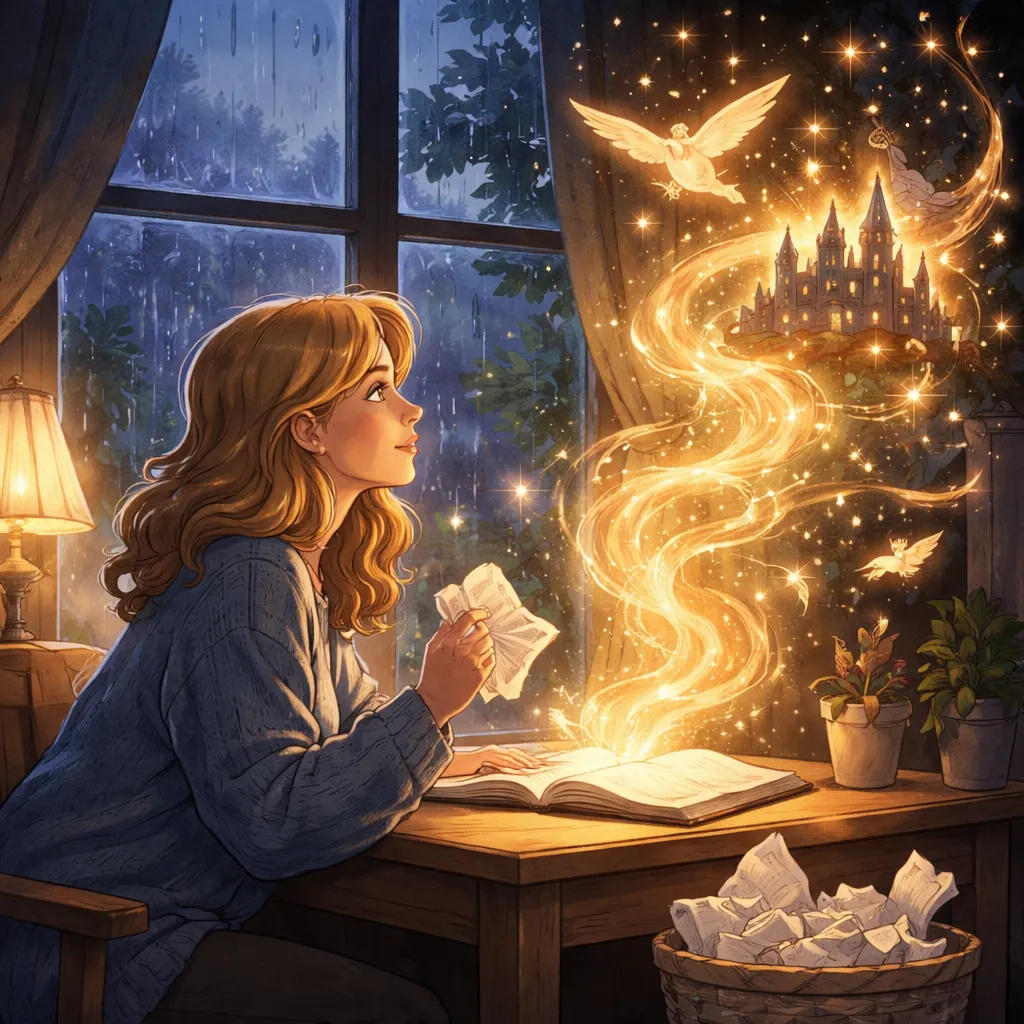
J.K. Rowling is a British author and philanthropist. She wrote the Harry Potter series, one of the best-selling book series in history. This celebrity story: J.K. Rowling shows that failure is not the end. It can be the beginning of something magical. Rowling was a single mother living on welfare. She faced twelve rejections from publishers. She kept writing. Children can learn that no one can stop a story that needs to be told. Parents can use her story to teach resilience and the power of imagination. Rowling's books have sold over 500 million copies. They have been translated into more than 80 languages. Her life proves that a girl who loved stories can grow up to give stories to the whole world.
Early Life and Background
Joanne Rowling was born on July 31, 1965, in Yate, Gloucestershire, England. Her father, Peter Rowling, was an aircraft engineer. Her mother, Anne Rowling, worked as a science technician. Joanne had a younger sister named Di. The family moved to the village of Tutshill when Joanne was nine. Young Joanne loved stories. She wrote her first story at age six. It was about a rabbit called Rabbit. She read books constantly. Her favorite author was Jane Austen. She also loved the stories of C.S. Lewis and E. Nesbit. At school, Joanne was shy and wore glasses. She felt like an outsider. She created stories in her head to escape. She made up characters who were also outsiders. She later said that Hermione Granger was based on herself at age eleven. She studied French and Classics at the University of Exeter. After graduation, she worked as a researcher and bilingual secretary for Amnesty International. In 1990, she was on a train from Manchester to London. The idea for Harry Potter appeared in her mind fully formed. A boy who did not know he was a wizard. She did not have a pen. She spent four hours thinking about the characters and the plot.
Career Highlights and Achievements
J.K. Rowling wrote the first Harry Potter book in cafes around Edinburgh, Scotland. She was a single mother. Her daughter, Jessica, was a baby. Rowling had lost her mother to multiple sclerosis in 1990. She was deeply sad. She also struggled with depression. She later said that she created the Dementors, soul-sucking creatures, to represent depression. She finished the manuscript for Harry Potter and the Philosopher's Stone in 1995. She sent it to twelve publishers. All twelve rejected it. The thirteenth publisher, Bloomsbury, accepted it. The publisher's eight-year-old daughter read the first chapter and demanded the rest. Bloomsbury printed only 500 copies. Rowling received a small advance of £1,500. She was told she would never make money writing children's books. The book was published in 1997. It won the Nestlé Smarties Book Prize. The sequel, Harry Potter and the Chamber of Secrets, came out in 1998. The third book, Harry Potter and the Prisoner of Azkaban, came out in 1999. Warner Bros. bought the film rights for a large sum. The fourth book, Harry Potter and the Goblet of Fire, broke sales records in 2000. Rowling became a billionaire. She was the first person to become a billionaire by writing books.
Famous Works or Performances
J.K. Rowling's most famous work is the Harry Potter series. The series has seven books. Harry Potter and the Philosopher's Stone (1997) introduces Harry, Ron, and Hermione. Harry Potter and the Chamber of Secrets (1998) brings in the mysterious diary and the basilisk. Harry Potter and the Prisoner of Azkaban (1999) introduces Sirius Black and the Marauder's Map. Harry Potter and the Goblet of Fire (2000) features the Triwizard Tournament and Lord Voldemort's return. Harry Potter and the Order of the Phoenix (2003) is the longest book. It introduces Dumbledore's Army and the prophecy. Harry Potter and the Half-Blood Prince (2005) reveals Voldemort's past and Snape's loyalty. Harry Potter and the Deathly Hallows (2007) finishes the story with the final battle at Hogwarts. The books have been turned into eight blockbuster films. Rowling also wrote companion books. Fantastic Beasts and Where to Find Them became a film series. Quidditch Through the Ages is a guide to the wizarding sport. The Tales of Beedle the Bard contains fairy tales for wizards. Rowling also wrote adult novels. The Casual Vacancy (2012) is a tragicomedy about a small English town. She also writes detective novels under the name Robert Galbraith. The Cormoran Strike series has sold millions of copies.
Personal Life and Fun Facts
J.K. Rowling has many interesting personal stories. The "K" in her name stands for Kathleen. Her publisher asked her to use initials because they thought boys would not read a book by a woman. A fun fact is that she invented many words that are now in the dictionary. "Muggle" means a person without magical powers. Oxford English Dictionary added the word in 2003. Another fun fact is that Rowling wrote the final chapter of the last Harry Potter book in the early 1990s. She kept it in a locked box for almost 17 years. She knew how the story ended before she wrote the middle. Rowling married Dr. Neil Murray in 2001. They have two children together, David and Mackenzie. She also has a daughter, Jessica, from her first marriage. Rowling is a very generous philanthropist. She gave so much money to charity that she lost her billionaire status. She founded Lumos, an organization that helps children in institutions. She also supports research into multiple sclerosis, the disease that killed her mother. Rowling loves dogs. She has two Jack Russells. She also loves to walk in the Scottish countryside. She still writes in cafes sometimes. She bought a 17th-century house and turned part of it into a writing room. She filled it with books and odd objects.
Legacy and Influence
J.K. Rowling changed children's literature forever. Before Harry Potter, children's books were often short and simple. Rowling wrote long, complex stories with dark themes. She proved that children could read 700-page books. The Harry Potter series created a generation of readers. Millions of children who hated reading fell in love with books because of Harry Potter. The books also changed how publishers think. Young adult literature became a huge market. Rowling's influence extends beyond books. The Harry Potter films made billions of dollars. Universal Studios built Wizarding World theme parks in Orlando, Hollywood, Osaka, and Beijing. Pottermore, now Wizarding World, is a website where fans can explore the stories. Harry Potter fan sites, podcasts, and conventions exist around the world. The books have been translated into Ancient Greek and Latin. Scholars study Harry Potter in universities. Some courses treat the books as literature. Rowling has received many honors. Queen Elizabeth II made her an Officer of the Order of the British Empire. She received the Hans Christian Andersen Literature Award. The French government made her a Chevalier of the Legion of Honour. Her legacy proves that a story born on a delayed train can become a global treasure. She gave the world a boy wizard. The world gave her back its heart.
Quotes or Famous Sayings
J.K. Rowling has spoken many inspiring words. One famous quote is, "It is impossible to live without failing at something, unless you live so cautiously that you might as well not have lived at all." Another powerful saying is, "Happiness can be found even in the darkest of times if one only remembers to turn on the light." She also said, "We do not need magic to change the world. We carry all the power we need inside ourselves already." Children might like this one: "It takes a great deal of bravery to stand up to our enemies, but just as much to stand up to our friends." Families can read these quotes together. Ask children, "What is a time you failed at something? What did you learn?" Parents can help children see that Rowling was rejected twelve times. She did not give up. Her quotes remind us that failure is not the opposite of success. It is part of success.
How to Learn from J.K. Rowling
Children can learn several lessons from J.K. Rowling. First, read everything. Rowling read constantly as a child. She learned story structure from other authors. Second, write every day. Rowling wrote in cafes with her baby sleeping beside her. She did not wait for a perfect office. Third, ignore rejection. Twelve publishers said no. One publisher said yes. That is all it takes. Parents can encourage young children to write a short story. Draw pictures to go with it. Bind it with string or staples. Make a book. Older children can keep a daily journal. Write one page every day. Do not worry about spelling or grammar. Just write. Families can also read the first Harry Potter book aloud together. Take turns reading chapters. Talk about the characters. Ask, "Why do you think Harry feels like an outsider?" Another activity is to start a "rejection box." Collect rejection letters from contests, schools, or publishers. Put them in a box. When you feel sad, open the box. See how many times successful people were rejected. J.K. Rowling started with nothing. No money. No publisher. No hope from anyone except herself. She had a story in her head. She wrote it down. She did not stop. That is the secret. Every child has a story. Write it down. Share it. Do not stop. The world is waiting for your magic.