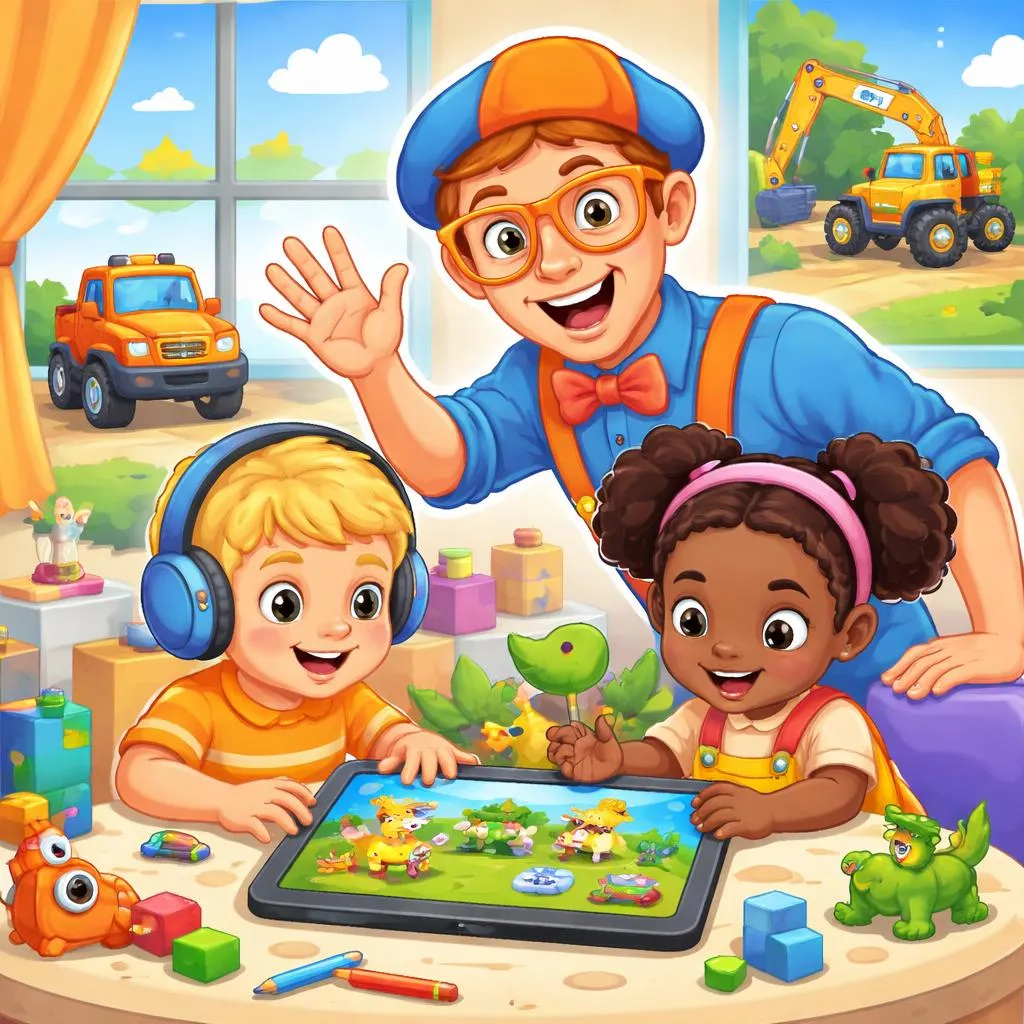

Hello, wonderful teachers and parents! Today we explore an exciting topic. Children all over the world love a cheerful character. He wears bright blue and orange. He visits exciting places. He sings fun songs. His name is Blippi. Now, children can play with Blippi in a new way. Blippi games online bring learning and fun together. These games feature familiar places and characters. They teach colors, numbers, and words. They keep children engaged and happy. Finding safe, educational games is important. Let us discover the world of Blippi games together. Let us learn how they help children grow and learn.
What Are Blippi Games Online? Blippi games online are digital games featuring the popular children's entertainer Blippi. These games appear on websites and apps. They are designed for young children. They feature bright colors and simple controls. The games teach basic concepts. Colors, shapes, numbers, and letters appear throughout.
The games feel like extensions of Blippi videos. Children recognize the settings. They might explore a playground with Blippi. They might visit an aquarium. They might help Blippi find objects. This familiarity brings comfort and excitement.
Most Blippi games are free or very low cost. They work on tablets, phones, and computers. Parents can find them easily. The games have no complicated instructions. Children can start playing right away. The simple design matches young children's abilities. They do not need to read to understand how to play.
Meaning and Explanation of Educational Gaming Educational games combine learning with play. This combination works well for young minds. Children learn best when they are having fun. Games provide motivation. Children want to play. They want to win. They want to see what happens next. This desire keeps them engaged.
In educational games, learning happens naturally. A child might not realize they are practicing counting. They just want to help Blippi count the toys. The learning is embedded in the fun. This reduces pressure. It increases enjoyment.
Games also provide immediate feedback. When a child chooses the correct answer, something good happens. A character cheers. A new level opens. This positive reinforcement encourages learning. It builds confidence. Children feel smart and capable.
Games also allow repetition. Children can play the same game many times. Each time, they practice the same skills. This repetition builds mastery. It moves knowledge from short-term to long-term memory. The fun never fades, so children gladly repeat.
Categories or Lists of Blippi Games Blippi games come in many types. Each type teaches different skills.
Matching Games: These games ask children to match objects. They might match shapes. They might match colors. They might match Blippi characters. Matching builds visual discrimination. It helps children notice similarities and differences.
Counting Games: Blippi asks children to count objects. How many red balls? How many yellow hats? Children click on the objects and count along. These games build number sense. They connect number words to quantities.
Memory Games: Cards turn over to reveal pictures. Children find matching pairs. These games build working memory. They also teach concentration and focus. Blippi themes make the game more engaging.
Coloring Games: Children color pictures of Blippi scenes. They choose colors from a palette. They fill in the shapes. These games build fine motor skills. They teach color names. They encourage creativity.
Puzzle Games: Simple jigsaw puzzles feature Blippi pictures. Children drag pieces into place. These games build spatial reasoning. They teach persistence. Children learn to keep trying until the puzzle fits.
Hide and Seek Games: Blippi hides objects in a scene. Children must find them. These games build observation skills. They teach vocabulary for common objects. They feel like a treasure hunt.
Daily Life Examples of Game Learning The learning from Blippi games extends into daily life. Children make connections between the game and the real world.
After playing a color matching game, a child might notice colors at home. "Look, a red cup like in the Blippi game!" This shows transfer of learning. The game vocabulary becomes real-world vocabulary.
After counting objects in a game, a child might count real objects. "One, two, three apples!" The counting practice from the game builds real math skills. The child uses these skills naturally.
After playing a puzzle game, a child might approach real puzzles with more confidence. They learned to try different pieces. They learned to keep going. These problem-solving skills transfer to many situations.
After playing a hide and seek game, a child might play hide and seek in real life. They use the same observation skills. They feel the same excitement of discovery. The game and real life enrich each other.
Printable Flashcards from Blippi Games We can extend game learning with printable materials. Flashcards based on Blippi games work well.
Character Flashcards: Create cards with Blippi and his friends. Practice names and descriptions. "This is Blippi. He wears blue and orange." This builds vocabulary and observation.
Object Flashcards: Make cards showing objects from the games. A ball, a hat, a bus, a shovel. Children name each object. They can sort them by color or size. They can use them in sentences.
Color Flashcards: Create cards in different colors. Match them to objects Blippi uses. "Blippi's hat is orange." This reinforces color vocabulary in a meaningful context.
Action Flashcards: Show Blippi doing actions. Jumping, dancing, pointing, digging. Children practice verb vocabulary. They can act out the actions themselves. This combines language with movement.
Use these cards for games. Play memory match with pairs. Play "find the object" around the room. Practice making sentences. The cards provide screen-free learning that connects to the digital games.
Learning Activities or Games Inspired by Blippi We can create our own activities inspired by Blippi games. These activities extend learning beyond the screen.
Blippi Scavenger Hunt: Hide objects around the room. Give children a list of things to find. "Find something blue. Find something round. Find something that makes noise." This builds observation and vocabulary. It feels like a Blippi adventure.
Blippi Says: Play a version of Simon Says with Blippi actions. "Blippi says touch your nose." "Blippi says jump three times." This builds listening skills and body awareness. Children love pretending to be Blippi.
Build a Blippi Scene: Provide craft materials. Children create their own Blippi scene. They might make a playground or an aquarium. They describe their scene using words from the games. This builds creativity and language.
Blippi Dance Party: Play Blippi music and dance together. Call out different moves. "Stomp like Blippi!" "Spin around!" This builds gross motor skills. It creates joyful movement. It connects music, movement, and language.
Blippi Snack Time: Make snacks inspired by Blippi games. Cut fruit into shapes. Arrange them to look like Blippi's face. Talk about colors and shapes while eating. This connects learning to daily routines.
Blippi Story Time: Create stories about Blippi adventures. "Today Blippi went to the park. What did he see there?" Children contribute ideas. This builds narrative skills and creativity. It uses vocabulary from the games.
These activities make learning active and multisensory. Children move, create, talk, and play. They practice skills in many different ways. This deepens understanding. It makes learning memorable.
Educational Benefits of Blippi Games Blippi games offer many educational benefits for young children.
Vocabulary Development: Games introduce new words in context. Children hear and see words repeatedly. This builds vocabulary naturally. The Blippi connection makes words more memorable.
Concept Understanding: Games teach basic concepts. Colors, shapes, numbers, letters. These concepts form the foundation for later learning. Games make them concrete and understandable.
Fine Motor Skills: Clicking, dragging, and tapping build fine motor control. These skills help with writing and other tasks later. The fun context keeps children practicing willingly.
Problem Solving: Games present simple problems to solve. Which piece fits here? How many are there? Where is it hidden? Children learn to think and reason. They learn that they can solve problems.
Attention and Focus: Games require concentration. Children must pay attention to succeed. This builds focus skills. The engaging format makes attention feel easy.
Confidence Building: Success in games builds confidence. Children feel smart and capable. This positive feeling transfers to other learning situations. They approach new challenges with optimism.
Through Blippi games online, children learn while having fun. The games respect young children's abilities. They provide positive reinforcement. They connect to a beloved character. This combination creates powerful learning experiences. Children develop skills joyfully. They build foundations for future success. The digital and real worlds connect and enrich each other. Blippi becomes not just a character on a screen, but a friend who helps children learn and grow.