
What is the origin of english?
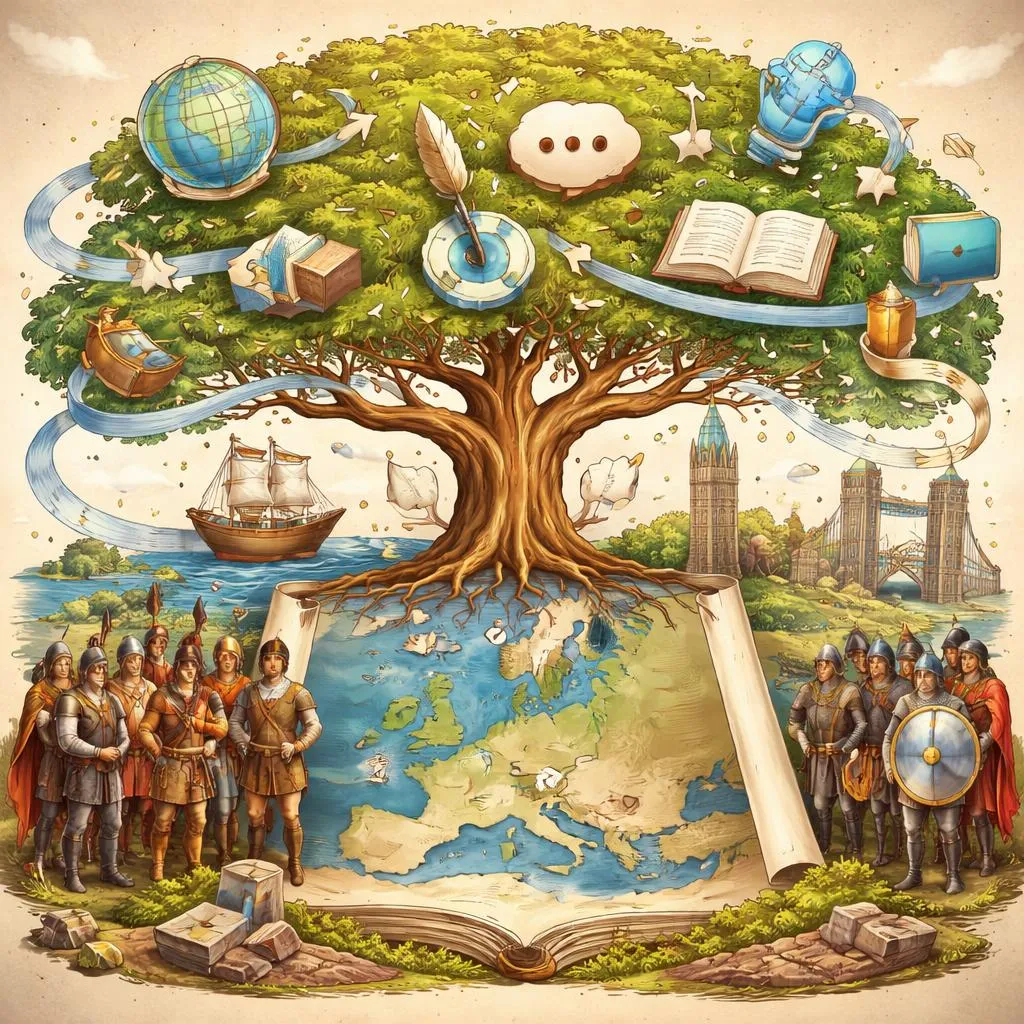
Hello, word explorers. Today, we are going on a fantastic journey back in time. We are going to discover a great story. It is the story of where the English language comes from. The English we speak today did not just appear. It grew and changed over a very, very long time, like a mighty tree.
Think of English as a giant, delicious soup. Many different cooks, from many different places, came and added their own special ingredients. Some added simple, strong words. Others added fancy, elegant words. They all mixed together in the big pot of history. The question, "Where does English originate from?" asks us to find those first cooks and see all the ingredients they brought. Let's put on our explorer hats and discover the recipe for our language.
Meaning and explanation
So, what does it mean to ask where a language comes from? A language is not a thing that is born in one place. It is a living thing that changes as people move, meet, and share ideas. When we ask where English originates from, we are looking for its oldest roots and the major events that shaped it.
English started a long, long time ago with groups of people who spoke a language we now call Old English. It sounded very different from the English we speak today. Over hundreds of years, this language met other languages. It fought with them, traded with them, and lived with them. Each meeting changed English. It added new words. It changed some grammar rules. Slowly, step by step, Old English turned into Middle English, and then into the Modern English we use now. The story of where English originates from is the story of these amazing meetings and mixings.
Categories or lists
Let's look at the main "cooks" who added ingredients to our English soup, in the order they arrived.
First Cooks: The Anglo-Saxons (Around 1,500 years ago). These were people from parts of Germany and Denmark who sailed to Britain. They brought their language, which we call Old English. This is the core of our soup. Many of our most common, strong, short words come from them. Words for family (mother, father), body parts (hand, foot), animals (cow, sheep), and daily life (house, food, drink, sleep) are from Old English. It is the base of our language.
Second Big Flavor: The Vikings (About 1,200 years ago). Viking warriors from Scandinavia invaded and settled in parts of Britain. Their language, Old Norse, mixed with Old English. They gave us many words that start with "sk-" like sky, skin, skill, and skirt. They also gave us the pronouns "they," "them," and "their." Imagine English without the word "sky" – that shows how important this mix was.
The Fancy Upgrade: The Normans (About 1,000 years ago). William the Conqueror from Normandy (in today's France) invaded England. French became the language of the royal court, law, and fancy things. Old English was still spoken by common people. This created a language with two levels. Animals in the field kept their Old English names (cow, pig, sheep). But the meat on the noble's table got French names (beef, pork, mutton). We got thousands of fancy words from French about government, art, law, and fashion.
The Modern Kitchen: Borrowing from the Whole World. As British people explored and traded across the globe, they kept borrowing words. From languages around the world, English picked up new "ingredients." Tomato (from Nahuatl, via Spanish), yoga (from Sanskrit), piano (from Italian), kindergarten (from German), safari (from Swahili), tsunami (from Japanese). This is why English has so many words. It has always been a language that loves to borrow and share.
Daily life examples
You can see the history of where English originates from in your own life. Let's look at two simple places.
At the Dinner Table: Look at your food. The animal names are often from Old English. Cow, pig, chicken. The meat names are often from French. Beef, pork, poultry. The word "dinner" itself comes from an old French word. Vegetables have mixed origins. "Apple" is Old English. "Potato" comes from a Native American language via Spanish. Your meal is a delicious lesson in history.
In Your Own Name and Your City's Name: Many common English first names show our origins. Names like Alfred, Edward, and Harold are Old English. Names like William, Robert, and Richard came with the Normans from France. Look at a map of England. Town names ending in "-ton" (like Southampton) or "-ham" (like Birmingham) are often from Old English. Names ending in "-chester" (like Manchester) come from an old Roman word. The names on the map tell the story of who lived there long ago.
Printable flashcards
Let's make the history of English visual and fun with printables. Create a "Language Family Tree."
Print a large tree outline. The roots are labeled "Old English (Anglo-Saxon)." A thick, low branch is labeled "Old Norse (Vikings)." A higher, elegant branch is labeled "French (Normans)." The top of the tree, with many small branches, is labeled "Languages of the World." Then, print leaf-shaped cards with words on them. "House," "Foot," "Drink" go on the Old English roots. "Sky," "Skin," "They" go on the Viking branch. "Beef," "Art," "Government" go on the French branch. "Tomato," "Pyjamas," "Kangaroo" go on the world branches. Kids can color and glue the leaves to the right part of the tree, building a beautiful picture of where English originates from.
Another idea is a "Word Timeline" poster. Draw a long line across a page. Mark important years: 500 AD, 800 AD, 1066 AD, 1500 AD, Today. Under each date, add simple pictures and words that entered the language around that time. Under 500 AD, a picture of a simple house and the word "house." Under 800 AD, a Viking ship and the word "sky." Under 1066 AD, a crown and the word "royal." Under 1500 AD, a ship and the word "potato." This shows the language growing over time.
Learning activities or games
Let's play a game called "Word Archaeologist." Prepare a list of common English words. Kids work in teams. Their job is to be archaeologists and dig up the word's origin using clues. Give them a simple chart: Old English = simple, everyday things. Old Norse = often "sk-" words. French = fancy, royal, or food words. For each word (like "king," "egg," "river," "dance," "skirt"), they must decide which "time layer" it came from. "King" is from Old English (cyning). "Egg" is from Old Norse. "Dance" is from French. This turns vocabulary into a historical puzzle.
Try the "Language Mix-Up" storytelling activity. Tell a very simple story twice. First, tell it using only words that are likely from Old English. "The good man went to his house. He ate bread and drank water. He saw his wife and child." Then, tell the same story using words that are likely from French. "The elegant gentleman proceeded to his mansion. He consumed cuisine and imbibed a beverage. He observed his spouse and offspring." Discuss how the story feels different. This shows the two levels of English that mixed long ago.
Create a "Passport to Word Origins." Print a small booklet for each child. Each page is for a different country or language that contributed to English. The page for "France" has the flag and space to write three words we borrowed (like "ballet," "garage," "restaurant"). The page for "India" has space for words like "shampoo," "pyjamas," "jungle." As they learn about where English originates from, they fill their passport with "word souvenirs" from around the world. This celebrates English as a global mixer of languages and ideas.