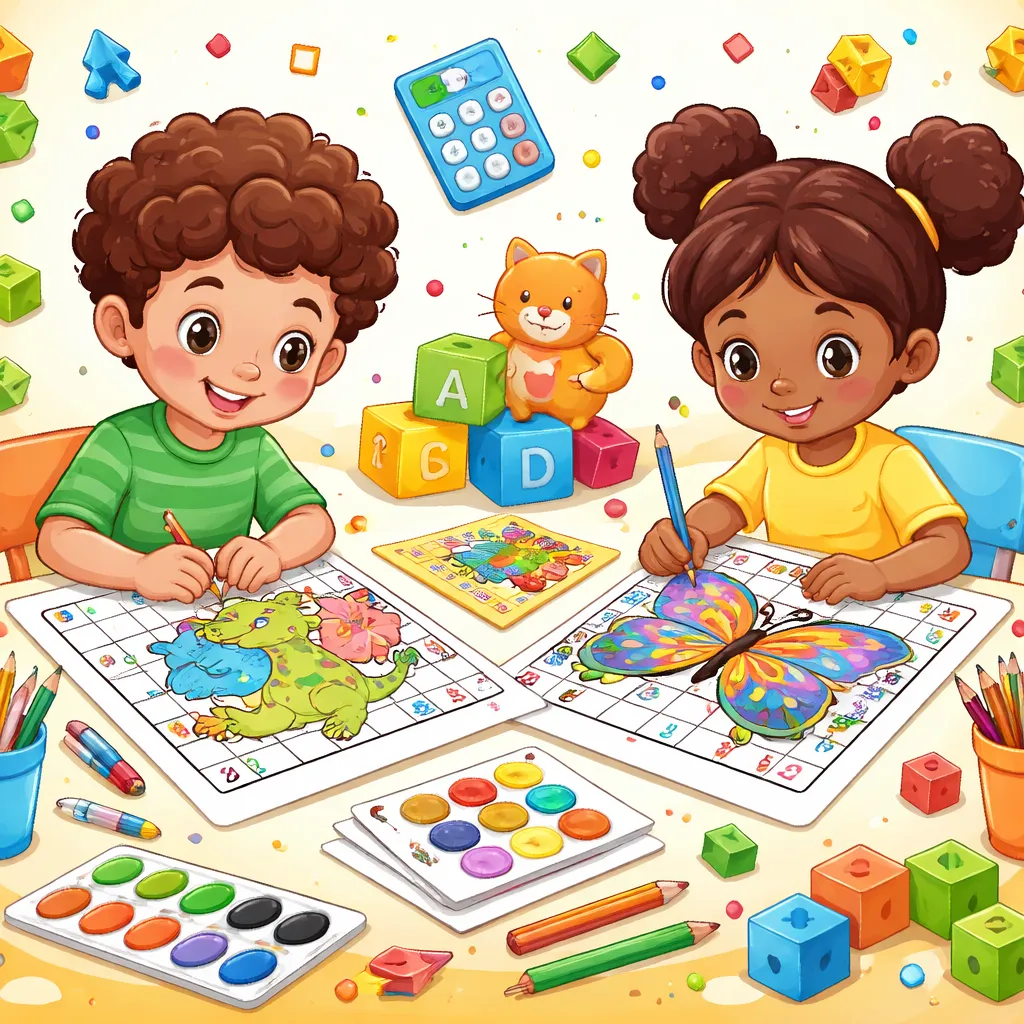

What Is This Situation? Color by number worksheets are a simple, fun activity. Each section has a number. The number tells you what color to use. Children follow the code. They color. A picture appears. It is like magic.
Color by number worksheets for kids teach number recognition. They teach color words. They build fine motor skills. And they are quiet, calm activities. Children love to see the picture appear.
This situation happens during quiet time, during art time, during moments when children need a calm activity. Worksheets are portable. You can use them at the kitchen table, on a trip, or on a rainy afternoon.
These worksheets are best used with conversation. Talk about the numbers. Talk about the colors. The learning happens while coloring.
Key English Phrases for This Situation Use phrases for introducing the worksheet. "Let us do a color by number worksheet. Each number tells you what color to use." "Number one is red. Color the ones that say one red."
Use phrases for practicing numbers. "Find all the number ones. What color do you use?" "Red. Yes. Color them red."
Use phrases for practicing colors. "What color is number two?" "Blue." "Yes. Find all the number twos and color them blue."
Use phrases for celebrating. "You colored all the number ones red. Good job." "Look at your picture. You did it."
Use phrases for finishing. "Your picture is done. It is a butterfly. You made a butterfly." "You worked so hard."
Simple Conversations for Kids Dialogue 1: Starting the Worksheet Parent: "Let us do a color by number. Look at the key. Number one is red. Can you find all the number ones?" Child finds number ones. Parent: "Good. Now color them red." Child colors. Parent: "You colored the ones. Good job."
This conversation introduces the worksheet. The parent guides. The child colors. The learning begins.
Dialogue 2: Following the Code Parent: "Now number two is blue. Find all the number twos." Child finds number twos. Parent: "Color them blue." Child colors. Parent: "You followed the code. Good job."
This conversation continues the activity. The child follows the code. The parent praises. The picture grows.
Dialogue 3: Finishing the Picture Parent: "You colored all the numbers. Look at your picture. What is it?" Child: "A fish." Parent: "Yes. You made a fish. You did a great job."
This conversation celebrates the finished picture. The child sees the result. The parent praises. The activity is complete.
Vocabulary You Should Know Number is a symbol that tells how many. You can say "Color number one red." This is the code.
Color is what you use to fill the sections. You can say "Red, blue, yellow." This is the result.
Key tells you which color goes with which number. You can say "Look at the key." This is the guide.
Section is a part of the picture. You can say "Color this section red." This is the area.
Picture is the finished drawing. You can say "Look at your picture." This is the reward.
Worksheet is the paper you color. You can say "Let us do a worksheet." This is the activity.
How to Use These Phrases Naturally Use a calm and encouraging tone. Coloring is quiet time. Your voice should match. "Find the number ones. Good."
Say the phrases as your child works. "You colored that section blue. Good." The words keep the activity connected.
Let your child work at their own pace. Some children color quickly. Some take time. Both are fine.
Talk about the picture as it appears. "I see a tail. What animal is it?" The conversation builds anticipation.
Celebrate the finished picture. "You made a beautiful butterfly. Hang it on the fridge." Pride in the work.
Common Mistakes to Avoid One mistake is focusing only on the numbers. Talk about colors too. "What color is number two?" Both skills are important.
Another mistake is coloring for your child. Let them do it. The work is their learning. Mistakes are okay.
Some children color outside the lines. That is fine. Fine motor skills develop with practice. Praise the effort.
Avoid rushing. Let your child enjoy the process. The finished picture is the reward.
Tips for Parents and Practice Ideas Print worksheets with simple pictures. Large sections are easier for small hands.
Use crayons or colored pencils. Markers may bleed through the paper.
Talk about the picture before starting. "This worksheet has a butterfly. What colors do butterflies have?"
Let your child choose the next worksheet. Choice builds engagement.
Display the finished pictures. Your child feels proud. They see their work valued.
Fun Practice Activities Make your own color by number. Draw a simple shape. Divide it into sections. Number the sections. Your child colors by the code.
Play color by number without worksheets. Say "Find something blue." Your child finds a blue toy. The game builds the same skills.
Create a color by number with stickers. Put number stickers on paper. Your child matches color stickers to the numbers.
Sing a color by number song. "Number one is red, red, red. Number two is blue, blue, blue. Color the sections, follow the code. See the picture appear." Music makes learning fun.
Use worksheets for quiet time. After active play, a worksheet calms. Quiet time is learning time.
Color by number worksheets for kids combine art, math, and language. Numbers teach counting. Colors teach vocabulary. The finished picture builds pride. With playful practice and patient guidance, your child will learn numbers and colors. They will follow a code. They will create beautiful pictures. That is the power of worksheets. One number at a time, your child will learn. And you will be there to color along.