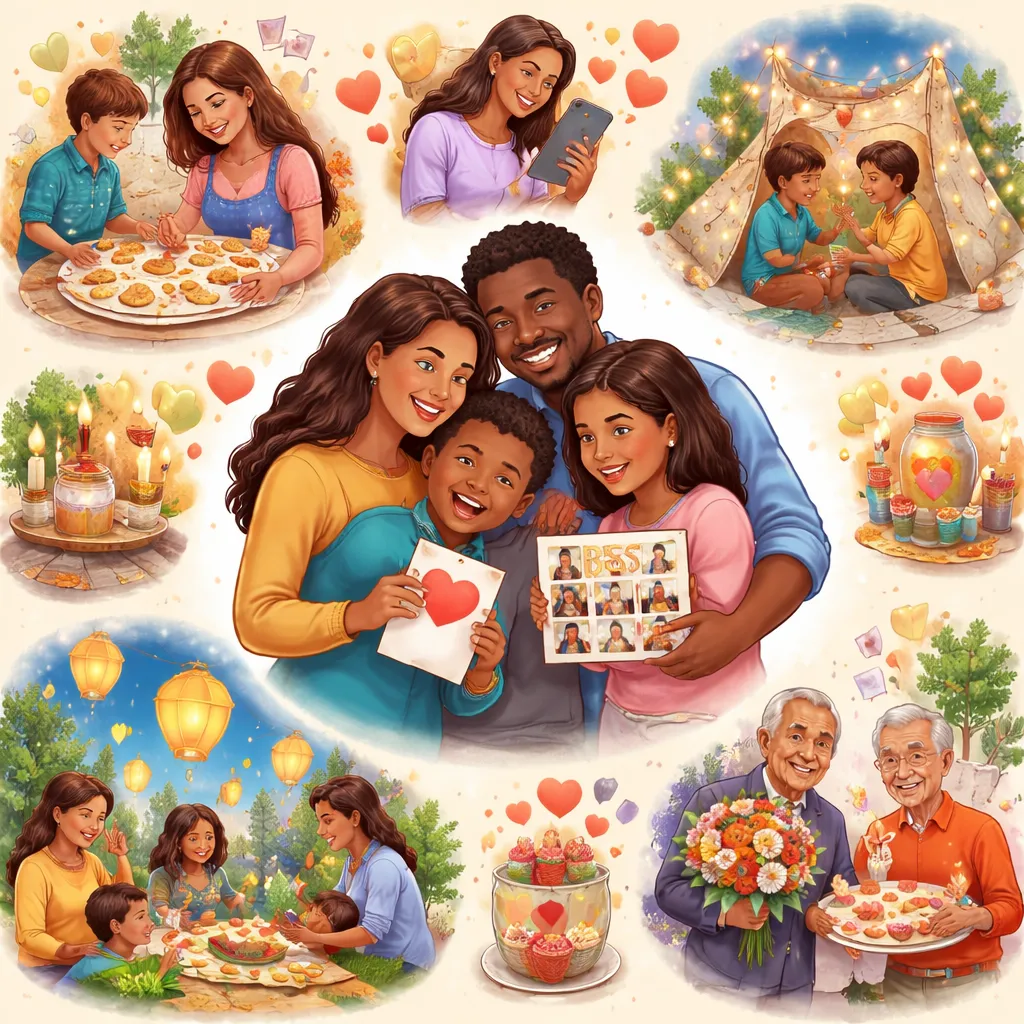

What Is This Situation? Love is the most important feeling. Children know it in their hearts. They feel it when you hug them. They feel it when you read them a story. But words make love visible. Words let children hear that they are loved.
How to say I love you in different ways in English gives children and parents a rich vocabulary for this most important message. Instead of only one phrase, you have many. Each phrase expresses love in a slightly different way. Each one adds depth to the connection.
This situation happens every day. At breakfast, at bedtime, when saying goodbye, when reuniting. Love is not just for special occasions. It is for ordinary moments. The words of love belong in daily life.
These phrases are warm and varied. Some are direct. Some are playful. Some notice something specific about the child. With these words, your child learns that love has many expressions.
Key English Phrases for This Situation Use phrases that are direct. "I love you" is the classic. "I love you so much" adds emphasis. "I love you more than anything" is expansive.
Use phrases that notice something specific. "I love how you help others" notices character. "I love your smile" notices joy. "I love the way you laugh" notices sound.
Use phrases that express pride. "I am so proud of you" shares pride. "You make me so happy" shares joy. "I am lucky to be your parent" shares gratitude.
Use phrases that offer comfort. "I am here for you" offers presence. "I love you no matter what" offers unconditional love. "You are safe with me" offers security.
Use phrases that are playful. "I love you to the moon and back" is classic. "You are my sunshine" is sweet. "I love you more than chocolate" is fun.
Simple Conversations for Kids Dialogue 1: Morning Greeting Parent: "Good morning, my love." Child: "Good morning, Mama." Parent: "I love waking up to your smile." Child: "I love your smile too." Parent: "You make my mornings happy."
This conversation starts the day with love. The parent uses a specific phrase. The child returns the sentiment. The day begins with connection.
Dialogue 2: After a Kind Act Child helps a friend pick up toys. Parent: "I saw you help your friend. I love how kind you are." Child: "He needed help." Parent: "You noticed that. That is a special thing about you. I love that about you." Child: "I love you too, Mama."
This conversation ties love to a specific action. The child learns that love notices kindness. The child hears what makes them special. The love is connected to who they are.
Dialogue 3: Bedtime Parent: "Time for bed, my sweet one." Child: "Read me a story?" Parent: "Of course. I love our bedtime stories." Child: "I love them too." Parent: "I love you more than all the stars in the sky." Child: "I love you more than all the fish in the sea." Parent: "That is a lot. Goodnight, I love you."
This conversation ends the day with love. The parent uses a playful comparison. The child returns with their own. The love is shared. The day ends warmly.
Vocabulary You Should Know Love is a deep feeling of care. You can say "I love you." This is the most important word.
Proud means feeling good about someone's actions. You can say "I am proud of you." This word shares admiration.
Kind means caring about others. You can say "I love your kind heart." This word names a quality.
Happy means feeling joy. You can say "You make me happy." This word shares the feeling your child brings.
Lucky means fortunate. You can say "I am lucky to have you." This word expresses gratitude.
Special means unique and important. You can say "You are so special to me." This word tells your child they matter.
How to Use These Phrases Naturally Use a warm and genuine tone. Love words need to feel real. Look at your child. Smile. Let them see that you mean what you say.
Say the phrases often. Love cannot be said too much. Every day, many times. Your child needs to hear it. The words become part of their inner voice.
Use different phrases for different moments. "I love your laugh" when they giggle. "I love how you helped" when they are kind. Matching the phrase to the moment makes it real.
Let your child hear you say love words to others. "I love you, Grandma." Your child learns that love is for all family members. They learn to say it too.
Receive love words graciously. When your child says "I love you," say it back. "I love you too." Receiving teaches giving.
Common Mistakes to Avoid One mistake is saying love only when things are perfect. Love is for all moments. When they make mistakes, say "I love you no matter what." Love in hard moments teaches unconditional love.
Another mistake is using love as a reward. "I will love you if you behave" is conditional. Love should not be tied to behavior. Love is constant.
Some parents feel love is implied. They think their child knows. Children need to hear it. Say it. Often. The words matter.
Avoid using love to fix problems. If your child is upset, "I love you" is good, but also listen. Love includes listening.
Tips for Parents and Practice Ideas Start a love journal. Each day, write one thing you love about your child. Read it together. "I love how you share." The journal becomes a collection of love.
Create a love phrase of the day. Pick one phrase. Use it throughout the day. "You are my sunshine." Repeat it. Your child learns the phrase.
Use love notes. Leave a note in a lunchbox. "I love you." Your child finds it. The words appear in unexpected places.
Sing love songs. "You Are My Sunshine" is a classic. Make up your own. Music carries love words.
Practice saying love in different ways. Each morning, use a new phrase. "I love your smile." "I love your laugh." "I love your kindness." Variety keeps the words fresh.
Fun Practice Activities Make a love jar. Write different love phrases on slips of paper. "I love you to the moon." "I love your hugs." Pull one out each day. Say it to your child.
Create a love tree. Draw a tree. Each leaf has a love phrase. Your child points to a leaf. You say the phrase. The tree grows with more phrases.
Play the love game. You say "I love you because..." and finish the sentence. Your child does the same. "I love you because you play with me." The game builds connection.
Make a love book. Write "I love..." on each page. Your child draws pictures. "I love Mama." "I love playing." The book is a collection of love.
Sing a love song together. Make up verses. "I love you in the morning. I love you at night. I love you all day long." Music makes the words stick.
How to say I love you in different ways in English gives your child a rich language of affection. They learn that love can be direct. It can be playful. It can notice something special. Each phrase is a different way to say the same thing: you matter. You are loved. When children hear these words, they carry them inside. They learn to say them back. They learn to say them to others. And one day, they will say them to their own children. That is the power of love words. They grow. They spread. They last forever.