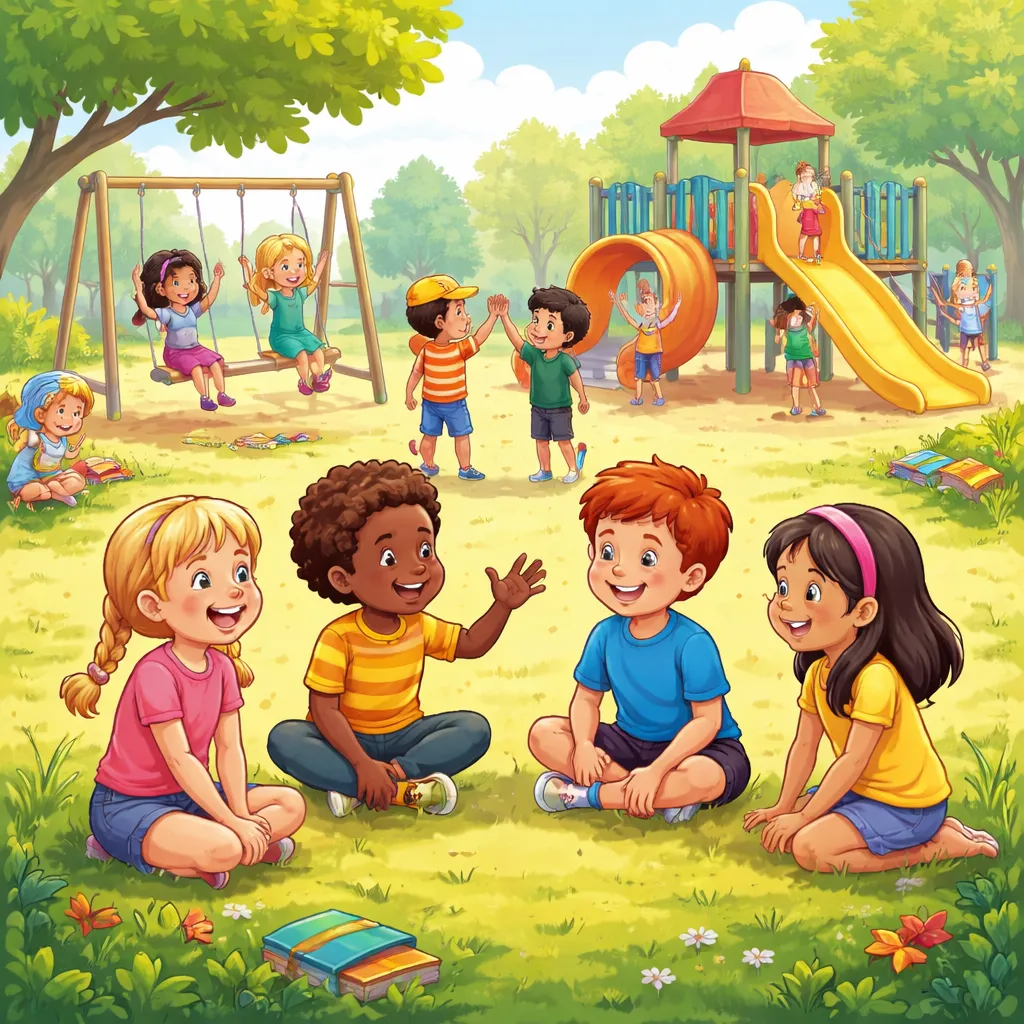

What Is This Situation? The playground is a world of movement and laughter. Swings go up and down. Children run from the slide to the sandbox. It is a place where kids meet, share space, and play together. For young children, it is their first social stage.
This situation happens at parks, schoolyards, or backyard playsets. It is a time when children naturally want to connect with others. They see someone on the slide. They want to join a game. They need words to make that happen.
Using English at the playground helps children speak in real moments. They are not repeating words from a book. They are asking to play. They are taking turns. They are solving little problems with friends.
These conversations are short and practical. Children learn to speak up, listen, and respond. The playground becomes a safe place to practice new words. Every swing and climb offers a chance to communicate.
Key English Phrases for This Situation Start with phrases for joining in. “Can I play with you?” is a simple question. It is direct and polite. Children use it to enter a game or activity. Another useful phrase is “Can I have a turn?” This helps them wait and share.
Use phrases for making friends. “What is your name?” opens a conversation. “My name is Leo” helps them introduce themselves. These simple exchanges feel big to a young child. They are the first steps in social connection.
Use phrases for playing together. “Let us go down the slide” invites shared fun. “You push me on the swing?” asks for help in a friendly way. These phrases turn individual play into cooperative play.
Use phrases for being kind. “Are you okay?” shows care when someone falls. “Good job” celebrates a friend’s success. These words build positive relationships. They teach empathy alongside language.
Use phrases for asking for help. “Can you help me?” is a safe way to seek support. “I need a push” is clear and specific. Children learn to express their needs without frustration.
Simple Conversations for Kids Dialogue 1: Asking to Join Child A: “Can I play with you?” Child B: “Yes. Let us go on the slide.” Child A: “Okay. I go first?” Child B: “Yes. Then my turn.”
This conversation is short and clear. The first child asks politely. The second child welcomes them. They agree on how to play. This teaches turn-taking in both words and actions.
Dialogue 2: Sharing the Swing Child A: “Can I have a turn on the swing?” Child B: “I am swinging now.” Child A: “Okay. I wait.” Child B: “My turn is done. Your turn.”
Here, the children practice patience and fairness. The first child makes a request. The second child sets a boundary. They reach a simple agreement. This builds social skills alongside language.
Dialogue 3: Helping a Friend Child A falls off the ladder. Child B: “Are you okay?” Child A: “My knee hurts.” Child B: “I get your mom.” Child A: “Thank you.”
This dialogue shows kindness. The child checks on their friend. They offer help. The child says thank you. These are high-frequency phrases for real moments of care.
Vocabulary You Should Know Slide is the tall, smooth ramp. You go down it. You can say “Let us go down the slide.” This word is both a noun and a verb. Children use it often at the playground.
Swing is the seat hanging from chains. You sit and move back and forth. You can say “Push me on the swing.” This is a favorite activity for many children.
Turn means your chance to use something. You can say “It is my turn now.” This word helps children share and wait. It is essential for playground peace.
Friend is someone you like to play with. You can say “You are my friend.” This word builds connection. Children feel proud to call someone a friend.
Climb means to go up using your hands and feet. You can say “I can climb the ladder.” This action word matches what children do at the playground.
Safe means not hurt. You can say “We play safe.” This word helps children understand rules. It also gives them language to express care.
How to Use These Phrases Naturally Use a friendly and open tone. Your voice should invite connection. When your child says “Can I play?” say it with warmth. A kind tone helps other children feel welcome to respond.
Timing matters. Say phrases when children are near each other. If your child wants to join a game, speak before they run in. Help them use words first. This prevents frustration.
Let your child hear you use these phrases too. Say “Can my child play with you?” to another parent. Your child sees that adults use the same polite words. This reinforces the language.
Practice phrases before you go to the playground. Talk about what you will say. “When we get there, you can ask ‘Can I play?’” This preparation builds confidence.
Do not push your child to speak. Some children need time to watch. They will speak when they feel ready. Your calm support gives them space to try.
Common Mistakes to Avoid One mistake is speaking for your child too much. It is natural to want to help. But children need to try on their own. Give them a moment to speak. Only step in if they look unsure.
Another mistake is using long sentences. A child under pressure cannot remember many words. Keep it simple. “My turn” is easier than “May I please have a turn on the swing?” Simplicity helps success.
Some children use direct translations from their home language. They might say “I go now” instead of “Can I go now?” Gently model the correct form. Say “Can I go now?” as you repeat their idea.
Avoid negative corrections on the playground. Do not say “No, say it the right way.” Instead, repeat the phrase correctly in a friendly tone. “Oh, you want to ask ‘Can I have a turn?’” This keeps the mood positive.
Tips for Parents and Practice Ideas Play together at home first. Use stuffed animals to practice playground talk. Have one toy ask “Can I play?” and another answer. This makes the phrases familiar before the real playground.
Praise your child when they use words. Say “I saw you ask to play. That was so kind.” Specific praise helps them know what they did well. It encourages them to try again.
Read books about playgrounds. Many children’s books show kids swinging, sliding, and making friends. Point to the pictures and use the same phrases. “See, she says ‘Can I have a turn?’”
Be present but not too close. Stay where your child can see you. But let them try conversations on their own. Your presence gives safety. Your distance gives independence.
Talk about the playground after you leave. Say “You asked to play with the girl on the slide. That was brave.” Reviewing the day helps language sink in. It also builds happy memories.
Fun Practice Activities Role-play playground scenes at home. You pretend to be a child on a swing. Your child pretends to ask for a turn. Then switch roles. This playful practice lowers pressure.
Create a playground picture card game. Draw or print pictures of a slide, swing, sandbox, and friends. Your child picks a card and says a phrase. “I want to go on the swing.” This connects words to playground items.
Sing a playground song. Make up simple lyrics. “At the playground, we say ‘Can I play?’ At the playground, we say ‘My turn, please.’” Music helps memory and makes practice fun.
Use dolls or action figures. Set up a small playground scene. Let your child make the toys talk. “Hello. Let us play together.” This gives them control over the conversation in a safe way.
Go to the playground with one friend you know. Familiar friends make language easier. Your child already feels comfortable. They can practice new phrases with someone they trust.
The playground offers more than fresh air and exercise. It offers a stage where children learn to connect. With a few simple English phrases, your child can step into play with confidence. They learn to ask, share, and be kind. Each visit becomes a small lesson in friendship and language. Over time, these moments build not just vocabulary, but the courage to reach out and say “Can I play with you?”