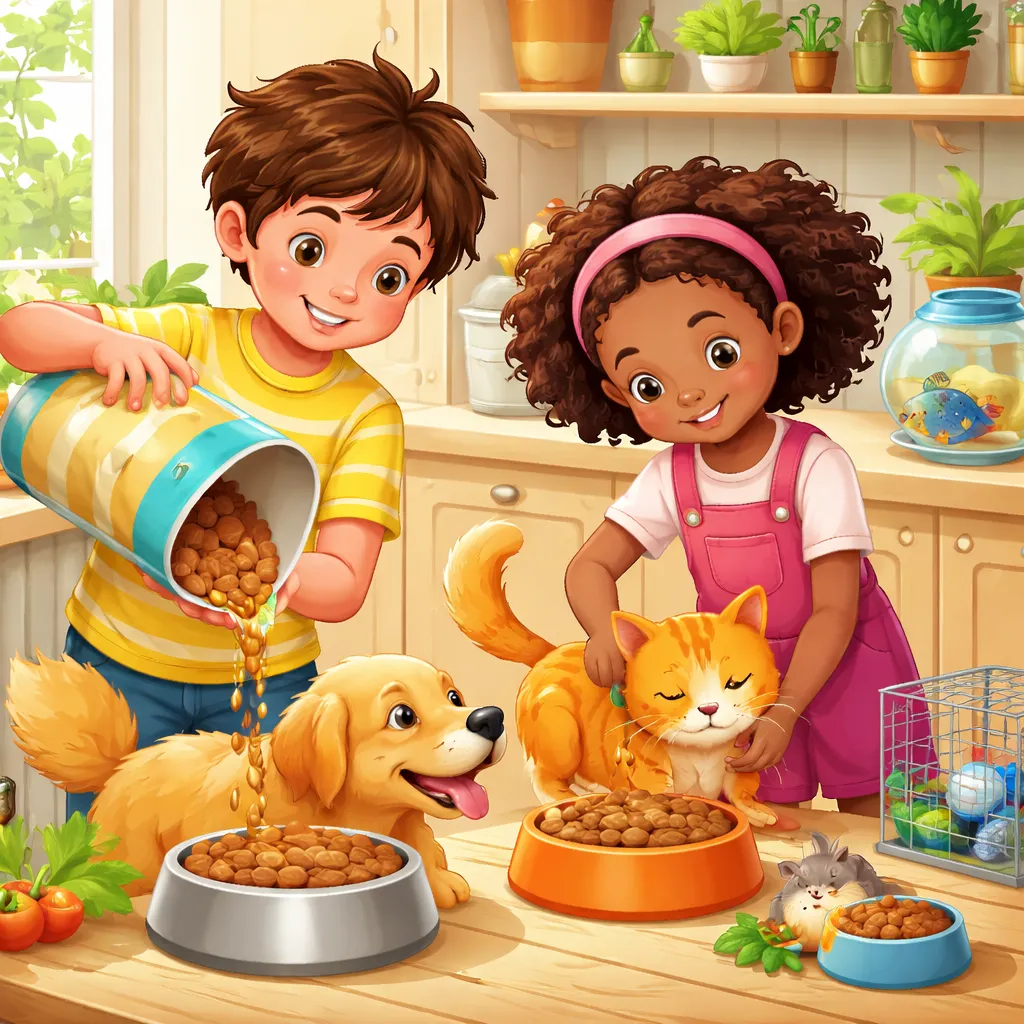

What Is This Situation? Many families have pets. A dog waits by the bowl. A cat meows at feeding time. A hamster looks up when you open the food. Pets rely on us. Feeding them is a daily act of care.
English sentences for feeding pets give children the words to participate in this responsibility. They learn the names of pet food. They learn the steps of feeding. They learn to call the pet. The words turn a chore into a time of connection.
This situation happens at home, every day, often twice a day. It happens in the kitchen where pet food is stored. It happens by the pet's bowl. It is a routine that happens at predictable times.
These phrases are simple and loving. They give directions. They call the pet. They praise the pet and the child. With these words, your child learns to care for another living being and to talk about it.
Key English Phrases for This Situation Use phrases for preparing food. "It is time to feed the dog" announces the task. "Let us get the food" starts the process. "We need the dog bowl" names the equipment.
Use phrases for measuring. "Scoop the food" gives the action. "One scoop for the cat" tells the amount. "This is the right amount" confirms.
Use phrases for calling the pet. "Here, kitty" calls a cat. "Come, doggy" calls a dog. "Time to eat" signals mealtime to the pet.
Use phrases for placing the food. "Put the bowl down" gives the direction. "The food is ready" tells the pet. "Eat your breakfast" encourages the pet.
Use phrases for after. "Good dog" praises the pet. "You fed the cat all by yourself" praises the child. "Let us wash the bowl" teaches the complete routine.
Simple Conversations for Kids Dialogue 1: Feeding the Dog Parent: "It is time to feed Max. Do you want to help?" Child: "Yes. I want to feed Max." Parent: "Get his bowl. Now scoop the food." Child scoops food. Parent: "Good. One scoop. Now call Max." Child: "Max! Come eat!" Dog comes running. Child: "Here is your food, Max." Parent: "Max is eating. Good job feeding him."
This conversation walks through each step. The child scoops, calls, and places the food. The parent guides and praises. The dog eats. The child feels helpful.
Dialogue 2: Feeding the Fish Child: "It is time to feed the fish." Parent: "Yes. Do you remember how much food?" Child: "A little pinch." Parent: "That is right. Fish get a little pinch." Child takes a pinch of food. Sprinkles it in the tank. Child: "Here you go, fish." Parent: "They are eating. You gave them the right amount. Good job."
This conversation shows a child taking the lead. The child remembers the amount. The child does the feeding. The parent confirms and praises. The fish are fed.
Dialogue 3: Feeding the Cat Child: "Where is the cat food?" Parent: "It is in the cupboard. The blue bag." Child gets food. "I need the bowl." Parent: "The bowl is by the fridge." Child gets bowl. Child: "One scoop?" Parent: "Yes. One scoop." Child scoops. Calls the cat. "Here, kitty. Time to eat." Cat comes. Child: "There you go." Parent: "The cat is happy. You did a good job."
This conversation shows a child managing the whole process. The child asks where items are. The child follows directions. The child calls the pet. The child completes the task.
Vocabulary You Should Know Feed means to give food to a pet. You can say "It is time to feed the dog." This is the main action word.
Bowl is the dish the pet eats from. You can say "Put the food in the bowl." This word names the container.
Scoop is the tool for measuring food. You can say "Use the scoop for the food." This word names the tool and the action.
Food is what the pet eats. You can say "The dog needs his food." This word names what you are giving.
Cat is a furry pet that meows. You can say "Feed the cat." This word names a common pet.
Dog is a furry pet that barks. You can say "Time to feed the dog." This word names another common pet.
How to Use These Phrases Naturally Use a kind and steady tone. Feeding pets is a calm activity. Your voice should match. Not too excited, not too serious. A steady tone helps the routine feel normal.
Say the phrases at the same time each day. Pets like routine. Children learn from routine. Feeding at the same times makes the words predictable.
Let your child do as much as possible. They can scoop. They can carry the bowl. They can call the pet. Doing builds confidence.
Use the pet's name. "Max" is more personal than "the dog." Using the pet's name teaches respect for the animal as an individual.
Praise both the child and the pet. "Good dog" and "Good job feeding him" together. Your child learns that caring for others is valued.
Common Mistakes to Avoid One mistake is giving the pet too much food. Teach the right amount. "One scoop" is clear. Too much food is not healthy. The right amount is part of care.
Another mistake is forgetting to wash the bowl. The routine is not complete until the bowl is clean. Teach the full cycle: feed, eat, wash.
Some parents do the feeding themselves because it is faster. Let your child do it. The time is worth it. Responsibility grows with practice.
Avoid letting the pet eat from the child's hands. Teach "Put the food in the bowl." Bowls are for pet food. Hands are not.
Tips for Parents and Practice Ideas Make feeding part of the daily routine. The same time each day. Your child knows when it is time. The routine becomes habit.
Let your child choose the pet's bowl. A special bowl makes the job feel important. The child takes pride in using it.
Teach the names of different pet foods. "Dog food" and "cat food" are different. "Fish flakes" is another. Specific names build vocabulary.
Talk about the pet's needs. "The dog is hungry. He needs his food." Connecting the action to the pet's need teaches empathy.
Let your child see you feed the pet too. When you do it, use the same words. Consistency builds learning.
Fun Practice Activities Create a feeding chart. Draw pictures of the pet, the bowl, and the food. Your child checks off each step. The chart builds independence.
Play pet store. Use toy food and bowls. Your child pretends to feed a stuffed animal. Play makes the routine fun.
Make a feeding song. "Scoop the food, put it in the bowl. Call the dog, here is your food. Good dog, good dog, eat your food." Music makes the words easy.
Use a measuring cup for practice. Your child practices scooping the right amount. Measuring builds math skills too.
Read books about pets. Many children's books show characters feeding pets. Read them together. Talk about what the characters do.
English sentences for feeding pets turn a daily responsibility into a language lesson. Your child learns the words for food and bowls. They learn to call the pet. They learn to follow steps. And they learn that caring for another living thing is important. Feeding a pet is not just about food. It is about responsibility. It is about kindness. It is about being needed. And with your guidance and these simple words, your child learns all of that, one scoop at a time.