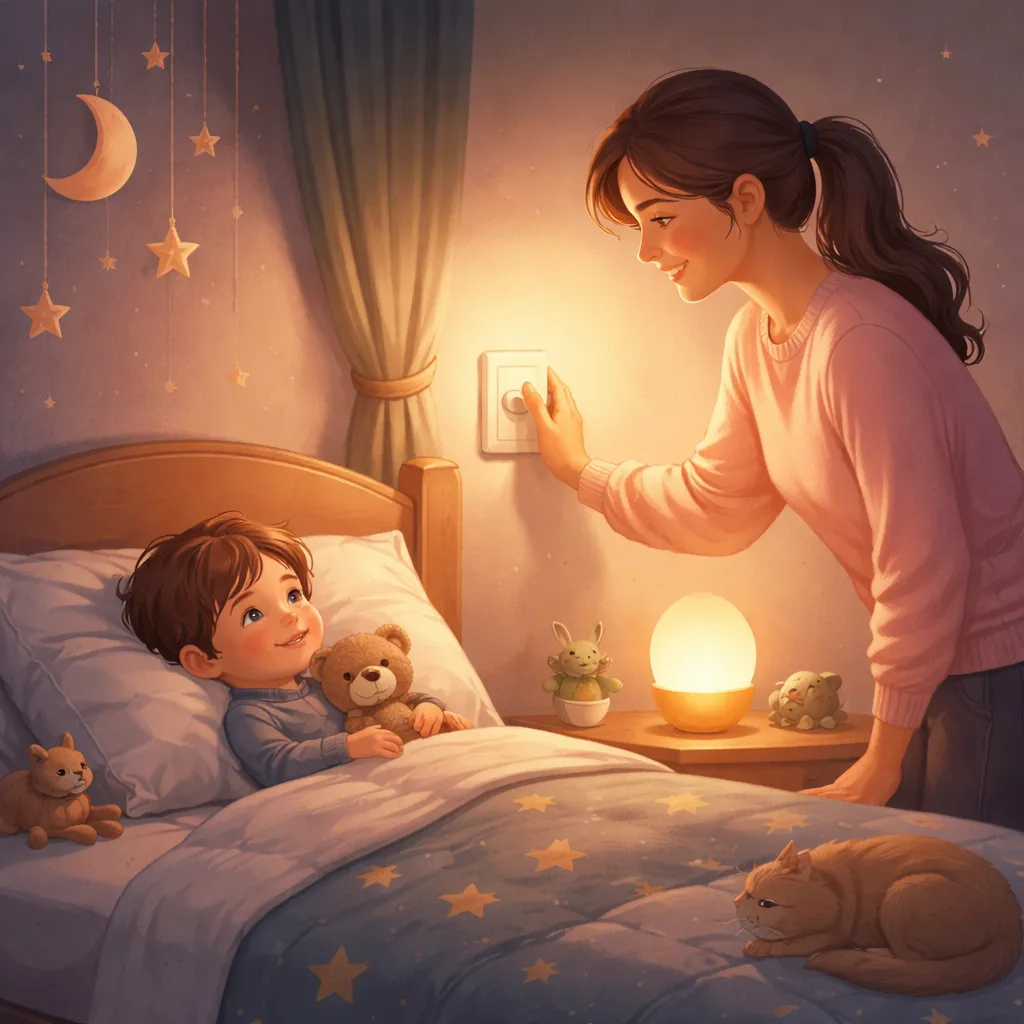

What Is This Situation? Night comes. The sun goes down. The house gets quiet. Lights that were on during the day need to go off. The bedroom light goes out. The hallway light dims. The house settles into darkness for sleep.
English phrases for turning off lights at night give children words for this transition. They learn that lights off means sleep is coming. They learn to ask for light if they need it. They learn that dark can be safe. The words help them feel in control.
This situation happens every night, at bedtime. It happens in bedrooms, hallways, and living rooms. It is part of the wind-down routine. The same words, the same actions, night after night.
These phrases are soft and reassuring. They name the action. They explain why. They offer comfort. With these words, your child learns that lights off is not an ending. It is the beginning of rest.
Key English Phrases for This Situation Use phrases for starting. "It is time to turn off the lights" announces the transition. "Let us turn the lights off now" invites cooperation. "Say goodnight to the light" makes it playful.
Use phrases for explaining. "The light goes off when it is time for sleep" teaches the routine. "Dark helps our bodies rest" explains the reason. "The sun is sleeping too" connects to nature.
Use phrases for comfort. "The nightlight stays on" offers reassurance. "You are safe in the dark" builds confidence. "I am here" offers presence.
Use phrases for asking. "Can we turn off the light now?" invites participation. "Are you ready for the light to go off?" respects their readiness. "Do you want the nightlight?" offers a choice.
Use phrases for the moment. "Ready? Off goes the light." "One, two, three... off." "Goodnight, light." These words mark the moment.
Simple Conversations for Kids Dialogue 1: Turning Off the Bedroom Light Parent: "It is time for sleep. Let us turn off the big light." Child: "I am a little scared of the dark." Parent: "I understand. The nightlight will stay on. See? It makes the room cozy." Child: "Okay." Parent: "Ready? One, two, three... off." Light goes off. Parent: "There. The nightlight is on. You are safe. I am right here."
This conversation addresses fear. The parent validates the feeling. The parent offers comfort. The parent counts down. The light goes off. The child feels safe.
Dialogue 2: Child Turns Off the Light Parent: "Do you want to turn off the light tonight?" Child: "Yes. I can do it." Parent: "Okay. Say goodnight to the light." Child: "Goodnight, light." Child reaches up and turns off the light. Parent: "You turned it off all by yourself. Good job. Now time for sleep."
This conversation gives the child control. The child does the action. The parent adds playfulness with "goodnight." The child feels capable. The transition is positive.
Dialogue 3: Hallway Light Parent: "We are going to turn off the hallway light now." Child: "But it is dark in the hallway." Parent: "We leave the bathroom light on. See? It makes a little light in the hallway." Child: "Okay." Parent: "Goodnight, hallway light. See you in the morning." Parent turns off light. Child: "See you in the morning."
This conversation addresses a light outside the bedroom. The parent offers an alternative light source. The parent uses a playful goodbye. The child repeats it. The transition is calm.
Vocabulary You Should Know Light is what helps you see in the dark. You can say "Turn off the light." This word names what you are controlling.
Off means not on. You can say "The light is off." This word describes the state for sleep.
On means working. You can say "The nightlight is on." This word describes the light that stays.
Nightlight is a small light that stays on. You can say "The nightlight keeps the room safe." This word offers comfort.
Dark means no light. You can say "It is dark now." This word describes what happens when lights go off.
Switch is what you press to turn lights on and off. You can say "Flip the switch." This word names the action.
How to Use These Phrases Naturally Use a soft and calm tone. Bedtime should be peaceful. Your voice should match. Not loud, not rushed. Soft words for the soft end of day.
Say the phrases at the same time each night. Routine builds security. Your child knows that lights off comes after story, after songs. The pattern is predictable.
Give your child control when possible. Let them turn off the light. Let them choose if the nightlight stays on. Control reduces fear.
Explain what is happening. "Now we turn off the big light. The nightlight stays on." Knowing what to expect reduces anxiety.
Use the phrases consistently. The same words each night. "Ready? Off goes the light." Consistency builds comfort.
Common Mistakes to Avoid One mistake is turning off lights abruptly. "Click" and the room is dark. That can be scary. Announce it. Count down. Let your child be ready.
Another mistake is dismissing fear. "There is nothing to be afraid of" does not help. The fear is real. Validate it. "I know the dark can feel scary. But you are safe." Then offer comfort.
Some parents turn off all lights. A nightlight is comforting for many children. A small light gives them control over the darkness.
Avoid rushing. Lights off is part of the routine. Do not skip it because you are tired. The routine matters. The words matter.
Tips for Parents and Practice Ideas Use a nightlight. A small, soft light gives comfort. Your child can see the room. They can see their toys. The dark is not total.
Let your child choose the nightlight. A fun shape or color makes it special. The choice gives ownership.
Practice during the day. "Let us practice turning the light off and on." Your child learns the switch. They learn they can turn the light on if they need to.
Use a dimmer switch if you have one. Slowly dimming the light prepares the room for darkness. The transition is gradual.
Read books about the dark. Many children's books show that dark is safe. Read them during the day. The stories build comfort.
Fun Practice Activities Play the light game. During the day, turn lights on and off. "On goes the light. Off goes the light." Your child learns the words. They learn the action.
Make a light switch song. "On, on, on goes the light. Off, off, off goes the light. Time for sleep, time for rest. Off goes the light, goodnight." Music makes the routine fun.
Create a goodnight ritual for lights. Say goodnight to each light. "Goodnight, bedroom light. Goodnight, hallway light. Goodnight, kitchen light." Your child says goodnight too.
Use a flashlight. Your child has their own light. They can turn it on if they wake up. The flashlight gives them control.
Draw a light chart. Draw your house. Mark where the lights are. Your child puts a sticker on each light when it is turned off at night. The chart builds the routine.
English phrases for turning off lights at night turn a simple action into a moment of comfort and language learning. Your child learns the words for light and dark. They learn to say goodnight to the day. They learn that darkness is not scary when you have the right words and a gentle presence. And when the light goes off and the room is dark, they know you are there. They know the nightlight is on. They know that morning will come, and the lights will go on again. That knowledge is comfort. The words are the bridge from day to night, from light to dark, from wakefulness to rest.