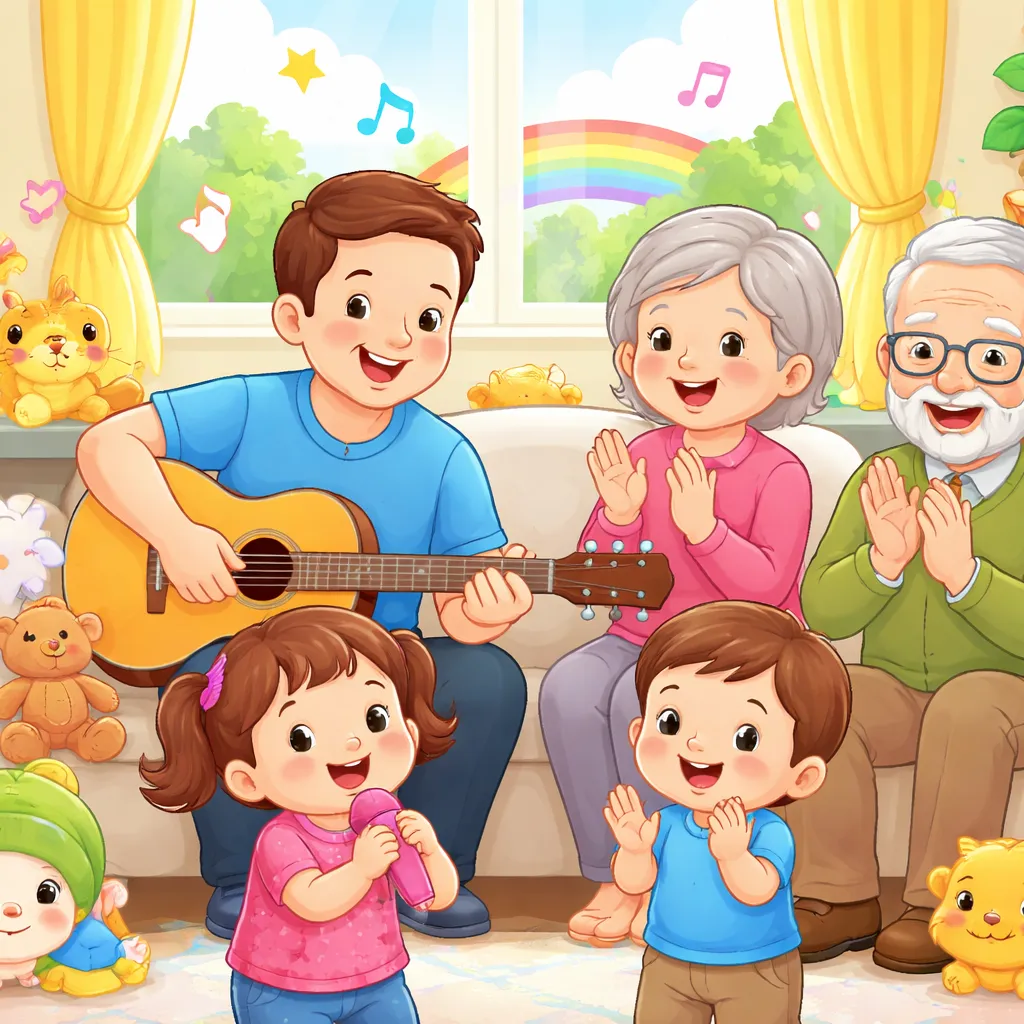

What Is This Situation? Family is at the center of a child's world. There is mama who gives hugs. There is papa who plays games. There are siblings, grandparents, and sometimes pets who are family too. Children love to talk about the people they love.
Nursery rhymes about family members lyrics give children a way to sing about these special people. A simple song might say "I love my mama" or "Where is daddy?" The music makes the words easy to remember. The melody makes learning feel like play.
This learning happens during morning cuddles, car rides, or playtime with stuffed animals. A child sings about family while drawing a picture of their family. They hum the tune while waiting for a grandparent to visit. Music brings family words into daily life.
These rhymes use repetition and simple phrases. Children hear the same words again and again. "Mama," "papa," "brother," "sister." They learn these words without pressure. They learn them through joy.
Key English Phrases for This Situation Use phrases that introduce the rhyme. "Let us sing a song about family" sets the theme. "This song is about a mama and her baby" connects the lyrics to real life. "Listen to the words" focuses attention.
Use phrases while singing. "Sing with me" invites participation. "Where is daddy in this song?" keeps engagement. "Can you point to mama when we sing her name?" adds movement.
Use phrases after singing. "Who did we sing about?" reviews the family words. "You sang so well" gives encouragement. "Let us sing it again" builds repetition.
Use phrases for connecting to real family. "We sang about mama. Here is your mama." This connects the song to the child's own life. "Grandma is coming to visit. Let us sing the grandma song."
Use phrases for extending the song. "What other family members can we add?" invites creativity. "Can you make up a verse about our family?" builds language skills.
Simple Conversations for Kids Dialogue 1: Before Singing Parent: "Do you want to sing the family song?" Child: "Yes. I like that song." Parent: "Which family member do you want to sing about first?" Child: "Mama." Parent: "Okay. Let us sing about mama."
This conversation gives the child choice. The parent follows the child's interest. The singing becomes a shared activity that the child helps direct.
Dialogue 2: While Singing Parent sings: "I love my mama, yes I do." Parent: "Who do you love?" Child: "Mama." Parent: "Yes. I love my mama too. Let us sing about papa now." Child: "Okay."
Here, the parent pauses the song to ask a question. The child answers simply. The parent validates the answer and continues. The conversation flows naturally with the music.
Dialogue 3: After Singing Parent: "We sang about mama, papa, and baby." Child: "And grandma." Parent: "Yes, we sang about grandma too. You remembered." Child: "Sing again." Parent: "Okay. One more time."
This conversation reviews what was sung. The child adds a detail. The parent celebrates the child's memory. The child asks for more, showing engagement.
Vocabulary You Should Know Mama is another word for mother. You can say "I love my mama." This is often one of the first words children learn and sing.
Papa is another word for father. You can say "Papa reads me stories." Many nursery rhymes use this gentle word for dad.
Grandma is your mother's mother or father's mother. You can say "Grandma gives me cookies." This word appears in rhymes about visiting family.
Grandpa is your mother's father or father's father. You can say "Grandpa tells me jokes." Children love to sing about grandparents.
Brother is a boy who has the same parents as you. You can say "My brother plays with me." This word helps children name siblings.
Sister is a girl who has the same parents as you. You can say "My sister shares her toys." This word is common in rhymes about siblings.
How to Use These Phrases Naturally Use a warm and musical tone. Your voice does not need to be perfect. Enthusiasm matters more than accuracy. Sing with joy. Your child will join you.
Say the phrases while holding your child. Physical closeness makes singing feel safe. A child on your lap is more willing to sing. The words become associated with comfort.
Sing at predictable times. A morning family song can start the day. A bedtime song can end it. Routine helps children learn. They know what to expect.
Let your child hear you sing these songs even when you are not "teaching." Hum the tune while making breakfast. Sing a line while playing. The words become part of daily life.
Use the songs to introduce new family vocabulary. When you sing about grandma before a visit, your child connects the word to the person. The song prepares them for real interaction.
Common Mistakes to Avoid One mistake is singing too fast. Children need time to hear the words. Slow down. Let each word be clear. Speed makes the lyrics hard to understand.
Another mistake is focusing only on the tune. The lyrics are the learning. Make sure your child can hear the family words. Emphasize them gently as you sing.
Some parents worry about their singing voice. Children do not judge. They only care that you are singing with them. Your voice is their favorite voice.
Avoid making singing a performance. Do not ask your child to sing for others if they are shy. Let singing be private and safe. It will become public when your child is ready.
Tips for Parents and Practice Ideas Sing the same songs many times. Repetition is how children learn. They will begin to sing along. They will remember the family words without effort.
Use simple hand motions. Point to yourself for "mama." Point to your partner for "papa." Pat your chest for "I love you." Movements help memory and make singing active.
Create a family song book. Print the lyrics. Let your child draw pictures of each family member. Read and sing from the book together.
Sing during family gatherings. When grandparents visit, sing the grandparent song. Your child sees that the song connects to real people. This makes the words meaningful.
Record yourself singing. Play the recording in the car. Your child hears your voice and the family words. They can sing along without you there.
Fun Practice Activities Make finger puppets of family members. Draw faces on paper or use old gloves. Put on a puppet show while singing the family songs. Your child uses the puppets to act out the lyrics.
Create a family photo album with song lyrics. Put photos of mama, papa, grandma, and grandpa. Write the song lyrics next to each photo. Sing as you look at the pictures.
Play a family guessing game. Hum a family rhyme. Your child guesses which family member the song is about. Then switch. Your child hums, and you guess.
Draw your family while singing. Give your child paper and crayons. Sing the family songs. Your child draws each family member as they are named in the song.
Make up new verses together. Start with a familiar tune. Add your own words. "I love my auntie, yes I do. I love my cousin, yes I do." Your child creates language while playing with the music.
Nursery rhymes about family members lyrics give children a joyful way to learn the words for the people they love most. Each song is a small celebration of family. Each verse builds vocabulary and connection. When you sing together, you are not just teaching English. You are building memories. You are showing your child that language lives in music, in laughter, and in the arms of the people who love them. Those words stay. Long after the song ends, the words "mama," "papa," and "I love you" remain in your child's heart and on their lips.