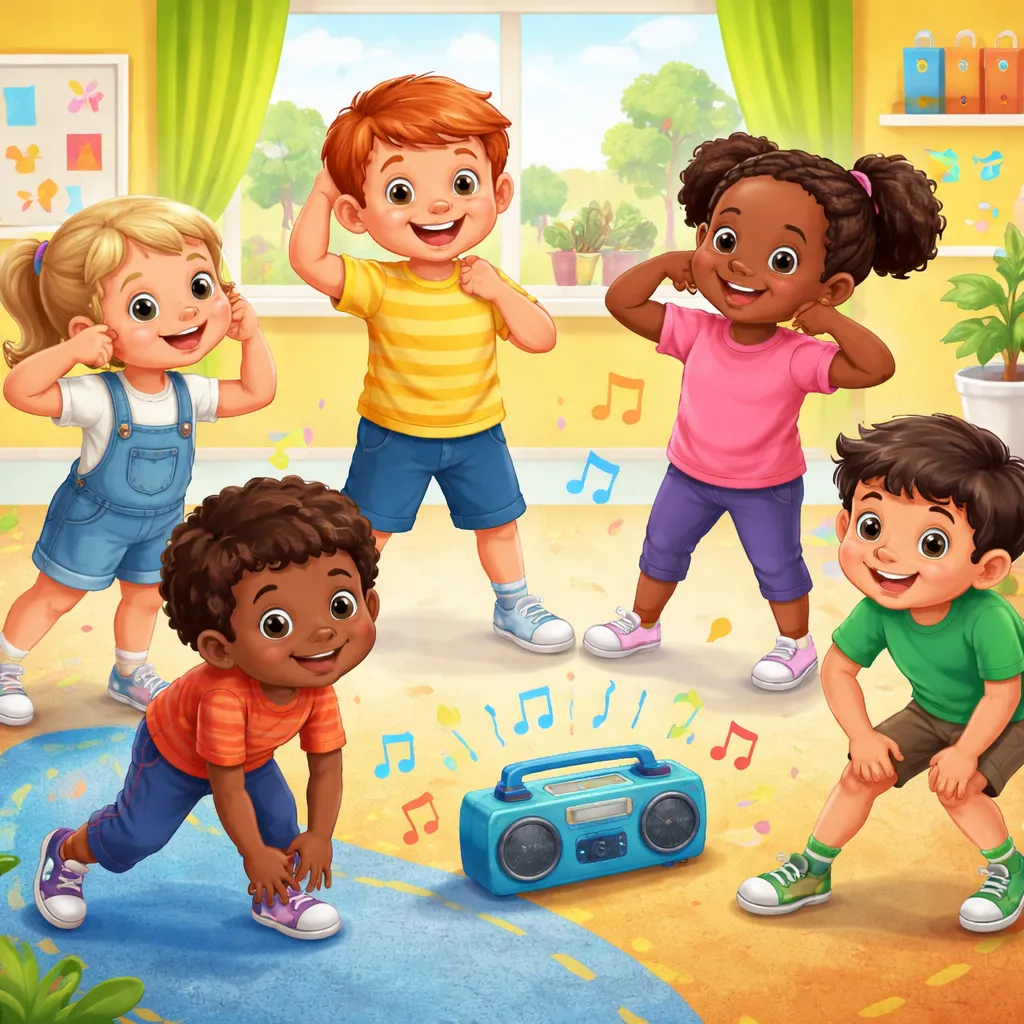

What Is This Situation? Children love to move. They wiggle their fingers. They stomp their feet. They point to their nose. Their bodies are always in motion. This natural movement is a perfect doorway to learning.
Parts of the body song lyrics and actions combine music with movement. A song says "head, shoulders, knees, and toes." Your child touches each part as they sing. The words and actions happen together. Learning becomes physical.
This learning happens during active play, circle time, or rainy afternoons inside. You can sing these songs standing up, sitting down, or lying on the floor. Any place with space to move works. The songs turn vocabulary into a game.
These songs use simple words. They repeat the same body parts many times. Children learn the words through hearing them and touching the parts. Music makes the words stick. Movement makes the learning fun.
Key English Phrases for This Situation Use phrases that introduce the song. "Let us sing a song about our bodies" sets the theme. "We are going to touch our heads" previews the actions. "Listen to the words and follow along" gives a gentle invitation.
Use phrases while singing. "Touch your head" directs the action. "Where are your shoulders?" checks understanding. "Let us go faster" adds excitement.
Use phrases for encouragement. "You found your nose. Good job" celebrates success. "You are moving so well" praises participation. "I like how you are singing" reinforces both language and engagement.
Use phrases for variation. "Let us sing it slow" changes the pace. "Now let us sing it fast" adds challenge. "Can you sing it without looking?" builds memory.
Use phrases for extension. "What other body parts do you know?" invites more vocabulary. "Let us make up our own verse" encourages creativity.
Simple Conversations for Kids Dialogue 1: Starting the Song Parent: "Do you want to sing the body song?" Child: "Yes. Head, shoulders..." Parent: "Head, shoulders, knees, and toes. Let us do it together." Child: "Ready." Parent: "Okay. Let us start."
This conversation begins with the child showing interest. The parent picks up the cue. They agree to sing together. The child feels ownership of the choice.
Dialogue 2: During the Song Parent sings: "Head, shoulders, knees, and toes, knees and toes." Parent: "Where are your knees?" Child touches knees. Parent: "Good. And your toes?" Child touches toes. Parent: "You found them. Let us keep singing."
Here, the parent pauses the song to check understanding. The child shows knowledge through action. The parent praises and continues. The learning is interactive and gentle.
Dialogue 3: After the Song Parent: "What body parts did we sing about?" Child: "Head, shoulders, knees, toes." Parent: "Yes. And what did we touch at the end?" Child: "Eyes, ears, mouth, nose." Parent: "You remembered all of them. Good singing and moving."
This conversation reviews what was learned. The parent asks simple questions. The child recalls the vocabulary. The parent gives specific praise for both singing and remembering.
Vocabulary You Should Know Head is the top part of your body. You can say "Touch your head." This is often the first body part children learn in songs.
Shoulders are the parts between your neck and arms. You can say "Shrug your shoulders." This word is fun to say and easy to act out.
Knees are the middle parts of your legs. You can say "Bend your knees." This word appears in many movement songs.
Toes are the ends of your feet. You can say "Wiggle your toes." Children love this word because it connects to tickling and movement.
Eyes are what you see with. You can say "Blink your eyes." This word is important for both language and body awareness.
Ears are what you hear with. You can say "Cover your ears." This word connects to listening, which is key for language learning.
How to Use These Phrases Naturally Use an energetic and happy tone. Body songs are active. Your voice should match the movement. Sing with enthusiasm. Your energy invites your child to join.
Say the phrases as you move together. Stand facing your child. Sing and do the actions. Your child watches you and copies. Modeling makes the learning clear.
Repeat the same song many times. Children love repetition. They will ask for the same song again and again. Each repetition deepens their memory of the words.
Vary the speed. Sing slowly so your child can learn the actions. Sing fast for fun and challenge. Speed changes keep the song interesting.
Let your child lead. When they know the song, let them call out the body parts. Let them set the speed. Following their lead builds confidence.
Common Mistakes to Avoid One mistake is singing too fast before your child knows the words. Start slowly. Let your child learn the sequence. Speed comes later.
Another mistake is focusing only on the lyrics and not the actions. The actions are the learning. They connect the word to the real body part. Do both together.
Some parents correct pointing. If your child touches their head for "shoulders," do not say "No." Gently guide their hand to the right place. Say "Shoulders are here. Let us try again."
Avoid sitting still for this song. The movement is essential. Stand up. Move. The physical activity helps memory and keeps your child engaged.
Tips for Parents and Practice Ideas Sing body songs during dressing time. When you put on a shirt, sing about arms. When you put on socks, sing about toes. Daily routines become song time.
Use body songs during bath time. Sing about washing body parts. "We wash our arms. We wash our toes." Water play makes the words memorable.
Sing before meals to get energy out. A quick body song helps your child settle before sitting at the table. Movement first, then calm.
Let your child teach someone else. When grandparents visit, your child can show them the body song. Teaching others builds confidence and reinforces learning.
Sing without music sometimes. Your voice is enough. Simple a cappella singing lets you control the speed. Your child hears your voice clearly.
Fun Practice Activities Play body part freeze dance. Play music. Your child dances. When the music stops, call out a body part. "Touch your nose." Your child freezes and touches that part. This combines listening, movement, and vocabulary.
Make body part cards. Draw pictures of a head, shoulders, knees, and toes. Lay them out. Your child picks a card and touches that part on their body. This connects pictures to real movement.
Create a body part puzzle. Draw an outline of a child. Cut out separate parts. Your child puts the puzzle together and names each part as they place it.
Sing with a stuffed animal. Your child makes their stuffed animal do the actions. The toy touches its head. The toy touches its shoulders. This adds playfulness to learning.
Go on a body part scavenger hunt. Call out a body part. Your child finds something in the room that same color as that part? No. They just touch the part. Silly variations keep the game fresh.
Parts of the body song lyrics and actions give children a joyful way to learn words for themselves. When a child sings "head, shoulders, knees, and toes," they are not just memorizing. They are connecting language to their own body. They are moving, laughing, and learning all at once. These songs become memories. Years later, your child will still know these words. They will still know the actions. And they will remember singing them with you. That is the power of music and movement together.