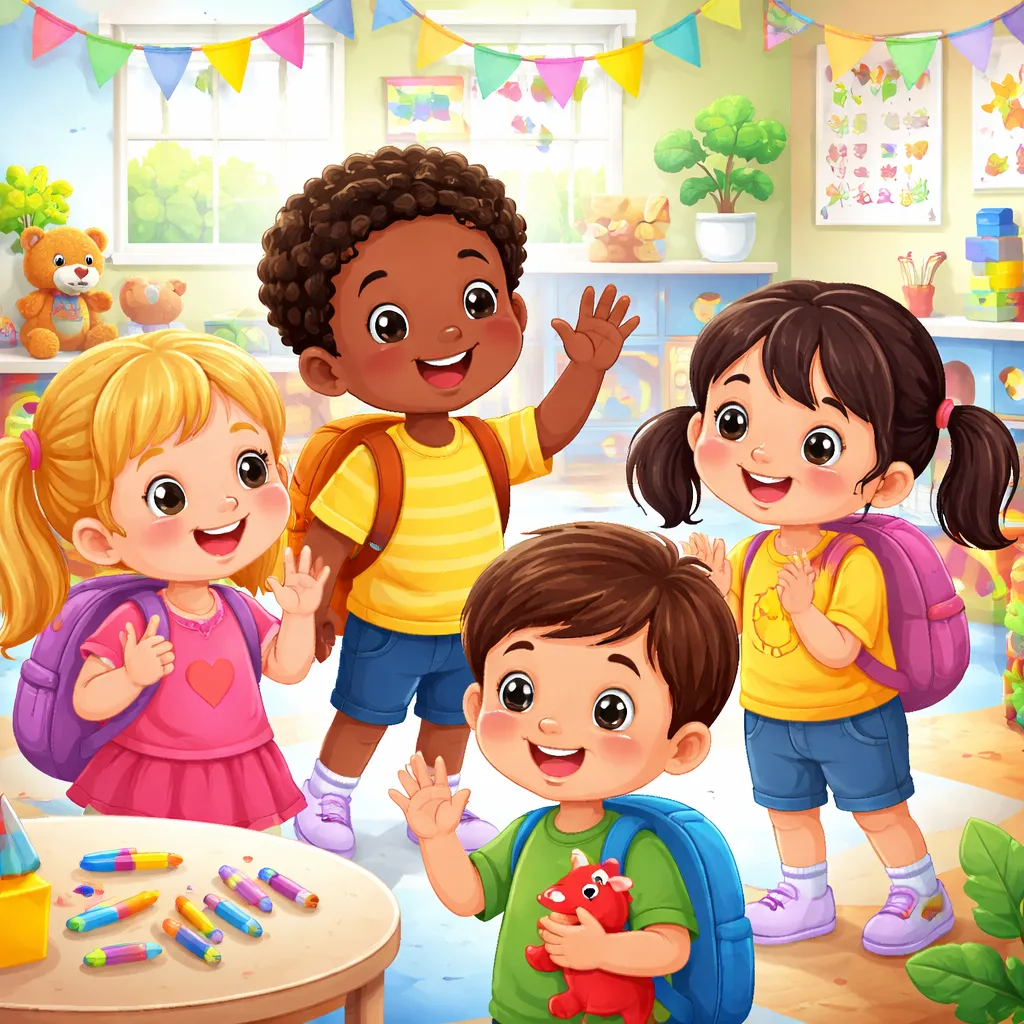

What Is This Situation? The first day of kindergarten is a big moment. Your child walks into a new classroom. There are new children. There is a new teacher. Everyone is looking at each other. The first words your child says can open the door to new friends.
How to introduce yourself in English for kindergarten gives children the words to start that first conversation. They learn to say their name. They learn to say how they feel. They learn to ask another child's name. These simple words build connections.
This situation happens on the first day of school. It happens at playdates. It happens at birthday parties. It happens whenever your child meets someone new. Knowing how to introduce themselves gives your child confidence in new situations.
These phrases are short and friendly. They include a greeting, a name, and sometimes a feeling. They teach children to speak clearly and make eye contact. With these words, your child can walk into any new situation ready to say hello.
Key English Phrases for This Situation Use phrases for greeting. "Hello" is the simplest start. "Hi" is friendly. "Good morning" is polite for early in the day.
Use phrases for stating their name. "My name is..." is clear. "I am..." is shorter. "I am called..." is another option.
Use phrases for sharing a feeling. "I am happy to be here" shows positivity. "I am a little nervous" is honest. "I am excited" shares enthusiasm.
Use phrases for asking about the other person. "What is your name?" invites response. "What is your favorite color?" starts conversation. "Do you want to play?" invites connection.
Use phrases for ending the introduction. "Nice to meet you" is polite. "Let us play together" opens activity. "See you later" closes the moment.
Simple Conversations for Kids Dialogue 1: Meeting a New Classmate Child: "Hello. My name is Emma. What is your name?" Other child: "My name is Leo." Child: "Nice to meet you, Leo. Do you want to play blocks?" Leo: "Yes. Let us play."
This conversation shows a complete introduction. The child says hello. The child states their name. The child asks the other's name. The child says nice to meet you. The child invites play. The friendship begins.
Dialogue 2: Introducing to the Teacher Teacher: "Welcome to kindergarten. What is your name?" Child: "My name is Sam." Teacher: "Hello, Sam. Are you excited for your first day?" Child: "Yes. I am happy to be here." Teacher: "That is wonderful. Let me show you where your cubby is."
This conversation shows a child introducing themselves to an adult. The child answers the teacher's question. The child shares a feeling. The teacher responds warmly. The first interaction is positive.
Dialogue 3: Shy Introduction Parent: "Do you want to tell the new friend your name?" Child looks at the other child. Parent: "You can say 'My name is Mia.'" Child: "My name is Mia." Other child: "I am Ben." Parent: "Now you know each other. Do you want to play?" Children nod and walk toward the toys.
This conversation shows a child who needs support. The parent prompts. The child repeats. The other child responds. The parent suggests play. The children connect through action.
Vocabulary You Should Know Name is what people call you. You can say "My name is..." This is the most important word for introducing yourself.
Hello is a greeting. You can say "Hello, my name is..." This word starts the conversation.
Friend is someone you like to play with. You can say "Will you be my friend?" This word names the goal of the introduction.
Play means to have fun together. You can say "Let us play." This word invites connection.
Nervous means a little scared but excited. You can say "I am nervous." This word is honest and relatable.
Happy means feeling good. You can say "I am happy to meet you." This word shares positive feeling.
How to Use These Phrases Naturally Use a friendly and warm tone. Your child learns from you. When you introduce yourself to someone, your child watches. Model the tone you want them to use.
Say the phrases at the right time. Do not interrupt play for a formal introduction. Wait for a natural pause. The moment should feel comfortable.
Let your child practice at home. Role-play meeting new people. You are the new friend. Your child practices the words. Practice builds confidence.
Encourage eye contact. When your child says their name, ask them to look at the person. Eye contact shows confidence. It helps the other person remember them.
Do not force introductions if your child is very shy. Start with a wave. Start with "hello." Small steps lead to full introductions. Pushing creates pressure.
Common Mistakes to Avoid One mistake is making introductions into a performance. "Show the teacher how you say your name" can feel like a test. Let introductions happen naturally. Trust your child's timing.
Another mistake is speaking for your child. If you always say "This is Emma," your child never learns to say it themselves. Give them space. Let them try.
Some parents correct the introduction in front of others. "Say 'My name is Emma,' not 'I'm Emma.'" Both are fine. Let your child use their words. Praise the effort.
Avoid comparing. "Your cousin speaks so clearly" creates pressure. Every child develops at their own pace. Your child's introduction is perfect for them.
Tips for Parents and Practice Ideas Practice at home with family. Your child introduces themselves to grandparents on video calls. "Hello, Grandma. My name is Leo." Familiar people are safe practice.
Use a name tag. Before kindergarten, let your child wear a name tag. They see their name. They learn to recognize it. They learn to say it.
Read books about the first day of school. Many books show children introducing themselves. Read them together. Talk about what the characters said.
Create an introduction card. Write "Hello, my name is ______" on a card. Your child fills in their name. They can show the card if they feel shy. The card helps until they are ready to speak.
Practice with stuffed animals. Your child introduces their toy. "Hello, my name is Teddy." Then your child introduces themselves to the toy. Play makes practice fun.
Fun Practice Activities Role-play introduction scenarios. You pretend to be a new friend at the playground. Your child practices. Then switch roles. Your child pretends to be the new friend. You introduce yourself.
Make a "getting to know you" book. Your child draws themselves. They write or trace "My name is..." They draw their favorite things. The book is something they can share when meeting new friends.
Sing an introduction song. "Hello, hello, what is your name? My name is Emma, nice to meet you." Music makes the words easy to remember.
Play the name game. Sit in a circle with family or toys. Each person says "My name is..." and a favorite thing. "My name is Leo. I like blocks." This builds the skill in a group setting.
Create a friendship bracelet. Your child makes a bracelet. They give it to a new friend after introducing themselves. The bracelet makes the moment special and memorable.
How to introduce yourself in English for kindergarten is one of the first social skills children learn. It is the key that opens the door to new friendships. With a simple "Hello, my name is," your child steps into the world of kindergarten. They are not just learning English. They are learning to connect. They are learning that their name matters. That they matter. And that every friendship begins with a few simple words. With your gentle practice and encouragement, your child will walk into that classroom ready to say "My name is" with confidence and pride.