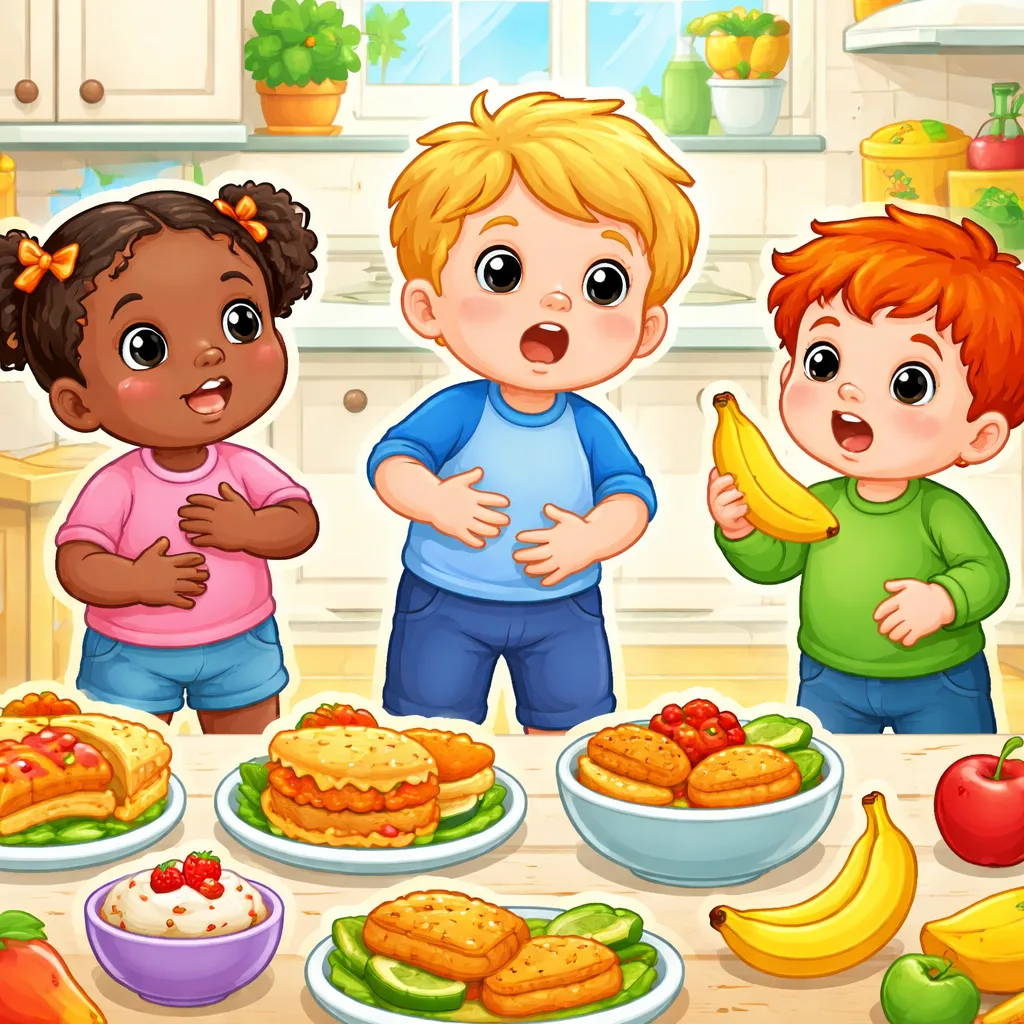

What Is This Situation? Toddlers feel hungry many times a day. Their bodies grow fast. They need fuel. But they do not always have the words to say what they feel. Instead of saying "I am hungry," they may whine, cry, or point. They need words for this basic need.
How to express hunger in English for toddlers gives children the language to say "I need food." Instead of frustration, they learn to say "Hungry." Instead of tears, they learn to say "I want a snack." The words help them get what they need.
This situation happens throughout the day. Before meals, between meals, after playing. Hunger comes and goes. Being able to name it helps children feel in control. It helps parents know what is wrong.
These phrases are short and simple. They match the toddler's developing language. One word, then two, then sentences. With these words, your child can tell you when their tummy needs food.
Key English Phrases for This Situation Use phrases for the basic word. "Hungry" is the simplest. "I hungry" is a short sentence. "I am hungry" is the full version.
Use phrases for asking for food. "I want food" is direct. "Snack, please" asks for something small. "Eat, please" requests a meal.
Use phrases for naming the feeling. "My tummy is empty" is playful. "My tummy says eat" is fun. "I need food" is clear.
Use phrases for choosing food. "I want a banana" names a specific food. "Apple, please" asks for a favorite. "What do we have to eat?" asks for options.
Use phrases for after eating. "I am full" tells you they are done. "No more" stops the meal. "Thank you" shows gratitude.
Simple Conversations for Kids Dialogue 1: Basic Hunger Child: "Hungry." Parent: "You are hungry? Let us get you a snack." Child: "Snack, please." Parent: "What would you like? Banana or crackers?" Child: "Banana." Parent: "Here is your banana."
This conversation starts with one word. The child says "hungry." The parent understands. The child uses "please." The child makes a choice. The need is met. The child learns that words work.
Dialogue 2: Asking for Food Child: "I want a snack." Parent: "You want a snack? Are you hungry?" Child: "Yes. I hungry." Parent: "Okay. Let us see what we have. Apple or yogurt?" Child: "Yogurt, please." Parent: "Good choice. Here is your yogurt."
This conversation uses a short sentence. The child says "I want a snack." The parent confirms. The child uses "please." The child gets the food. The communication is clear.
Dialogue 3: Before a Meal Parent: "Dinner will be ready soon." Child: "I am hungry now." Parent: "I know. Dinner is almost ready. Can you wait five more minutes?" Child: "I want food." Parent: "Here is a cracker to hold you until dinner. Just one, so you still have room for dinner." Child: "Thank you."
This conversation involves waiting. The child expresses hunger strongly. The parent offers a small solution. The child accepts. The child says thank you. The need is partially met while waiting.
Vocabulary You Should Know Hungry means your body needs food. You can say "I am hungry." This is the most important word.
Snack is a small amount of food between meals. You can say "I want a snack." This word asks for a small food.
Tummy is your belly. You can say "My tummy is empty." This word makes hunger playful.
Eat is the action of putting food in your mouth. You can say "I want to eat." This word asks for the activity.
Full means you have had enough food. You can say "I am full." This word tells when you are done.
Thirsty means you need a drink. You can say "I am thirsty." Sometimes hunger and thirst feel the same. This word helps tell the difference.
How to Use These Phrases Naturally Use a gentle and responsive tone. When your child says "hungry," respond quickly. Your response teaches that words work. Hunger is a need. Meeting it builds trust.
Say the phrases at meal and snack times. "Are you hungry?" before a meal. "What do you want to eat?" at snack time. The words become part of the routine.
Model the words yourself. "I am hungry. Let us make lunch." Your child hears you name the feeling. They learn that everyone gets hungry.
Teach the word "full" too. After eating, say "I am full. Are you full?" Understanding both ends of the spectrum helps your child communicate completely.
Let your child see food preparation. "I am making your snack. You said you were hungry." Connecting the words to the action reinforces learning.
Common Mistakes to Avoid One mistake is ignoring the word "hungry" because it is not a full sentence. "Hungry" is enough. Accept it. The child is communicating. Praise the effort.
Another mistake is offering food before they ask. Give them a chance to use the words. "Are you hungry?" invites them to say it. Let them say it first.
Some parents confuse hunger with other needs. A child who says "hungry" may be tired or thirsty. Teach "thirsty" and "tired" too. Help them find the right word.
Avoid saying "You just ate" if they say they are hungry. Toddlers have small stomachs. They may be hungry again soon. Trust them. They know their body.
Tips for Parents and Practice Ideas Use a visual hunger scale. Draw a tummy that is empty and a tummy that is full. Your child points to how they feel. The picture helps them learn the words.
Practice at snack time. "Are you hungry? Let us say 'I am hungry' together." Practice the words before the food comes. The words become part of the routine.
Read books about hunger. Many toddler books show characters eating. Point to the pictures. "Look, the bear is hungry. He wants food."
Sing a hunger song. "I am hungry, I am hungry. What shall I eat? What shall I eat? I want a banana, I want a banana. Yummy treat, yummy treat." Music makes the words fun.
Play restaurant. Your child is the customer. They say "I am hungry." You say "What would you like?" They name a food. Play builds the language.
Fun Practice Activities Make a snack basket. Put healthy snacks in a basket at child height. Your child can pick a snack and say "I am hungry. I want a cracker." The basket gives them independence.
Create a hunger chart. Draw pictures of food. When your child is hungry, they point to the food they want. The chart gives non-verbal children a way to communicate.
Play the feeling game. You make a face. Your child guesses the feeling. "Hungry?" You nod. Then they make a face. You guess. The game builds emotional vocabulary.
Use a doll. The doll is hungry. Your child feeds the doll. "The doll is hungry. What does she want?" Your child practices the words through play.
Cook together. As you cook, use the words. "We are making lunch because we are hungry." Your child connects the words to the activity.
How to express hunger in English for toddlers gives your child one of the most important tools they will ever have: the ability to say what their body needs. Hunger is a basic feeling. Having the words for it gives your child power. Instead of crying, they can say "hungry." Instead of frustration, they can say "snack, please." These words are small. But they open a door. They say "I can tell you what I need. I can communicate. I can take care of myself." That is a big step for a little person. And it all starts with one simple word: hungry.