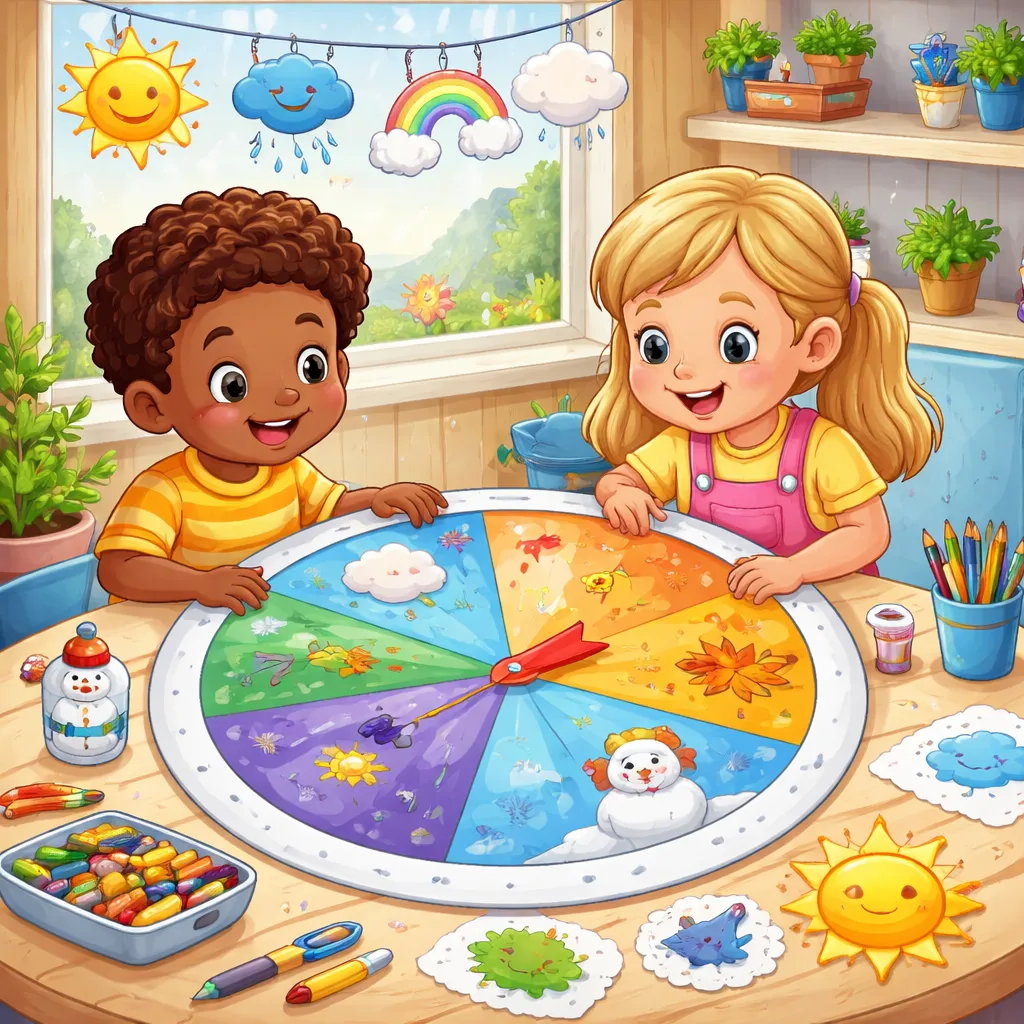

What Is This Situation? Weather changes every day. Sunny, rainy, cloudy, snowy. A weather wheel helps children see these changes. They spin the wheel to match the weather outside. It is a craft. It is a learning tool. It is fun.
A weather wheel craft template printable gives children a hands-on way to learn about weather. They color the wheel. They cut it out. They spin it to show the weather. The craft builds vocabulary. It builds observation skills.
This situation happens during craft time, during morning routine, during weather observation. The weather wheel is a daily tool. Children check the weather. They spin the wheel. They learn the words.
These crafts are best used with conversation. Talk about the weather. Talk about what you see. The learning happens while crafting and using the wheel.
Key English Phrases for This Situation Use phrases for making the craft. "Let us make a weather wheel. First, color the pictures. Sunny, rainy, cloudy, snowy." "Now cut out the wheel. Be careful with the scissors."
Use phrases for using the wheel. "What is the weather today? Look outside. Is it sunny or rainy?" "Spin the wheel to sunny. Good. Today is sunny."
Use phrases for weather words. "Sunny means the sun is shining. Rainy means water is falling." "Cloudy means the sky is covered with clouds. Snowy means white snow is falling."
Use phrases for asking questions. "What is the weather today?" "Is it hot or cold?" "Do we need a coat?"
Use phrases for celebrating. "You made a weather wheel. Good job." "You spun it to the right weather. You are a weather watcher."
Simple Conversations for Kids Dialogue 1: Making the Wheel Parent: "Let us make a weather wheel. First, color the sunny picture. What color is the sun?" Child: "Yellow." Parent: "Good. Color the sun yellow. Now color the rain. What color is rain?" Child: "Blue." Parent: "Yes. Color the rain blue."
This conversation introduces the craft. The child colors. The parent talks. The learning begins.
Dialogue 2: Cutting and Assembling Parent: "Now cut out the wheel. Be careful with the scissors." Child cuts. Parent: "Good. Now cut out the arrow." Child cuts arrow. Parent: "Now put the arrow on the wheel with a brad. Now it spins." Child spins the wheel. Parent: "You made a weather wheel. Good job."
This conversation guides the assembly. The child cuts and builds. The parent praises. The craft is complete.
Dialogue 3: Using the Wheel Parent: "Let us use the weather wheel. What is the weather today?" Child looks outside. Child: "Sunny." Parent: "Yes. It is sunny. Spin the wheel to sunny." Child spins. Parent: "Good. Today is sunny. We can play outside."
This conversation uses the wheel. The child observes. The child spins. The learning is active.
Vocabulary You Should Know Sunny means the sun is shining. You can say "Today is sunny." The sun is yellow.
Rainy means water is falling from the sky. You can say "It is rainy. Get your umbrella." Rain is blue.
Cloudy means the sky is covered with clouds. You can say "It is cloudy. No sun today." Clouds are gray.
Snowy means white snow is falling. You can say "It is snowy. Let us build a snowman." Snow is white.
Windy means the air is moving. You can say "It is windy. Hold your hat." You can add windy to the wheel.
Weather is what the sky is doing. You can say "What is the weather today?" This is the main concept.
How to Use These Phrases Naturally Use a curious and observant tone. Weather is interesting. Your voice should show it. "Look outside. What is the weather today?"
Say the phrases as your child makes the craft. "Color the sun yellow." The words guide the hands.
Let your child spin the wheel each morning. Routine builds learning. The wheel becomes a habit.
Talk about the weather as you spin. "Today is sunny. We can go to the park." Connecting weather to activities makes it meaningful.
Celebrate when they use the wheel. "You spun it to the right weather. Good job." Celebration makes the wheel fun.
Common Mistakes to Avoid One mistake is making the wheel too complex. Start with four weather types. Sunny, rainy, cloudy, snowy. Add more later.
Another mistake is forgetting to use it. Keep the wheel where your child can reach. Use it daily.
Some children mix up weather words. Gently correct. "That is rainy. Rainy has water falling. Today is sunny."
Avoid making it a test. The wheel is a tool. Use it naturally. The learning will come.
Tips for Parents and Practice Ideas Print the template on cardstock. It lasts longer. Laminate it if you can.
Use a brad to attach the arrow. A brad lets the arrow spin smoothly.
Hang the wheel by the window. Your child can check the weather and spin.
Talk about the weather in different seasons. "In winter, it is snowy. In summer, it is sunny."
Let your child add new weather types. Windy, stormy, foggy. The wheel can grow.
Fun Practice Activities Make a weather chart. Each day, your child draws the weather and spins the wheel. The chart tracks patterns.
Play weather charades. Act out sunny, rainy, cloudy, snowy. Your child guesses and spins the wheel. The game builds vocabulary.
Sing the weather song. "What is the weather, what is the weather, today? Is it sunny, is it rainy, is it cloudy, is it snowy?" Music makes learning fun.
Take the wheel outside. Check the weather. Spin the wheel. "Look, it is cloudy. Spin to cloudy."
Make a weather journal. Your child draws the weather each day. The wheel helps them choose.
A weather wheel craft template printable helps children learn about weather and seasons. Sunny, rainy, cloudy, snowy. Color, cut, spin. With playful crafting and patient guidance, your child will learn weather words. They will observe the sky. They will spin the wheel. They will become a weather watcher. That is the power of hands-on learning. One spin at a time, your child will learn. And you will be there to craft and spin together.