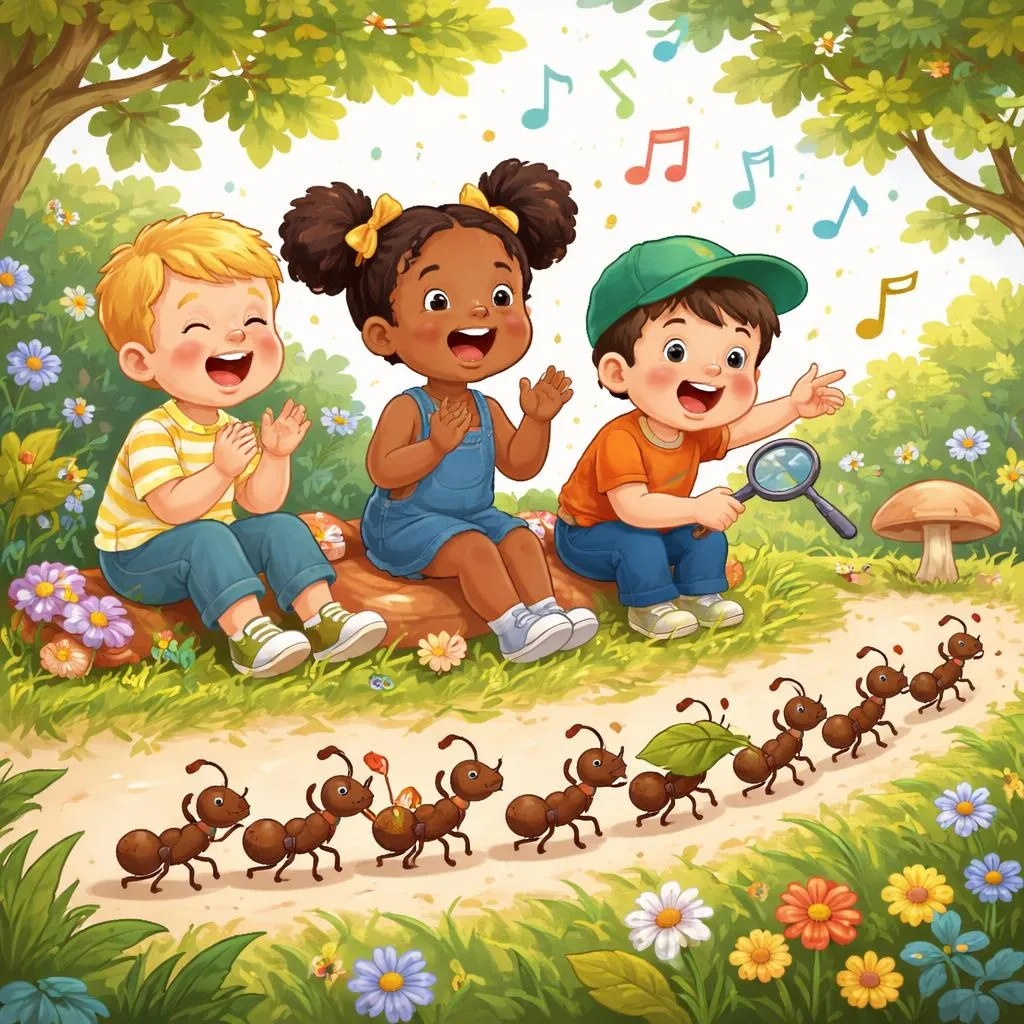

Hello, young explorers and wonderful teachers! Today we discover a delightful song about tiny creatures. They march in a long line. They work together. They face little challenges along the way. The song is "The Ants Go Marching." The ants going marching one by one lyrics are playful and repetitive. Children love counting along with the ants. They love the funny things each ant does. This song teaches counting and teamwork. It builds rhythm and memory. Let us follow the marching ants together. Let us discover all the verses and what each ant does.
What Is the Ants Go Marching Rhyme? "The Ants Go Marching" is a popular children's song. It tells the story of ants marching in a line. They march one by one, two by two, and so on up to ten. Each verse introduces a new number. Each ant does something silly or surprising. The little one stops to do something fun. Then they all march again.
The song likely comes from an old American folk song. It became popular in the 20th century. Now children sing it in classrooms everywhere. The counting pattern makes it educational. The funny actions make it entertaining.
The song has a repetitive structure. Each verse follows the same pattern. First the ants march in number order. Then the little one stops to do something. Then they all march again. This repetition helps children predict what comes next. They feel successful when they can join in.
The Lyrics of the Nursery Rhyme Let us look at the complete ants going marching one by one lyrics. Many versions exist. Here is the most common version.
The ants go marching one by one, hurrah, hurrah. The ants go marching one by one, hurrah, hurrah. The ants go marching one by one, The little one stops to suck his thumb, And they all go marching down to the ground To get out of the rain. Boom, boom, boom, boom!
The ants go marching two by two, hurrah, hurrah. The ants go marching two by two, hurrah, hurrah. The ants go marching two by two, The little one stops to tie his shoe, And they all go marching down to the ground To get out of the rain. Boom, boom, boom, boom!
The ants go marching three by three, hurrah, hurrah. The ants go marching three by three, hurrah, hurrah. The ants go marching three by three, The little one stops to climb a tree, And they all go marching down to the ground To get out of the rain. Boom, boom, boom, boom!
The song continues up to ten. Each number has a different action for the little ant. Four by four, he stops to shut the door. Five by five, he stops to take a dive. Six by six, he stops to pick up sticks. Seven by seven, he stops to pray to heaven. Eight by eight, he stops to shut the gate. Nine by nine, he stops to check the time. Ten by ten, he stops to say "THE END!"
Vocabulary Learning from the Song This counting song teaches many useful words. Let us explore them together.
Number words: The song teaches number names from one to ten. One, two, three, four, five, six, seven, eight, nine, ten. Children hear them in order repeatedly. This builds number recognition.
Action words: Each verse introduces a new action verb. Suck, tie, climb, shut, dive, pick, pray, check, say. These are common verbs children use. Learning them in a song makes them memorable.
Body words: The song mentions "thumb" and "shoe." These are body and clothing words. Children learn to name parts of themselves and what they wear.
Weather words: The song ends with rain. Children learn that ants go underground to escape rain. This connects to real-world observations.
Exclamation words: The song uses "hurrah" and "boom." These are fun, expressive words. Children love shouting them. They add excitement to the song.
Phonics Points in the Rhyme The marching song offers excellent phonics practice. Let us look at some important sounds.
Listen to the "m" sound. It appears in "marching" throughout. The "m" sound is made with closed lips. Practice together. "M-m-marching." This sound appears in many action words.
Listen to the "r" sound. It appears in "rain" and "marching." The "r" sound can be tricky. Practice together. "R-r-rain." "Ma-r-ching." This sound appears in weather words.
Listen to the rhyming words. One and thumb. Two and shoe. Three and tree. Four and door. Five and dive. Six and sticks. Seven and heaven. Eight and gate. Nine and time. Ten and end. These rhymes build phonemic awareness. Children learn to recognize sound patterns.
Grammar Patterns in the Song The song contains useful grammar patterns for young learners.
Present progressive tense: The song uses "going marching." This shows action in progress. Children learn to describe things happening now.
Prepositional phrases: The song uses "down to the ground" and "out of the rain." These phrases show movement and location. Children learn to describe where things go.
Number agreement: The song teaches number agreement. "One by one" matches singular. "Two by two" matches plural. Children learn this pattern naturally.
Sentence patterns: Each verse follows the same structure. This helps children predict language. They can create new verses using the pattern.
Learning Activities for the Song The song lends itself to many activities. Here are some ideas to extend learning.
Marching Band: Line up children like marching ants. They march around the room while singing. Add instruments like drums or shakers. The "boom, boom, boom" part is perfect for drumming. This builds coordination and rhythm.
Ant Counting Line: Create a line of ant pictures. Number them from one to ten. As children sing each verse, they point to the correct number of ants. This connects the song to visual counting.
Action Play: Act out each little ant's action. Suck thumb, tie shoe, climb tree, shut door, take a dive, pick up sticks, pray, shut gate, check time, say "THE END!" This physical connection makes the words memorable.
Ant Craft: Make simple ants from egg cartons or paper. Paint them black. Add googly eyes. Children can use them to act out the song. This combines art and music.
Printable Materials for the Song Printable resources support learning from the song. They provide visual reinforcement.
Number Posters: Create posters for each number from one to ten. Show that many ants marching. Write the verse for that number. Display them around the room. This supports number recognition and reading.
Ant Counting Cards: Create cards with different numbers of ants. Children count the ants and match them to number cards. This builds counting skills alongside the song.
Action Flashcards: Create cards showing each little ant's action. Sucking thumb, tying shoe, climbing tree. Use these during the song. Hold up the matching card for each verse.
Coloring Pages: Create coloring pages for each verse. Show that many ants marching. Show the little one doing its special action. Coloring reinforces the vocabulary quietly.
Educational Games for the Song Games make learning from the song even more fun.
Ant Line Race: Divide children into teams. Give each team a set of ant pictures numbered one to ten. Play the song. Teams must arrange their ants in the correct order as fast as possible. This builds number order skills.
What Does the Little One Do?: Call out a number. Children must remember and act out what the little ant does. "Number four!" Children act out shutting a door. This builds memory and recall.
Ant Hide and Seek: Hide ant pictures around the room with numbers on them. Children find them and bring them to the front. They must place them in order from one to ten. This combines movement and number skills.
New Verse Creation: Challenge children to create new verses for numbers beyond ten. "Eleven by eleven, the little one stops to go to heaven." Or use different actions. This builds creativity and language skills.
Ant Bingo: Create bingo cards with actions from the song. Suck thumb, tie shoe, climb tree, shut door, take dive, pick sticks, pray, shut gate, check time, say the end. Call out actions. Children cover them. This builds action vocabulary.
Through this playful song, children learn to count from one to ten. They learn action verbs and rhyming patterns. They march and sing together. The ants going marching one by one lyrics create joy and learning at the same time. The song builds number skills and coordination. It connects children to each other through music and movement. Every verse adds a new number and a new action. The little ant becomes a beloved character children look forward to meeting again and again.