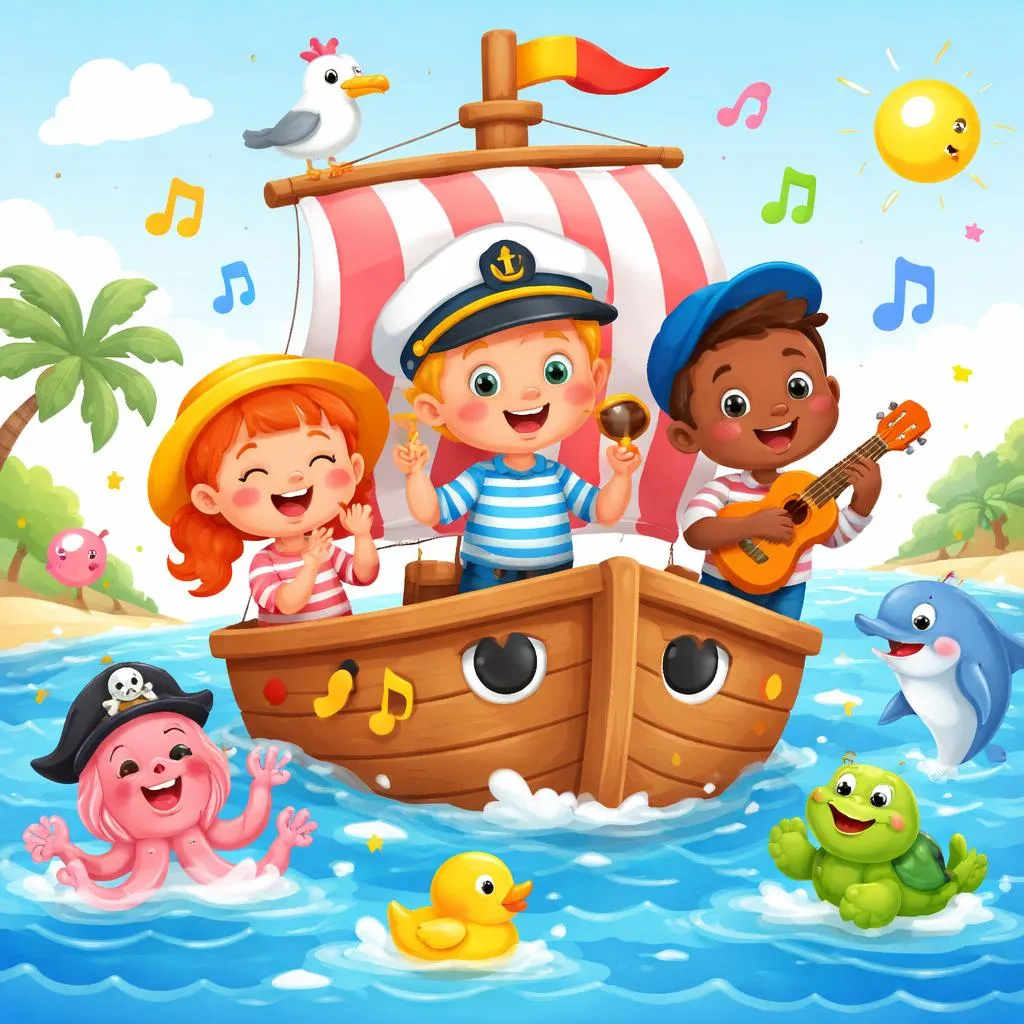

Hello, dear teachers and parents! Today brings a wonderful opportunity to explore a delightful nautical nursery rhyme. This catchy tune has entertained children for generations. It tells the story of a sailor exploring the deep blue sea. The "Super Simple Songs a Sailor Went to Sea Lyrics" offer so much more than fun. They teach sea creature vocabulary through repetition. They build memory skills through cumulative structure. They introduce rhythm and rhyme in an engaging way. Let us discover together why this song remains a favorite in classrooms everywhere.
What Is the "A Sailor Went to Sea" Nursery Rhyme? The "A Sailor Went to Sea" song is a traditional English nursery rhyme and clapping game. It dates back many generations. The song tells about a sailor who goes to sea. He hopes to see what he can find. What he discovers underwater becomes the song's focus.
The song follows a cumulative pattern. Each verse adds a new sea creature. The creatures appear in the water below. The sailor sees them from his boat. The repetition helps children remember the sequence.
What makes this song special is its building structure. The creatures accumulate verse by verse. Children must remember the growing list. This builds memory skills while keeping engagement high. The challenge feels like a fun game rather than work.
The "Super Simple Songs" version adds clear pronunciation and gentle music. The animation shows each creature clearly. Children see and hear the words simultaneously. This multisensory approach strengthens learning. The Super Simple adaptation makes the traditional rhyme accessible to young learners everywhere.
The Lyrics of the "A Sailor Went to Sea" Nursery Rhyme Let us look closely at the words of this wonderful song. The Super Simple version presents the traditional rhyme with clear, child-friendly language.
The first verse introduces the sailor and the sea:
A sailor went to sea, sea, sea To see what he could see, see, see But all that he could see, see, see Was the bottom of the deep blue sea, sea, sea
The second verse adds a starfish:
A sailor went to sea, sea, sea To see what he could see, see, see But all that he could see, see, see Was a starfish swimming in the sea, sea, sea And the bottom of the deep blue sea, sea, sea
The third verse adds a jellyfish:
A sailor went to sea, sea, sea To see what he could see, see, see But all that he could see, see, see Was a jellyfish swimming in the sea, sea, sea A starfish swimming in the sea, sea, sea And the bottom of the deep blue sea, sea, sea
The pattern continues with more sea creatures. Each verse adds a new animal. The list grows longer. Children love the challenge of remembering the entire sequence. Common additions include turtle, octopus, fish, and shark.
The repetition of "sea, sea, sea" and "see, see, see" creates a playful rhyme. The words "sea" and "see" sound identical but have different meanings. This homophone pair adds a layer of language learning to the song.
Vocabulary Learning from the Sailor Song The "Super Simple Songs a Sailor Went to Sea Lyrics" introduce wonderful sea vocabulary. Young learners encounter the word "sailor" first. A sailor is a person who works or travels on a boat. Children learn about this occupation through the song.
The word "sea" appears constantly. Children learn that the sea is a large body of salt water. The repeated "sea, sea, sea" reinforces this word. The phrase "deep blue sea" adds descriptive language. Children visualize the color and depth of ocean water.
The verb "see" appears throughout. Children learn that "see" means to look and observe. The homophone pair with "sea" creates a teachable moment. Two words that sound the same can have different meanings and spellings.
Sea creature vocabulary builds with each verse. Starfish, jellyfish, turtle, octopus, fish, and shark may appear. Children learn the names of common ocean animals. Each creature connects to the ocean setting.
Descriptive words enrich the vocabulary. "Deep" describes the ocean's depth. "Blue" describes its color. "Swimming" describes the creatures' action. These words build descriptive language skills.
Phonics Points in the Sailor Song Phonics learning happens naturally with this song. The rhythm and rhyme draw attention to word patterns. Children hear specific sounds again and again.
The long "e" sound appears prominently. "Sea" and "see" share this sound. Children hear the similarity clearly. They learn that different spellings can make the same sound. "Sea" uses "ea" while "see" uses "ee." Both make the long "e" sound.
The "s" sound begins many key words. Sailor, sea, see, starfish, and swimming all start with "s." This repetition builds awareness of initial sounds. Children can generate other "s" words after hearing the song.
The "sh" sound appears in "shark" and potentially "fish." This digraph requires precise mouth placement. Children practice forming this sound through repetition. The song provides many opportunities for this practice.
The "sw" blend appears in "swimming." This consonant combination also requires practice. Children learn that "sw" at the beginning of words makes a special sound. They can find other "sw" words like swing or sweet after learning this song.
Rhyming patterns support phonemic awareness. "Sea" and "see" rhyme with "me," "be," and "tree." Children can generate other rhyming words. This builds understanding of word families and sound patterns.
Grammar Patterns Emerging from the Song Grammar teaching becomes effortless with this song. The natural language provides perfect models. Children absorb correct structures without formal lessons.
Past tense verbs tell the story. "Went" is the past tense of "go." Children learn that "went" describes action that already happened. "Could" is the past tense of "can." This shows past ability. These irregular past forms appear naturally in context.
The phrase "to see what he could see" shows purpose. "To see" is an infinitive expressing why the sailor went. Children learn that "to" plus a verb can explain reason. This structure appears frequently in English.
Prepositions show location. "To sea" shows direction of movement. "In the sea" shows position of creatures. "Bottom of the sea" shows specific location within. These small but important words gain meaning through context.
Repetition builds familiarity with sentence structure. The pattern "A sailor went to sea" repeats each verse. Children internalize this subject-verb-preposition pattern. They can later create similar sentences about other people and places.
Questions can emerge from the song naturally. "What did the sailor see?" "Where did he go?" "What else lives in the sea?" These questions encourage critical thinking while modeling correct question formation.
Learning Activities for the Sailor Song The "Super Simple Songs a Sailor Went to Sea Lyrics" inspire countless learning activities. These ideas extend the song into deeper language practice. Each activity builds different skills while maintaining the fun.
Sea creature puppets bring the song to life. Create simple puppets using paper bags or craft sticks. Make a starfish, jellyfish, turtle, octopus, fish, and shark. Children hold up each puppet when its creature appears in the song. This builds listening skills and fine motor coordination.
Underwater scene drawing connects art to literacy. Provide blue paper and art supplies. Children draw the deep blue sea. They add all the creatures from the song. They label each creature with its name. This builds vocabulary and writing skills.
Cumulative memory challenge practices recall. Sing the song together. Stop after the list of creatures. Ask children to name them in order. Start with just a few. Add more as memory improves. This builds working memory and attention.
Sea creature sorting builds categorization skills. Print pictures of sea creatures from the song. Add pictures of land animals. Children sort them into ocean and land categories. This builds understanding of animal habitats.
Sailor dress-up creates dramatic play opportunities. Provide sailor hats, blue fabric for water, and sea creature toys. Children act out the song. The sailor goes to sea and discovers creatures. This immersive experience builds vocabulary through play.
Printable Materials for the Sailor Song Printable materials support learning at home and school. These resources give children something to hold and use. They extend the song into independent practice.
Sea creature flashcards provide versatile learning tools. Print cards showing each creature from the song. Starfish, jellyfish, turtle, octopus, fish, and shark appear clearly. The name appears on the back. Children practice naming creatures in order. They sequence them as they appear in the song.
Mini books let children own the song. Create a simple folded book with pages for each verse. Each page shows the new creature added. Simple text guides singing. Children color the illustrations. They practice reading their books to family members. This builds pride and reading confidence.
Cumulative sequencing cards support memory practice. Print small cards showing each creature. Children arrange them in song order. They practice saying the list while pointing to cards. This builds sequencing skills and vocabulary recall.
Sailor and sea coloring pages offer creative engagement. Print a sailor in a boat above the sea. Below the water, show outlines of sea creatures. Children color the scene. They name each creature as they color. This connects art to literacy learning.
Word cards focus on key vocabulary. Print each important word separately. Sailor, sea, starfish, jellyfish, turtle, octopus, fish, shark appear on cards. Children match words to pictures. They arrange words in song order. They use cards for spelling practice.
Educational Games Based on the Song Games turn learning into pure joy. These game ideas use the sailor song as their foundation. Children practice language skills while having fun.
What's Missing? builds observation and memory. Place sea creature cards in song order. Children study them carefully. Cover the cards and remove one. Children identify which creature disappeared. This builds attention and vocabulary recall.
Sea Creature Hide and Seek builds listening skills. Hide creature pictures around the room. Play the song. When the music stops, children find a creature nearby. They name the creature they found before the song resumes. This combines movement with vocabulary practice.
Memory Match builds visual recognition. Create pairs of sea creature cards. Mix them face down. Children take turns finding matches. When they make a match, they name the creature and sing its part of the song. This builds memory and language skills.
Ocean Animal Bingo reinforces vocabulary. Create bingo cards with sea creature pictures. Call out creature names. Children cover matching pictures. The first to cover a row wins. This builds listening skills along with vocabulary recognition.
Sailor Says builds listening and following directions. Play like Simon Says but with a sailor theme. "Sailor says swim like a starfish." Children act out starfish movements. "Sailor says float like a jellyfish." Children pretend to float. This combines movement with imaginative play.
The "Super Simple Songs a Sailor Went to Sea Lyrics" continue teaching long after the final note fades. The simple words carry rich language learning potential. Sea vocabulary becomes concrete through repetition. Cumulative structure builds memory skills. Rhyming patterns support phonemic awareness. Grammar structures appear in natural language. Every child connects to the curious sailor exploring the deep blue sea. Through this beloved song, children learn without even trying. They absorb vocabulary, phonics, and memory skills through joyful participation. The starfish, jellyfish, turtle, and other creatures become familiar friends. The deep blue sea becomes a place of wonder and learning. That is the lasting magic of traditional songs adapted for modern young learners.