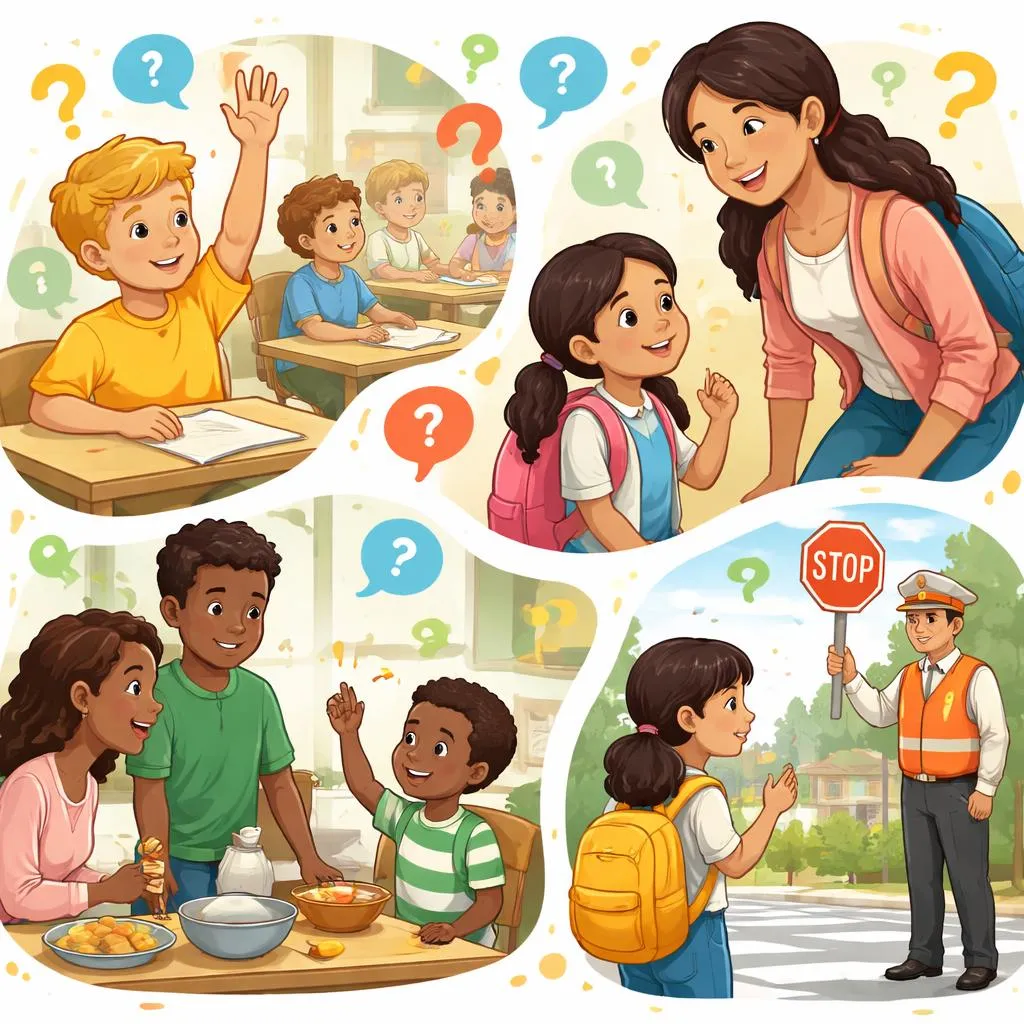

What Do These Expressions Mean? “I have a question” and “I need to ask” both relate to asking for information. Children often hear these expressions in classrooms, at home, or during conversations with friends. “I have a question” means a person wants to ask something. The speaker already knows they are confused or curious about a topic. “I need to ask” means the speaker feels it is important to ask something. It focuses more on the action of asking. For children, the difference can feel very small because both expressions appear before a question. Here is a simple way to understand them:
“I have a question” introduces a question.
“I need to ask” explains the need to ask something.
These expressions seem similar because both happen before someone asks for information. What’s the Difference? The main difference is the focus. “I have a question” focuses on the question itself. The speaker wants attention before speaking. “I need to ask” focuses on the need or reason for asking. It sounds slightly stronger or more urgent. One expression is more about curiosity. The other is more about necessity. Children often use “I have a question” in school because it sounds polite and clear. “I need to ask” appears more when something feels important. For example:
“I have a question about math.”
“I need to ask where the bus stops.”
The first sentence introduces curiosity. The second sentence explains an important need. Another small difference is tone. “I have a question” sounds softer and calmer. “I need to ask” sounds more direct. Both expressions are correct, but the situation changes which one sounds more natural. When Do We Use Each One? Using “I have a question” Children use this expression during lessons, homework time, or group activities. A student may say: “I have a question about the story.” A child at home may say: “I have a question about dinner.” This expression works well when someone politely asks for help or information. Teachers also like this phrase because it sounds respectful and organized. Friends may use it during games: “I have a question about the rules.” The expression feels friendly and natural in many daily situations. Using “I need to ask” People use this expression when they feel something is important to know. A child may say: “I need to ask where Mom is.” Another example: “I need to ask the teacher about tomorrow’s trip.” This phrase often appears when someone wants information quickly or seriously. Parents may also use it: “I need to ask you something important.” Children should notice that this expression sometimes carries more emotion or urgency. Example Sentences for Kids Sentences with “I have a question”
I have a question about my homework.
I have a question about the game.
I have a question for my teacher.
Sentences with “I need to ask”
I need to ask where the library is.
I need to ask Dad for help.
I need to ask about the test time.
These examples show how both expressions help people begin conversations politely. Common Mistakes to Avoid Many English learners confuse these expressions because both happen before asking something. One common mistake is forgetting to finish the sentence after “I need to ask.” Incorrect: “I need to ask.” Correct: “I need to ask about the homework.” The listener needs more information. Another mistake is using “I have a question” without asking the actual question later. Incorrect: “I have a question.” Correct: “I have a question. Can you help me?” Children should remember that this phrase usually introduces a question. Some learners also use both expressions together in unnatural ways. Incorrect: “I have a question I need to ask where the bus is.” Correct: “I have a question about where the bus is.” Or: “I need to ask where the bus is.” Short and clear sentences sound more natural. Easy Memory Tips A simple memory trick can help children remember the difference. Think about a raised hand in class. When a child raises a hand politely, they often say: “I have a question.” Now imagine someone searching for important information quickly. That person may say: “I need to ask.” Another easy trick is this:
“Have a question” = curiosity
“Need to ask” = importance
Children can also connect the expressions to feelings. “I have a question” feels calm. “I need to ask” feels stronger. These small emotional clues help learners remember natural usage. Why Asking Questions Helps Children Learn English Questions help children grow their language skills every day. When children ask questions, they practice speaking clearly. They also learn new vocabulary and sentence patterns. Expressions like “I have a question” help children join conversations politely. Expressions like “I need to ask” help children explain urgency or importance. Good communication skills improve reading, listening, speaking, and confidence. Children who ask questions often become stronger learners because curiosity supports language growth. Parents can encourage this habit at home through simple conversation. For example:
“Do you have a question about this book?”
“Is there something you need to ask?”
These moments build confidence naturally. How Parents and Teachers Can Encourage Natural Usage Children learn expressions faster when they hear them often. Parents can model polite questions during daily routines. At dinner: “I have a question about your school project.” Before leaving home: “I need to ask if you packed your lunch.” Teachers can also encourage question-friendly classrooms. Children feel safer speaking English when adults respond kindly to questions. Reading storybooks together also helps. Characters in books often ask questions before solving problems. Children begin noticing natural English patterns through reading. Short conversations work better than memorizing long grammar rules. Why Tone Matters in Everyday English English speakers often choose expressions based on feeling. Even when two expressions share a similar meaning, the tone may change the message. “I have a question” sounds gentle and polite. “I need to ask” sounds more serious or direct. Understanding tone helps children:
speak more naturally
choose better expressions
communicate clearly
understand conversations more easily
This skill becomes very useful during school discussions and group activities. Children slowly develop this awareness through listening and practice. Quick Practice Time Multiple Choice
Which expression sounds more urgent?
A. I have a question B. I need to ask Answer: B. I need to ask Fill in the Blank
“I ______ a question about science class.”
Answer: have
“I need to ______ where the train stops.”
Answer: ask These short exercises help children remember how the expressions work in real situations. How Children Hear These Expressions in Real Life Children hear “I have a question” very often in classrooms. Students use it before speaking to teachers. It helps conversations stay polite and organized. “I need to ask” appears more during important moments. For example:
asking for directions
checking information
solving a problem
asking for permission
Movies, cartoons, and storybooks also use these expressions often. Children learn naturally when they hear English in different situations. Listening practice helps learners notice tone, emotion, and sentence structure at the same time. Building Confidence Through Questions Many children feel nervous about asking questions in English. Simple expressions make speaking easier. “I have a question” gives children a polite way to begin. “I need to ask” helps children express importance clearly. Mistakes are a normal part of language learning. Every question gives children another chance to improve. The more children ask questions, the more comfortable they become with English conversations. Strong communication starts with simple, clear expressions used every day. Wrap-up “I have a question” introduces curiosity politely, while “I need to ask” expresses a stronger need for information.