
Life’s Little Embarrassment
Meet Sam the squirrel. He loves family dinners. Last Sunday, Sam wanted to praise his home. He shouted, "Our housing is beautiful!" Everyone laughed. They thought he discussed city planning. Sam felt silly. This happens to many kids. Today, we learn a word family. Think of them as tools in a box. Each tool has a special job. We call them house, housing, household, and housework. They look alike but work differently. After reading this, you will understand them perfectly.
Core Comparison Zone: Deep Analysis
Sam’s day continues. We follow him everywhere. First, meet the members.
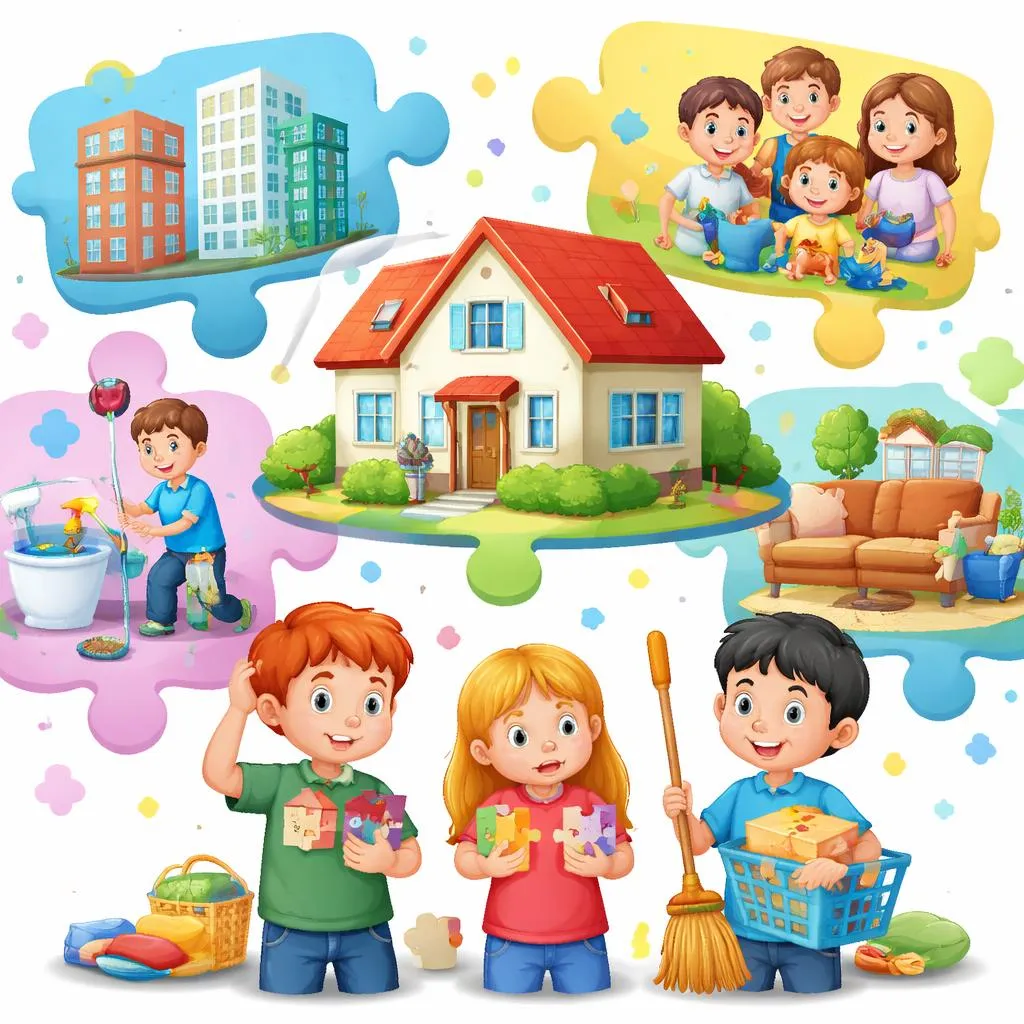
House is the building boss. It is a physical home. We call it "Building Boss". Housing is the supply manager. It refers to homes available. We call it "Supply Manager". Household is the family leader. It means all people living together. We call it "Family Leader". Housework is the chore doer. It means tasks to keep a house clean. We call it "Chore Doer".
Now, let’s explore five ways they differ.
Time Dimension
Clocks tick. Calendars flip. Words show how long things last.
At home, Sam lives in a house permanently. It is like a steady clock. Housing needs long-term plans. It is like a calendar year. Household changes slowly over time. It is like a current date. Housework happens daily. It is like a daily alarm.
At the playground, Sam sees a house near the park. It stands forever. Housing developments take years. They appear on calendars. Household sizes shift gradually. They mark life stages. Housework routines repeat daily. They follow play schedules.
At school, Sam draws a house for art. It represents permanence. Housing projects require months. They fill calendar pages. Household compositions vary. They reflect current terms. Housework assignments cycle daily. They structure school days.
In nature, Sam finds an abandoned house. It remains for ages. Housing shortages persist seasons. They span natural cycles. Household wildlife adapts slowly. It matches seasonal clocks. Housework for animals is constant. It follows daylight hours.
Each word shows time. House is eternal. Housing is long-term. Household is current. Housework is daily.
Role Dimension
Words have jobs. Some name objects. Some name groups.
At home, house names a building. "Clean the house." Housing names a system. "Affordable housing helps." Household names a group. "Our household is busy." Housework names tasks. "Do housework now."
At the playground, house names a structure. "Climb near the house." Housing names a provision. "New housing is built." Household names residents. "The household cheers." Housework names chores. "Finish housework first."
At school, house names a dwelling. "Draw a house." Housing names a resource. "Study housing needs." Household names a unit. "Count household members." Housework names duties. "Assign housework fairly."
In nature, house names a shelter. "Find a house." Housing names availability. "Limited housing exists." Household names a pack. "The household hunts." Housework names maintenance. "Animal housework includes nesting."
Building Boss names structures. Supply Manager names systems. Family Leader names groups. Chore Doer names tasks.
Partners Dimension
Some words need friends. Others stand alone.
At home, house stands alone. "The house is big." Housing needs adjectives. "Affordable housing grows." Household needs possessives. "Our household votes." Housework needs verbs. "Do the housework."
At the playground, house stands alone. "Paint the house." Housing needs descriptors. "Public housing opens." Household needs articles. "The household gathers." Housework needs modal verbs. "Must finish housework."
At school, house stands alone. "Visit the house." Housing needs qualifiers. "Rural housing expands." Household needs pronouns. "Every household participates." Housework needs action verbs. "Complete housework quickly."
In nature, house stands alone. "Spot a house." Housing needs modifiers. "Adequate housing matters." Household needs demonstratives. "This household migrates." Housework needs auxiliary verbs. "Should do housework."
Building Boss is independent. Supply Manager likes adjectives. Family Leader likes pronouns. Chore Doer likes action verbs.
Nuances Dimension
Small choices change meaning. Let’s see tiny differences.
At home, say "my house" for the building. Say "better housing" for the system. Say "our household" for the family. Say "daily housework" for chores.
At the playground, "near the house" specifies location. "new housing" indicates development. "the household" identifies residents. "finish housework" assigns tasks.
At school, "draw a house" is an object. "study housing" is a topic. "count household" is a unit. "assign housework" is a duty.
In nature, "find a house" is shelter. "limited housing" is scarcity. "this household" is a group. "animal housework" is maintenance.
Use Building Boss for buildings. Use Supply Manager for systems. Use Family Leader for families. Use Chore Doer for chores.
The Trap
This part is long. Many kids fall into traps. We fix them together.
Trap one: Using "housing" for a single home. Wrong: "I live in a housing." Right: "I live in a house." Why? "Housing" refers to multiple homes or systems. It cannot name one building. Only "house" does that. Memory tip: "Housing is plural, house is singular."
Trap two: Using "house" for housing supply. Wrong: "The city needs more house." Right: "The city needs more housing." Why? "House" is one building. "Housing" means the overall supply. Memory tip: "House is one, housing is many."
Trap three: Mixing "household" and "housework". Wrong: "I do household every day." Right: "I do housework every day." Why? "Household" is the family. "Housework" is the chores. Memory tip: "Household is people, housework is tasks."
Trap four: Using "housework" as a place. Wrong: "Go to housework." Right: "Go to the house." Why? "Housework" is work. It is not a place. Only "house" is a place. Memory tip: "Housework is doing, house is being."
Trap five: Confusing all four in one sentence. Wrong: "The housing household housework house." Right: "The household lives in a house. They do housework. Housing is adequate." Clear now. Always ask: Is it a building? A system? A family? Tasks? Memory tip: "Building, system, family, tasks—pick one."
These traps trip many. Practice spotting them. Soon you will dodge them easily.
Detailed Summary
Let’s tie it all together. If you name a physical building, use "house". If you talk about the supply of homes, use "housing". If you name a group of people living together, use "household". If you talk about cleaning tasks, use "housework". Remember their partners. "House" stands alone. "Housing" likes adjectives. "Household" likes pronouns. "Housework" likes action verbs. Keep these rules in mind. You will master the word family.
Practice
Task A: Best Choice. Fill in the blank. Choose between two options.
Scene: Home. Mom says, "Clean the ___." Options: house / housing. Answer: house. Because it is the building.
Scene: Playground. Sam shouts, "New ___ is being built!" Options: household / housing. Answer: housing. Because it is the supply.
Scene: School. Teacher says, "Our ___ has five members." Options: housework / household. Answer: household. Because it is the family.
Task B: Eagle Eyes. Find and fix mistakes. Read the paragraph.
“Yesterday, I cleaned the housing. Our household has chores. We need more housework. The housework is big.”
Fixes: “Yesterday, I cleaned the house. Our household has chores. We need more housing. The house is big.”
Task C: Be the Director. Create sentences. Use two forms.
Scene: Family dinner. Use "house" and "household". Sample: We live in a big house. Our household eats together.
Scene: Nature hike. Use "housing" and "housework". Sample: Animals need housing. Their housework is gathering.
What You Learned
You learned to tell house, housing, household, and housework apart. You practiced using them in real scenes. You spotted common mistakes and fixed them. You gained confidence in choosing the right word.
Your Action Step
Point to your house today. Say "housing" when you see apartments. Help with housework after dinner. Keep practicing every day.