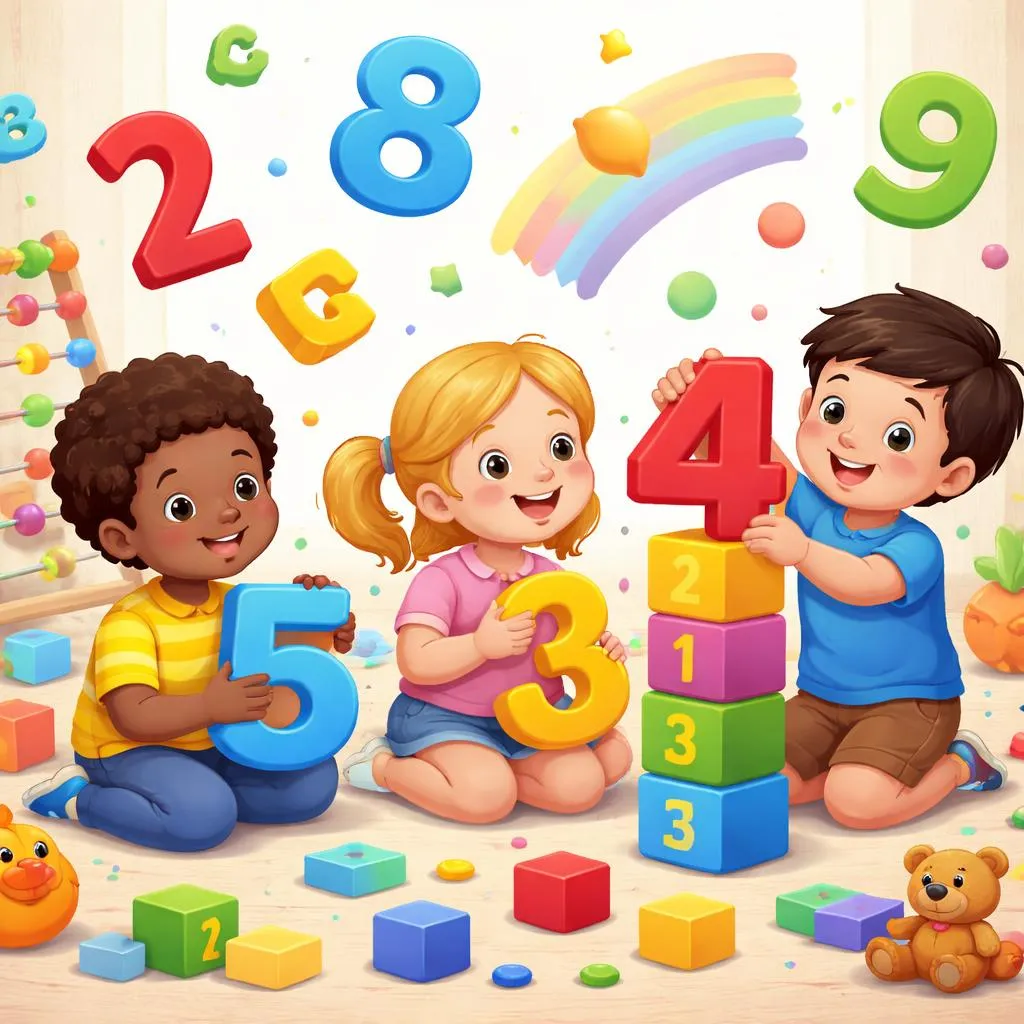

Hello, young mathematicians and wonderful teachers! Today we explore the fascinating world of numbers. Numbers are everywhere. They tell us how old we are. They tell us how many cookies we have. They tell us what time it is. Learning to learn about numbers helps children understand their world. It builds thinking skills. It prepares them for math in school. Numbers are like friends that help us count, measure, and compare. Let us discover numbers together. Let us learn their names, their order, and what they mean.
What Does It Mean to Learn About Numbers? Learning about numbers means understanding what numbers are and how they work. It includes many different skills. Children learn to count objects. They learn to recognize written numbers. They learn to say number names in order. They learn to compare quantities. They learn to add and subtract.
Numbers help us make sense of the world. We use them every day without thinking. How many plates do we need for dinner? How many minutes until bedtime? How many blocks are in the tower? These questions use numbers.
When children learn about numbers, they build a foundation for all future math. They develop number sense. This means they understand how numbers relate to each other. They know that five is more than three. They know that adding makes numbers bigger. This understanding grows over time.
Meaning and Explanation of Number Concepts Numbers have different meanings depending on how we use them. Let us explore the main ways we use numbers.
Counting numbers tell us how many. One, two, three, four, five. These are also called natural numbers. We use them to count objects. "I have three apples." "There are five children in the line."
Ordinal numbers tell us position or order. First, second, third, fourth, fifth. We use them to talk about who is first in line. Which floor is on the third level. Which day is the fifth of the month.
Number words are the names we say. One, two, three. Children learn to say these words in order. This is the first step in counting.
Written numbers are the symbols we write. 1, 2, 3. Children learn to recognize these symbols. They learn to match the symbol to the quantity.
Quantity is the amount something represents. The number five means five things. Children learn that the word "five" and the symbol "5" both mean the same amount.
Categories or Lists of Number Learning Number learning happens in stages. Here are the main skills children develop.
Rote Counting: Saying number words in order from memory. One, two, three, four, five. This is like singing a song. Children learn the sequence before they understand quantity.
One-to-One Correspondence: Touching each object and saying one number. This connects counting to real things. Children learn that each object gets one number.
Number Recognition: Seeing a written number and knowing its name. Seeing "5" and saying "five." This connects symbols to words.
Quantity Understanding: Knowing that "five" means five things. Being able to show five fingers. Knowing that five is more than three.
Number Order: Understanding which numbers come before and after. Knowing that four comes after three. Knowing that seven comes before eight.
Comparing Numbers: Understanding bigger and smaller. Knowing that eight is bigger than five. Knowing that two is smaller than six.
Basic Operations: Adding and subtracting small numbers. Understanding that two and two make four. Knowing that taking one away from three leaves two.
Daily Life Examples of Numbers Numbers appear everywhere in daily life. Pointing them out helps children learn naturally.
At breakfast, count items. "How many pancakes do you have?" "Let's count the strawberries. One, two, three." This connects numbers to food.
During play, count toys. "How many blocks are in your tower?" "You have three cars. I have two cars. Who has more?" This makes counting part of play.
At the store, point out numbers. "We need five apples. Let's count them." "This costs two dollars." Children see that numbers matter in shopping.
On the calendar, talk about dates. "Today is the fifteenth." "Your birthday is on the tenth." Numbers help us organize time.
During bath time, count body parts. "How many toes do you have? Let's count them." "You have two hands and ten fingers." Numbers are part of our bodies.
Printable Flashcards for Numbers Flashcards help children learn numbers visually. They provide clear symbols with quantities.
Number Flashcards: Create cards showing each number from 1 to 10. Show the written number and that many dots or objects. This connects the symbol to the quantity.
Number Word Flashcards: Create cards showing the written number words. One, two, three. Children match them to the number cards. This builds reading skills.
Quantity Flashcards: Create cards showing groups of objects without numbers. Children count the objects and find the matching number card. This builds counting skills.
Ordinal Number Flashcards: Create cards showing first, second, third. Use pictures of children in a line or animals in a race. This teaches order words.
Use the cards for games. Put them in order. Play memory match. Count and match. The possibilities are endless.
Learning Activities or Games for Numbers Games make learning about numbers fun and interactive.
Number Hunt: Hide number cards around the room. Children find them and bring them to a central place. Then they put them in order from one to ten. This combines movement with number recognition.
Counting Snacks: Give children a small bowl of snack items like crackers or grapes. Ask them to count out a certain number. "Please put five crackers on your plate." This connects counting to a tasty reward.
Hopscotch Counting: Draw a hopscotch grid with numbers. Children hop to each number and say it aloud. This combines movement with number practice.
Number Line Game: Create a number line on the floor with tape. Call out numbers. Children jump to that number. Call out "one more than three." Children jump to four. This builds number sense.
Play Dough Numbers: Roll play dough into long snakes. Shape them into numbers. This builds fine motor skills and number recognition together.
Counting Songs: Sing songs that involve counting. "Five Little Ducks" and "Ten in the Bed" are perfect. Music makes counting fun and memorable.
Printable Materials for Numbers Printable resources support number learning. They provide practice opportunities.
Number Tracing Pages: Create pages where children trace written numbers. Start with large numbers and dotted lines. This builds writing skills and number recognition.
Counting Worksheets: Create pages with groups of objects. Children count them and write the number. This builds counting and writing together.
Number Coloring Pages: Create pages with large numbers to color. Each page has that number of objects to count. Children color the number and the objects.
Number Puzzles: Create puzzles where children match the number to the correct quantity. Cut them into pieces for children to put together.
Educational Games for Numbers Games extend number learning and make it joyful.
Number Bingo: Create bingo cards with numbers instead of pictures. Call out numbers. Children cover them. When someone gets BINGO, they count to twenty. This builds number recognition.
Roll and Count: Use large dice with dots. Children roll the dice and count the dots. They can move a game piece that many spaces. This connects counting to game play.
Number Memory: Place number cards face down. Children flip two trying to find matching numbers. When they find a match, they say the number name. This builds memory and recognition.
What Comes Next?: Say a sequence of numbers with one missing. "One, two, three, ____, five." Children fill in the missing number. This builds understanding of number order.
Number Bean Bag Toss: Place numbered buckets or hoops on the floor. Children toss bean bags and try to land in a number. They say the number they hit. This combines gross motor skills with number recognition.
Building Block Numbers: Use building blocks to create numbers. Make a big number three with blocks. This connects physical building to number concepts.
Through these activities, children learn about numbers in many ways. They see numbers, say numbers, and touch numbers. They count objects and recognize symbols. They learn what numbers mean and how they work. Numbers become familiar friends. Every day brings new chances to count and compare. The world becomes a place full of numbers to discover.