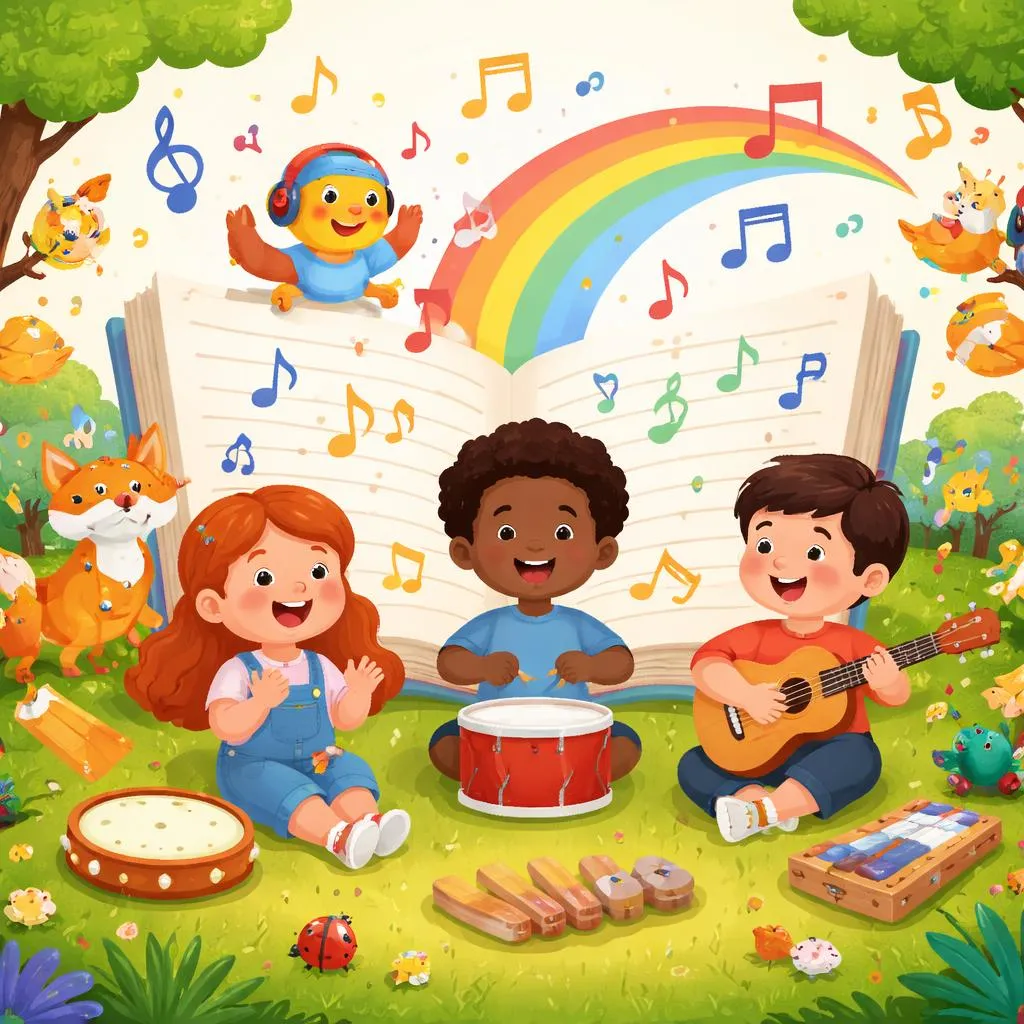

The connection between music and language runs deep. Both rely on rhythm, pitch, and pattern. Children's stories about music combine these elements naturally. They introduce musical concepts through narrative. They use sound words that engage the ear. This article explores practical teaching applications for these specialized stories. The focus remains on language development through musical themes. Let us examine how music-themed stories support English learning.
What Are Children's Stories About Music? Children's stories about music are narratives that feature musical elements prominently. Some tell about characters learning instruments. Others follow musicians on adventures. Many explore how music affects feelings and communities.
These stories vary widely in format. Some are picture books with illustrations of orchestras. Others are chapter books about young musicians. Some include actual musical notation. Many come with recordings or suggestions for listening. The common thread involves music as a central theme. Characters think about music. They create music. They respond to music emotionally. The vocabulary of music becomes accessible through story context.
Vocabulary Learning from Music Stories Children's stories about music introduce specialized vocabulary in natural contexts. Instrument names appear throughout. "Piano," "violin," "drum," "flute," "guitar," and "trumpet" become familiar through character actions. Students see what each instrument looks like and what it does.
Action words describe music making. "Play," "strum," "blow," "beat," "pluck," and "conduct" connect instruments to the movements that create sound. These verbs gain meaning through pictures and story events.
Sound words bring music to life on the page. "Bang," "twang," "toot," "ring," "hum," and "thump" represent musical sounds in text. Students learn onomatopoeia naturally.
Feeling words connect music to emotion. "Joyful," "peaceful," "excited," "sad," "calm," and "energetic" describe how music makes characters feel. This builds emotional vocabulary alongside musical concepts.
Phonics Points in Music Stories Children's stories about music offer rich phonics opportunities. Instrument names contain useful sound patterns. "Flute" features the long "u" sound. "Drum" features the short "u" sound. "Violin" contains the long "i" sound. Students practice vowel discrimination through familiar words.
Sound words provide onomatopoeia practice. "Bang" starts with the "b" sound. "Crash" starts with the "cr" blend. "Twinkle" features the "tw" blend. These words connect letters to the sounds they represent.
Rhythm in language becomes visible through music terms. Words like "rhythm" and "beat" name concepts students experience. The connection between syllable stress and musical rhythm supports phonological awareness.
Instrument families group words by sound patterns. String instruments share no sound pattern but create a conceptual category. Students learn categorization while practicing word recognition.
Grammar Patterns in Music Stories Children's stories about music model essential grammar structures. Present tense describes ongoing musical activities. "The orchestra plays beautifully." "The drummer keeps the beat." Students encounter simple present for habitual actions.
Past tense tells about musical performances. "The violinist performed last night." "The audience clapped for five minutes." Students see regular and irregular past forms in context.
Comparative language describes musical qualities. "Louder than," "softer than," "higher than," "lower than" appear when characters discuss music. These comparatives connect to actual sound differences students can hear.
Prepositional phrases describe position in orchestras or bands. "In the front row." "Behind the drums." "Next to the piano." Spatial language becomes meaningful through musical settings.
Learning Activities with Music Stories Several activities work well with children's stories about music. Instrument identification builds vocabulary. After reading a story featuring various instruments, show pictures. Students name each instrument and recall its role in the story.
Sound matching connects story words to real sounds. Find recordings of instruments mentioned in the story. Play short clips. Students match sounds to instrument names and to story moments when that instrument appeared.
Feelings chart connects music to emotion. Create a simple chart with feeling words. As you read or listen to music from the story, students indicate how the music makes them feel. This builds emotional vocabulary and listening skills.
Story rhythm activities transfer narrative to physical experience. Identify a repeating phrase in the story. Clap the syllable rhythm. Students join the clapping each time the phrase appears. This connects language to bodily rhythm.
Printable Flashcards for Music Vocabulary Flashcards reinforce key vocabulary from children's stories about music. Create cards for instrument names. Use clear pictures on one side, words on the other. Students practice naming and recognizing.
Action word flashcards capture music-making movements. Illustrate "blow," "strum," "beat," "pluck," "bow," and "conduct." Students can act out each action while saying the word.
Sound word flashcards connect writing to noise. Write "bang," "crash," "twinkle," "hum," "ring," and "toot." Students make the sound when they see the card. This creates multisensory learning.
Feeling word flashcards support emotional vocabulary. Create cards with "joyful," "peaceful," "excited," "sad," "calm," and "energetic." Match each feeling to music that might create it.
Educational Games for Music Story Learning Games transform children's stories about music into interactive experience. Instrument bingo works well. Create cards with instrument pictures. Call out instrument names. Students mark matches. First to complete a row wins.
Musical charades brings story elements to life. Write instrument names or actions on cards. Students act out playing the instrument. Others guess. This builds vocabulary through physical expression.
Story sequencing with picture cards supports comprehension. Provide images of key story events involving music. Students arrange them in correct order. This builds understanding of narrative structure.
Compose a class song extends the musical theme. After reading a story about creating music, write simple lyrics together. Use vocabulary from the story. Add a simple rhythm. Perform for another class.
Printable Materials for Music Story Lessons Printable materials support structured learning with music stories. Instrument family sorting sheets organize vocabulary. Create columns for strings, woodwinds, brass, and percussion. Students cut and paste instrument pictures into correct families.
Story maps guide comprehension of musical narratives. Provide spaces for characters, setting, musical elements, problem, and solution. Students complete after reading.
Listening response sheets connect stories to actual music. After reading a story featuring specific pieces, play recordings. Students draw how the music makes them feel and write one describing word.
Word searches using music vocabulary provide independent review. Include instrument names, sound words, and action words from the story. The puzzle format feels like play.
Music and Emotion Connections Children's stories about music naturally explore how sound affects feelings. Characters feel happy during lively music. They feel calm during gentle melodies. These connections give language for discussing internal states.
Students can identify music that matches their own feelings. What do they listen to when happy? When sad? When energetic? This personal connection makes vocabulary meaningful.
The stories provide vocabulary for discussing why music affects us. Words like "tempo," "rhythm," "melody," and "harmony" name the elements that create emotional response. Students learn to analyze what they hear.
Cultural connections emerge through diverse musical stories. Stories about music from different cultures introduce new instruments and traditions. Vocabulary expands beyond familiar terms.
Cross-Curricular Connections Music stories connect naturally to other subject areas. Science lessons explore how instruments produce sound. Vibration, pitch, and volume become concrete through instrument study.
Math connections appear through rhythm. Note values represent fractions. Measures contain specific numbers of beats. Students experience mathematical patterns through music.
Social studies explore music's role in communities. Stories about marching bands, orchestras, or cultural celebrations show music's social function. Vocabulary about community connects to musical themes.
Art projects extend music stories visually. Students draw instruments. They create posters for imaginary concerts. They illustrate how music looks to them. Visual expression reinforces verbal understanding.
Children's stories about music offer unique opportunities for language development. They combine narrative engagement with musical concepts. They introduce specialized vocabulary in meaningful contexts. They connect words to sounds students can actually hear. The emotional dimension of music adds depth to vocabulary learning. Young learners acquire language while exploring how sound shapes human experience. This combination of linguistic and musical learning creates rich educational experiences.