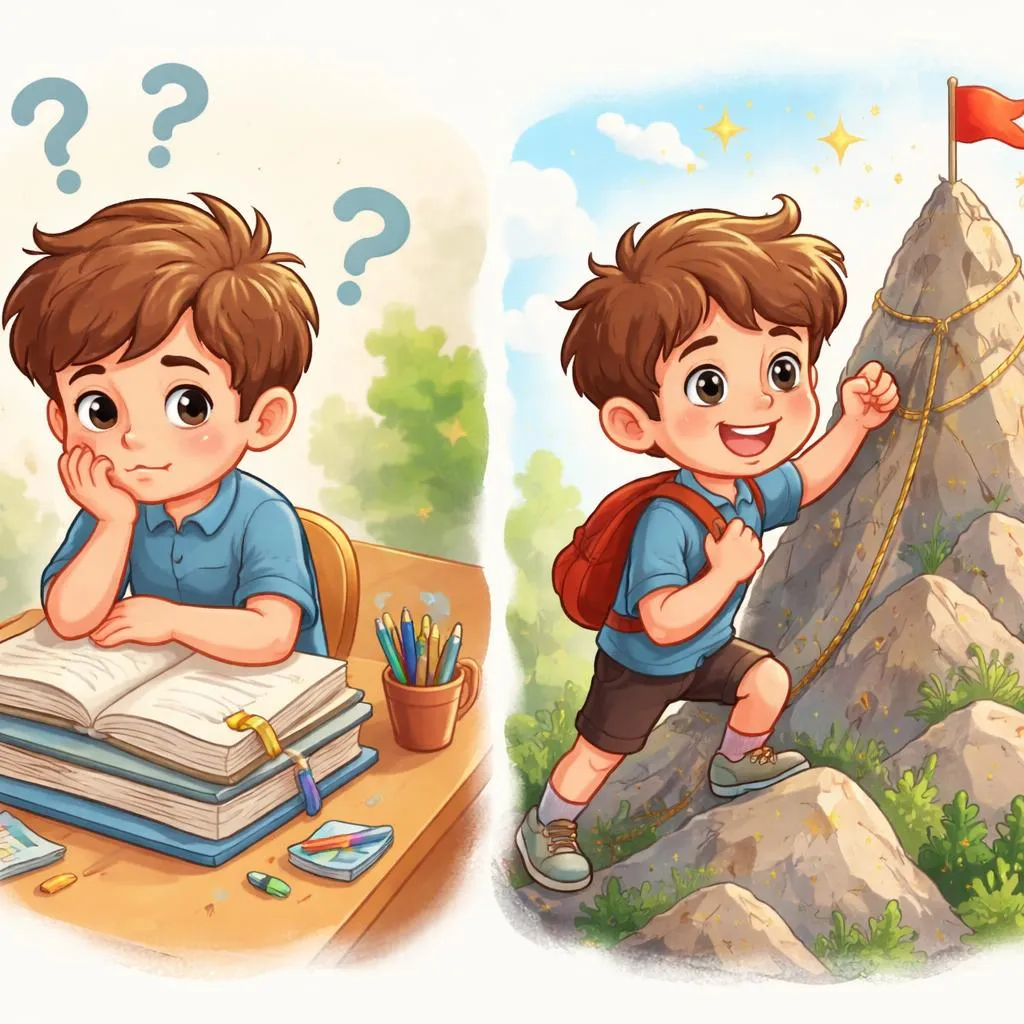

What Do These Expressions Mean? “I will try” and “I’ll attempt” both mean that you will make an effort to do something, even if you are not sure you will succeed. They tell yourself and others that you are willing to put in effort. Children say these words when facing a difficult task, a new skill, or a scary challenge. Both build a growth mindset.
“I will try” is a common, positive way to say you will make an effort. A child says it when they are unsure but willing. It is full of hope and determination.
“I’ll attempt” means the same thing, but it sounds more formal and careful. It is less common in child speech. It might be used in writing or grown-up talk. It is quieter and more serious.
These expressions seem similar. Both mean “I will make an effort.” Both show courage. But one is warm and childlike while one is formal and careful.
What's the Difference? One is warm, positive, and childlike. One is formal and careful. “I will try” is what children naturally say. It is hopeful and energetic. It is the classic phrase for effort.
“I’ll attempt” is more about making an effort in a formal or careful way. It might be used for something that requires precision. A child saying it sounds very grown-up. It is correct but unusual for a child.
Think of a child learning to tie shoes. “I will try to tie them” is right. “I will attempt to tie them” sounds strange. One is for learning. One is for a science experiment.
One is for everyday challenges. The other is for formal or careful efforts. “I will try” for a new sport. “I’ll attempt” for a written plan. Use the first for encouragement. Use the second for formal talk.
Also, “I will try” often has a feeling of hope. “I’ll attempt” feels more like a business plan.
When Do We Use Each One? Use “I will try” for everyday effort. Use it before a test, a game, or a new skill. Use it to show willingness. It fits hopeful talk.
Examples at home: “I will try to finish my puzzle.” “I was scared, but I said ‘I will try.’” “I will try my best.”
Use “I’ll attempt” rarely. Use it in formal statements or written plans. Use it to teach the word. Children almost never need to say this phrase.
Examples for formality: “I will attempt to solve the problem in three steps.” (formal) “After studying, I will attempt the test.” (careful) “I will attempt to climb the rock wall.” (serious)
Most children should just say “I will try.” It is clear, hopeful, and natural. “I’ll attempt” is good to understand for reading. But for everyday effort, “I will try” is best.
Example Sentences for Kids I will try: “I will try to learn this song.” “I don’t know if I can, but I will try.” “I will try my best every day.”
I’ll attempt: “I will attempt to draw a horse.” (formal) “I’ll attempt to finish the level.” (careful) “I will attempt to help you.” (serious)
Notice “I will try” is hopeful and natural. “I’ll attempt” is formal and careful. Children learn both. One for effort. One for formality.
Parents can use both. Encouragement: “say ‘I will try.’” Formal plan: “you will attempt.” Children learn different effort words.
Common Mistakes to Avoid Some children say “I’ll try” but don’t actually try. Trying means making effort, not just saying the words. Encourage real effort.
Wrong: “I’ll try” (then gives up immediately) Better: “I’ll try for five minutes before I ask for help.”
Another mistake: thinking “I will try” means expecting to fail. Try means you hope to succeed. It is a positive step.
Wrong: “I’ll try, but I know I’ll fail.” Better: “I’ll try. I might surprise myself.”
Some learners forget that “attempt” is stronger than “try” in some contexts. An attempt is a specific effort, often for something hard. But for children, “try” is kinder.
Also avoid using “I’ll attempt” for small tasks. “I’ll attempt to pick up my toy” sounds silly. Use “try” for daily things.
Easy Memory Tips Think of “I will try” as a runner at the starting line. Ready. Hopeful. Energetic. For everyday effort.
Think of “I’ll attempt” as a scientist in a lab. Careful. Serious. Formal. For formal plans.
Another trick: remember the tone. “I will try” = warm and hopeful. “I’ll attempt” = cool and careful. Warm gets “I will try.” Cool gets “I’ll attempt.”
Parents can say: “Try for a goal. Attempt for a scroll.”
Practice at home. Learning a sport: “I will try.” Writing a plan: “I will attempt.”
Quick Practice Time Let us try a small exercise. Choose the better phrase for each situation.
A child is about to try a new food for the first time. a) “I’ll attempt to eat it.” b) “I will try it.”
A child writes in a journal about a goal. a) “I will try to read every day.” b) “I will attempt to read daily.”
Answers: 1 – b. A new, slightly scary food fits the hopeful “I will try.” 2 – a or b. “I will attempt” is more formal and fits a written goal.
Fill in the blank: “When I make a promise to myself to make an effort, I say ______.” (“I will try” is the warm, hopeful, encouraging choice.)
One more: “When I write a formal plan for a difficult project, I write ______.” (“I will attempt” fits the careful, formal, serious description.)
Effort is the key to growth. “I will try” opens the door. “I’ll attempt” walks through carefully. Teach your child both. A child who learns both will make efforts with hope and care.