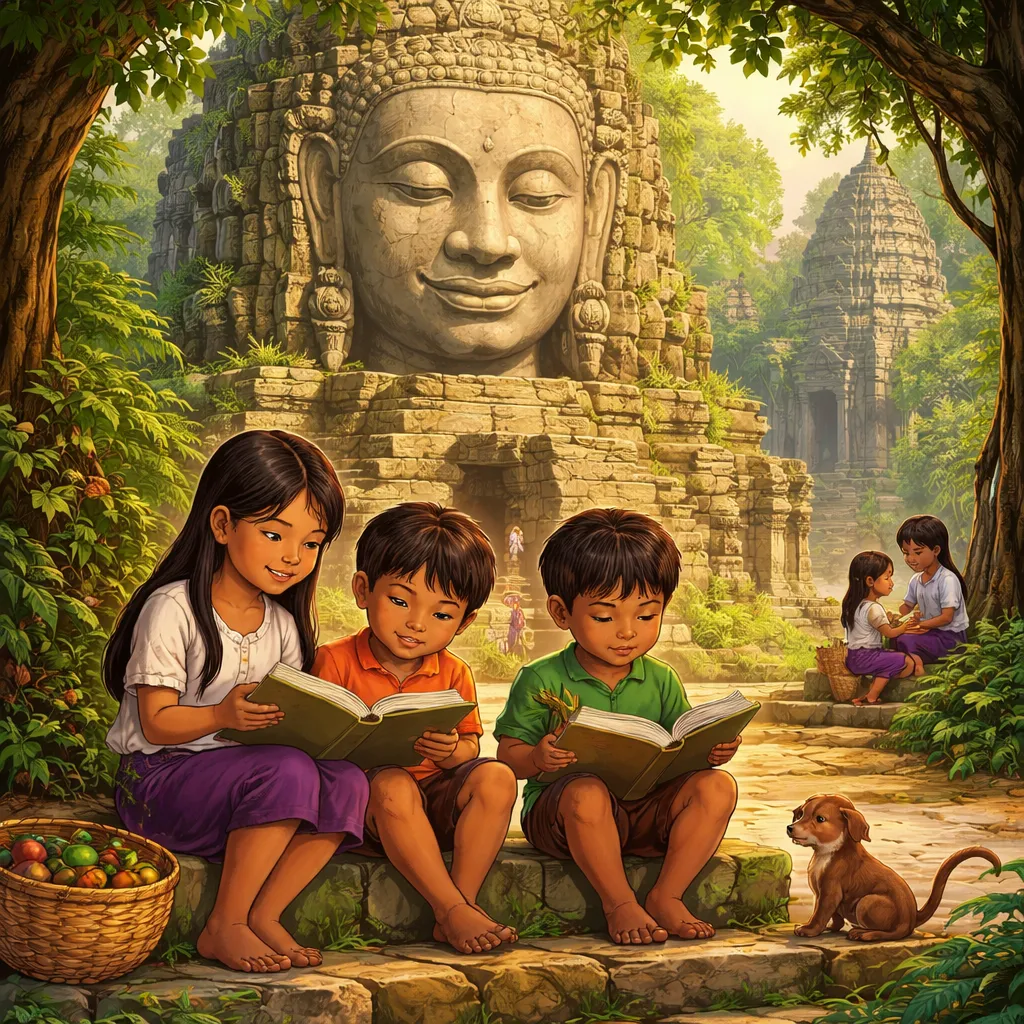

A Friendly Hello and First Impressions
Suosdey! (SWAH-day). This is a friendly "Hello" in Khmer. Aw kohn! (Aw kohn). This is a warm "Thank you". People say it with a slight bow. Learning reading about Cambodia starts with these gentle, polite words.
Cambodia sits in Southeast Asia. Its shape looks like a tilted heart. The heart points downward. Vietnam, Laos, and Thailand are its neighbors. The Gulf of Thailand is to the southwest. The mighty Mekong River flows through the land. It is a country with a gentle, tropical beauty.
People call it the "Kingdom of Wonder". This nickname comes from its ancient temples. The temples inspire awe and mystery. Another name is the "Land of the Smiling People". Cambodians are known for their friendly, resilient smiles. What stories are carved into the ancient stone walls?
Deep Dive into Culture and Stories
Echoes of History
A long time ago, a great empire ruled. It was the Khmer Empire. It lasted from the 9th to 15th centuries. The empire was powerful and rich. It built the amazing city of Angkor. A famous king was Jayavarman VII. He built many hospitals and rest houses. He also built the beautiful Bayon temple. His face might be on the towers. The empire's glory is a source of national pride. This history is a key part of learning reading about Cambodia.
A more recent and sad history also exists. The Khmer Rouge regime ruled from 1975 to 1979. It was a very dark time. Many people suffered and died. The country is still healing. The people show incredible strength. They work hard to rebuild their culture. This resilience is an important lesson.
A Marvel of Engineering
The ancient Khmers were brilliant engineers. They built a huge water management system. It had reservoirs, canals, and moats. The biggest reservoir is the West Baray. It is 8 kilometers long! This system helped grow rice. It fed a huge city. It shows great skill and planning. This is a gift of ancient knowledge.
A Land of Plains and a Great Lake
Cambodia is mostly flat. The center is a large, fertile plain. The plain is perfect for growing rice. The north and southwest have some mountains. The Tonle Sap lake is in the center. It is a special lake. In the rainy season, the Mekong River flows backward. It fills the Tonle Sap. The lake grows five times larger! It is a unique natural wonder.
The climate is tropical monsoon. There are two main seasons. The rainy season is from May to October. The dry season is from November to April. The monsoon rains are important for rice. The environment shapes life. Many traditional houses are built on stilts. This protects from floods. The main crop is rice. Fish from the lake and river are also vital.
A special animal is the Kouprey. It is a wild forest ox. It is very rare. It is the national mammal. The giant ibis is the national bird. It is also rare and protected. The Rumdul flower is the national flower. It has a sweet smell at night. The sugar palm tree is very important. Its juice makes sugar and wine.
Landmarks of Stone and Smiles
Visit Angkor Wat. It is the largest religious monument in the world. It was built in the 12th century. It is a Hindu temple for the god Vishnu. Later it became a Buddhist temple. The temple has five tall towers. They look like giant lotus buds. The walls have long carvings. They tell stories from myths and history. A fun legend says the temple was built by a divine architect. He completed it in one night.
See the Bayon Temple in Angkor Thom. It is famous for its many stone faces. Over 200 large faces smile down from the towers. They might be the face of King Jayavarman VII. Or they might be the Bodhisattva of compassion. The smiling faces are mysterious and peaceful. The temple feels magical and a little mysterious.
Another wonder is the Royal Palace in Phnom Penh. It is the king's home. The buildings have beautiful golden roofs. The Silver Pagoda is inside. Its floor has over 5,000 silver tiles! A statue of a gold Buddha is there. It has over 2,000 diamonds. The palace is a symbol of the monarchy.
Festivals of Water and Light
The biggest holiday is Khmer New Year. It is called "Chaul Chnam Thmey". It happens in mid-April. The celebration lasts for three days. People clean their homes beautifully. They wash Buddha statues with perfumed water. This is for good luck.
Young people play traditional games. They also throw water and powder. This is for fun and blessing. Families visit temples. They give food to monks. Special cakes are eaten. The mood is joyful and hopeful. It celebrates the end of the harvest.
Another important festival is the Water Festival. It is called "Bon Om Touk". It marks the end of the rainy season. The Tonle Sap river reverses its flow. Huge boat races are held in Phnom Penh. Hundreds of longboats compete. The riverbanks are full of cheering people. At night, there are fireworks. The festival is exciting and colorful.
Food and Flavors
The national dish is Amok. It is a creamy, fragrant curry. It is often made with fish. The fish is mixed with coconut milk and spices. The mix is steamed in a banana leaf cup. It is soft, savory, and a little sweet. People eat it at celebrations. It tastes like a delicate, flavorful hug.
You must try Nom Banh Chok. It is a famous breakfast. It is rice noodles with a green fish sauce. The sauce is made from lemongrass and turmeric. Fresh herbs and vegetables are on top. The dish is fresh, herby, and tangy. It wakes up your senses in the morning.
A Culture of Dance and Clearance
Cambodia is famous for classical dance. It is called "Apsara dance". Dancers wear silk costumes. They have golden headdresses. Their hands bend backward beautifully. Each movement tells a story. The dance almost disappeared. But people worked to revive it. This beautiful art is a key part of learning reading about Cambodia.
The country is a leader in clearing landmines. Past wars left many landmines. They are very dangerous. Special teams work to find and remove them. They use machines and trained rats! This work saves lives. It helps people farm safely again. It is a difficult but vital job.
Tips for Young Explorers
Cultural Manners Matter
The traditional greeting is the "sampeah". Put your hands together like praying. Your fingertips should touch your nose. The higher the hands, the more respect. Use this for hello and thank you. A smile is always welcome.
The head is sacred. Never touch a person's head. Not even a child's. The feet are the lowest part. Do not point your feet at people or statues. Sit with your feet tucked back. This shows respect.
Dress modestly, especially at temples. Cover your shoulders and knees. Remove your hat and shoes before entering. This is very important. Always ask before taking photos of people.
A Note on Staying Safe
Cambodia is generally safe for tourists. But be careful in cities. Watch for bag snatchers on motorbikes. Keep your bag on the side away from the street. Do not show expensive phones.
Landmines are a danger in rural areas. Never walk off clear paths in the countryside. Do not touch unknown objects. Always follow marked trails. Your guide will keep you safe.
A Tasty Stop
Look for "Chek" on the street. It is grilled banana. The banana is cooked over charcoal. It becomes sweet and soft. Vendors sometimes put it on a stick. Eat it hot. The taste is simple, sweet, and delicious. It is a perfect tropical snack.
Healthy and Happy Travels
Drink only bottled or boiled water. This is the most important rule. Do not drink tap water. Avoid ice in drinks unless you are sure. Brush your teeth with bottled water. This keeps your stomach happy.
The sun is very strong. Use a high SPF sunscreen. Wear a hat and sunglasses. The heat can be tiring. Drink lots of water. Take breaks in the shade.
Mosquitoes can carry diseases. Use insect repellent. Wear long sleeves in the evening. Your hotel may have a mosquito net. Use it. This helps prevent bites.
Your Invitation to Explore
Start your journey with dance. Watch a video of Cambodian Apsara dance. See the graceful hand movements. Try to move your fingers like the dancers. Or, look at photos of the Angkor temples. Imagine exploring the stone corridors. This is a wonderful way of learning reading about Cambodia.
Visit a local market. Look for lemongrass, galangal, and kaffir lime leaves. These are common Cambodian flavors. Smell their unique scents. Try making a simple soup with them. Imagine the bustling markets of Phnom Penh.
The world is a big, ancient library. Each country is a different book. Cambodia's book is written on temple walls and danced in gestures. Open it with respect. Read about its smiles, spices, and spirit. Your curiosity is your guide.
Cambodian families share a meal of amok. Children learn traditional dances. Friends gather by the river for the festival. We all know these feelings. We love sharing special foods. We enjoy music and celebration. We cherish time with family. Learning about Cambodia shows us this. Our global family shares the same hopes for peace and joy. Keep exploring, one page, one country, at a time. Your adventure has just begun.