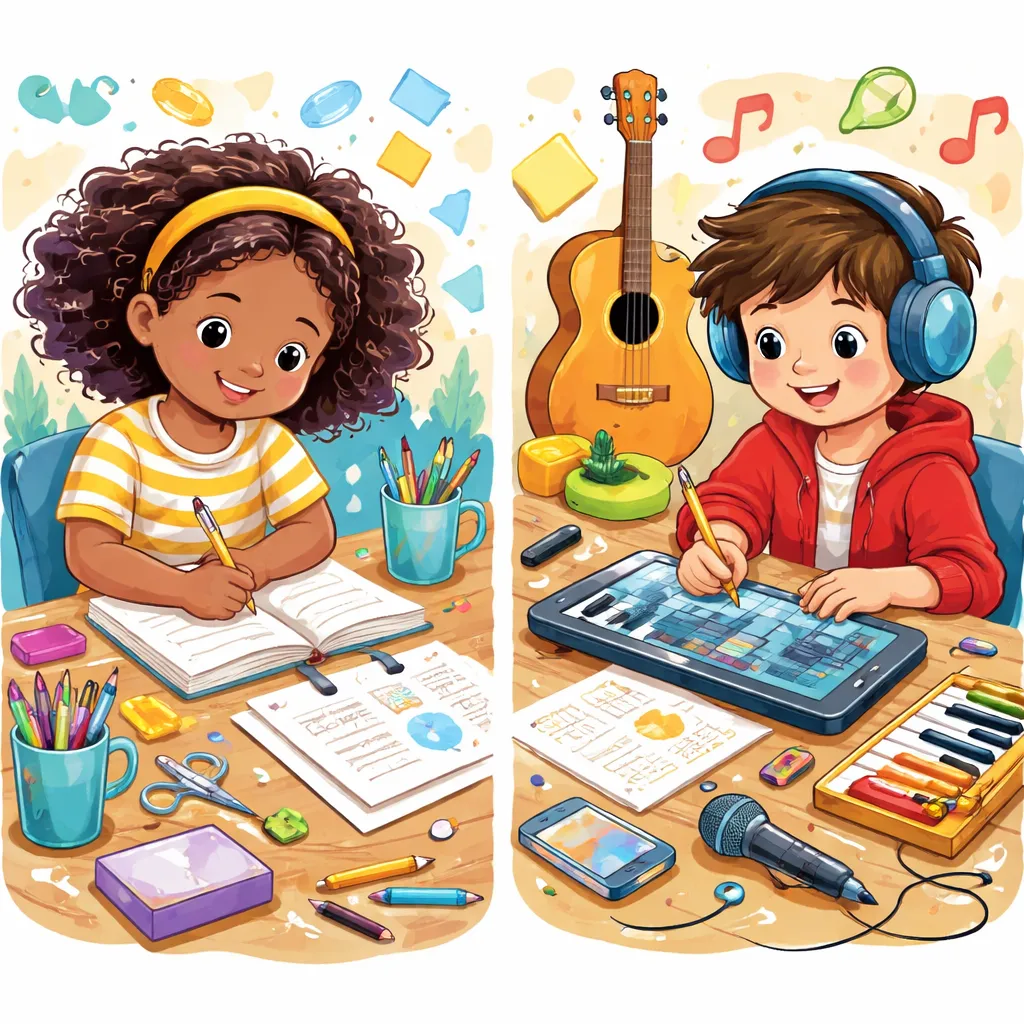

Hello, word creator! Do you love making stories and messages? What do you do for homework? What do you do for fun? Do you write a letter to a friend? Or do you compose a song for the school show? They both seem to mean making words. But are they the same? They are like two different word-making tools. One is a trusty, everyday pencil. One is a special, creative magic wand. Let's find out! Today, we explore the word friends "write" and "compose". Knowing their secret is a superpower. It lets you describe your creations perfectly. Let's start our word adventure!
First, let's be Word Detectives. Look at home. Here are two sentences. "I need to write a shopping list for my mom before we go to the store." "My sister is trying to compose a poem for her English class project." They both talk about making words. A shopping list. A poem. Do they sound the same? One feels like a simple note. One feels like creative art. Can you sense it? Great observation! Now, let's look closer.
Adventure! Into the World of Making Words
Welcome to the world of word-making! "Write" and "compose" are two different creators. Think of "write" as a trusty, everyday pencil. It is the main word for making letters and words. You can write anything. Think of "compose" as a special, creative magic wand. It is for making something artistic and whole. Both use words. But one is the everyday tool. One is the artistic tool. Let's learn about each one.
The Everyday Pencil vs. The Creative Wand Think about the word "write". To "write" feels like a simple, basic tool. It is the main word. You can write a word, a sentence, or a note. You can write your name. Please write this down. She can write well. It is the general action. Now, think about "compose". To "compose" feels like a creative spell. It means to create an original piece of art. You put parts together thoughtfully. Musicians compose songs. Writers compose stories. "Write" is the pencil. "Compose" is the magic wand. One is for all writing. The other is for creative building.
Simple Tasks vs. Creative Works Let's compare their purpose. "Write" is for all tasks. It can be simple or complex. You write a text message. You write a test. You write a book. The word "write" does not tell us the quality. "Compose" is for artistic, complete works. You compose music. You compose a letter (this is a formal phrase). You compose a speech. "Compose" suggests care and structure. You "write" a quick note. You "compose" a thoughtful thank-you letter. One is everyday. The other is special.
Their Special Word Partners and Common Uses Words have best friends. "Write" loves everyday things. Write a letter. Write an email. Write a story. Write in your journal. "Compose" loves artistic, formal works. Compose music. Compose a poem. Compose a speech. Compose yourself (meaning to calm down). Note: You "write" a homework answer. You "compose" a symphony. A student "writes" an essay. A musician "composes" a melody.
Let's visit a school scene. In math class, your teacher gives an exercise. You use your pencil to write the numbers and answers. This is a simple, everyday task. In music class, you are making a new tune. You think of the notes. You put them together to make a song. You are trying to compose a melody. The word "write" paints the simple math work. The word "compose" paints the creative music work.
Now, let's go to the playground. You make a secret club. You need rules. You use chalk to write the rules on the ground. This is a simple list. Your friend makes up a funny chant for your club. They think of the words and the rhythm. They are trying to compose a club chant. The word "write" fits the chalk rules. The word "compose" fits the creative chant.
Our Little Discovery So, what did we find? "Write" and "compose" both mean making words. But they are different. "Write" is the main, big word. It means to form letters and words on a surface. It is for everything. A note, a story, a test. "Compose" is a special word. It means to create an original, artistic piece. You think and put parts together. You compose music, a poem, or a formal letter. You can write a sentence. You can compose a whole song. Knowing this helps you talk about your word projects perfectly.
Challenge! Become a Writing Word Champion
Ready for a creative test? Let's try your new skills!
"The Best Choice" Challenge Let's imagine a nature scene. A spider builds a web. The web is like a message. The spider puts silk in lines and circles. It is like forming signals. We can imagine the spider is writing a message in silk. This is like making marks. Now, think of a bird, like a nightingale. It does not just make a sound. It creates a beautiful, complex song. The song has different parts. The bird puts notes together. The bird seems to compose a lovely song. "Write" wins for the spider's silk message. "Compose" is the champion for the bird's musical creation.
"My Sentence Show" Your turn to create! Here is your scene: Working on a project about your favorite animal. Can you make two sentences? Use "write" in one. Use "compose" in the other. Try it! Here is an example: "First, I will write ten facts about dolphins in my notebook." This is the simple action of putting down facts. "Then, I want to compose a short, fun song to help me remember all the facts!" This is the creative act of making an original song. Your sentences will show two types of word-making!
"Eagle Eyes" Search Look at this sentence. Can you find the word that could be better? Let's check a home context. "For the party game, I quickly composed a list of names on a piece of paper." Hmm. Making a simple list is a quick, everyday task. The word "wrote" is the correct choice here. "Composed" sounds too formal and artistic for a quick list. "For the party game, I quickly wrote a list of names on a piece of paper." Using "composed" here makes the simple list sound like a major creative work. Did you spot it? Excellent word work!
Harvest and Action! Turn Knowledge Into Your Superpower
Great exploring! We started thinking "write" and "compose" were similar. Now we know they are two different creators. We "write" everyday things. We "compose" special creations. You can now talk about your writing with perfect accuracy. This is a great skill for school and fun.
What you can learn from this article: You can now feel that to "write" is the main, everyday word for making letters, words, or text, and it can be used for anything from a simple note to a whole book. You can now feel that to "compose" is a special word for creating an original, artistic piece by carefully putting parts together, like a song, a poem, a speech, or even a formal letter. You know that you write an email to a friend, but a musician might compose a symphony. You learned to match the word to the task: "write" for the general action of making text, "compose" for the creative, structured act of making art.
Life practice application: Try your new skill today! Be a word detective. Look at your tasks. Are you going to write your homework answers? Or are you trying to compose a story for fun? Next time you make something, name your action. Say, "I will write a reminder for myself." or "I will try to compose a new rhyme." Tell a friend about a time you had to write a long report. Describe an idea you want to compose into a song. You are now a master of writing words! Keep creating wonderful things with words.