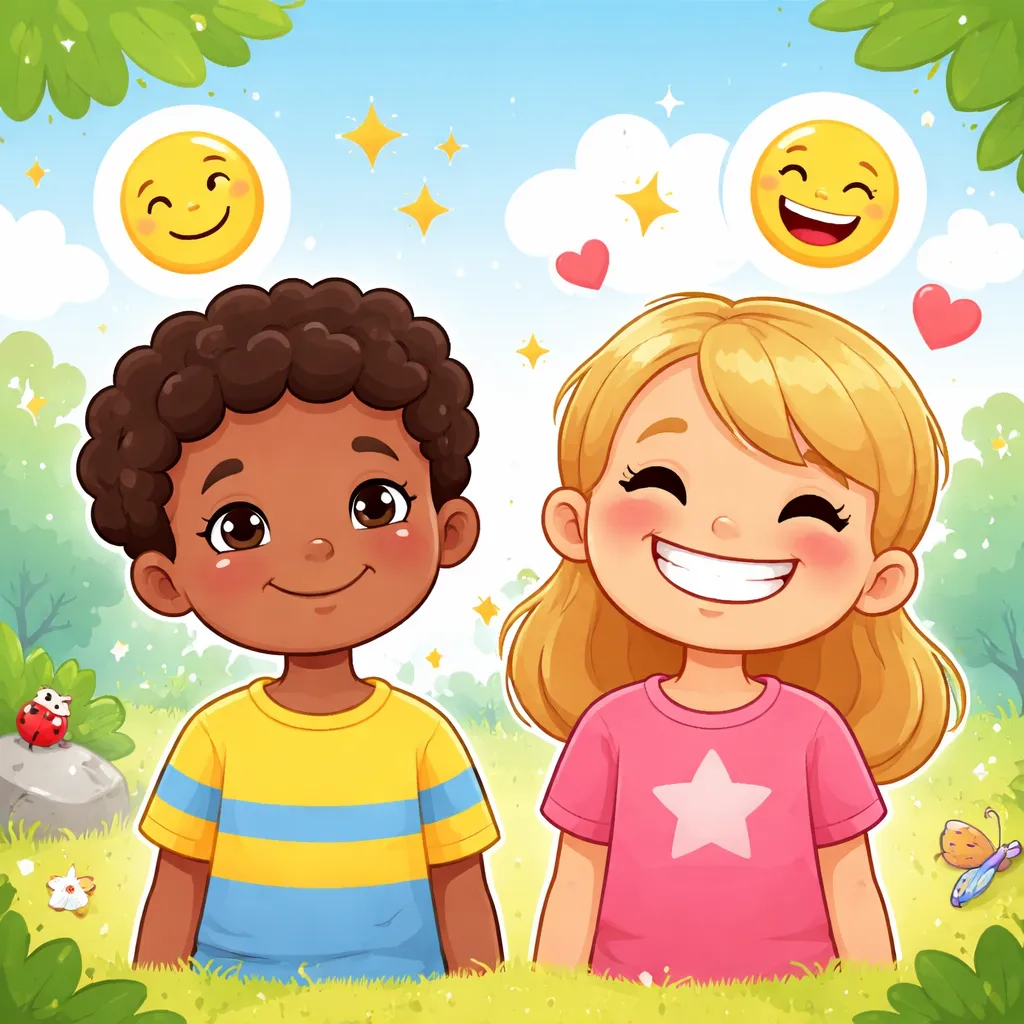

Hello, expression explorer! Have you ever felt really happy? How does your face show it? Does a happy smile appear? Or do you break into a big grin? They both mean to turn your mouth up. But are they the same? They are like two different kinds of sunshine. One is gentle morning light. One is bright afternoon beams. Let's find out! Today, we explore the word friends "smile" and "grin". Knowing their secret is a superpower. It lets you paint pictures of happiness. Let's start our cheerful adventure!
First, let's be Face Detectives. Look at home. Here are two sentences. "My mom gave a gentle smile when she saw my drawing." "My little brother made a silly face, and I couldn't help but grin." They both talk about happy faces. A kind look. A funny face. Do they sound the same? One feels soft and warm. One feels bigger and wider. Can you sense it? Great observation! Now, let's look at the happiness.
Adventure! Into the World of Happy Faces
Welcome to the world of happy looks! "Smile" and "grin" are two different joy-shapers. Think of a "smile" as gentle morning sunshine. It is soft, warm, and can be small or big. It shows many happy feelings. Think of a "grin" as bright, direct sunlight. It is wider, often shows teeth, and feels playful. Both are happy. But one is a gentle glow. One is a bright beam. Let's learn about each look.
The Gentle Sunshine vs. The Bright Sunbeam Think about the word "smile". A "smile" feels like morning sun. It is the main word for a happy face. Your lips curve up. It can be kind, shy, or proud. You smile at a friend. Give me a smile. It is a warm, friendly expression. Now, think about "grin". A "grin" feels like a bright sunbeam. It is a big, wide smile. It often shows your teeth. A grin is cheerful and sometimes silly. He had a big grin on his face. She grinned with mischief. "Smile" is the sunshine. "Grin" is the sunbeam. One is general. The other is specific and big.
The Wide Glow vs. The Big, Playful Beam Let's compare their size and feeling. A "smile" is the general word. It covers all kinds of happy mouth curves. It can be small or big. A "grin" is usually a big, broad smile. It often shows lots of teeth. A "grin" can show you are very amused, proud, or playful. You can smile politely. You grin when something is really funny. A "smile" is warm. A "grin" is often lively and fun. One is for all happiness. The other is for big, playful joy.
Their Special Word Partners and Common Uses Words have best friends. "Smile" has many warm friends. A warm smile. A bright smile. She gave a smile. "Grin" has bigger, playful friends. A big, wide grin. A mischievous grin. He broke into a grin. Note: You can "smile at" someone. You often just "grin" by itself. A grin can look cheeky or proud.
Let's visit a school scene. Your teacher looks at your perfect test. She gives you a kind, proud smile. This is a warm, encouraging look. Your friend tells a hilarious joke at lunch. You both burst out laughing with big, toothy grins. This is a wide, open expression of fun. Using "grin" for the teacher's look seems too silly. Using "smile" for the joke is fine, but "grin" is more vivid and playful.
Now, let's go to the playground. You score the winning goal! Your face lights up with a proud, happy smile. This is a glow of success. Your friend tells a secret funny plan. You listen and start to grin with excitement. The word "smile" paints the proud, happy glow. The word "grin" paints the cheeky, excited beam.
Our Little Discovery So, what did we find? "Smile" and "grin" are both happy faces. But they show different kinds and amounts of joy. A "smile" is the general, warm word. It is the curve of your lips from happiness. It can be gentle or big. A "grin" is a specific kind of smile. It is usually a big, wide smile that shows your teeth. It often looks playful, cheeky, or very pleased. Your grandma gives a kind smile. A friend might have a mischievous grin. Knowing this helps you describe faces perfectly.
Challenge! Become an Expression Word Champion
Ready for a happy test? Let's try your new skills!
"The Best Choice" Challenge Let's imagine a nature scene. A mother deer nuzzles her fawn gently. The fawn looks safe and content. We can imagine the fawn has a calm, peaceful look. It seems to smile in its quiet way. This is a gentle, content expression. A young monkey plays a trick. It steals a banana from another. It scurries up a tree. It looks back with a cheeky, wide look. It seems to grin with mischief. This is a playful, knowing expression. "Smile" wins for the fawn's gentle look. "Grin" is the champion for the monkey's cheeky look.
"My Sentence Show" Your turn to create! Here is your scene: Seeing your best friend after a long holiday. Can you make two sentences? Use "smile" in one. Use "grin" in the other. Try it! Here is an example: "When I saw her, I felt so happy I gave a big, warm smile." This is for the general, happy look. "Then she pulled a funny gift from her bag, and my smile turned into a huge, silly grin." This shows the smile changing into a bigger, playful grin. Your sentences will show two levels of happy faces!
"Eagle Eyes" Search Look at this sentence. Can you find the word that could be better? Let's check a home context. "The queen in the storybook looked at the kind knight. She gave him a wide, mischievous grin to thank him for his bravery." Hmm. A "grin" is playful or cheeky. A queen thanking a knight would be more formal and kind. The word "smile" is the better, more respectful choice here. "The queen in the storybook looked at the kind knight. She gave him a warm, grateful smile to thank him for his bravery." Using "grin" here makes the queen look silly, not regal. Did you spot it? Excellent word work!
Harvest and Action! Turn Knowledge Into Your Superpower
Great exploring! We started thinking "smile" and "grin" were the same. Now we know they are two different happy faces. We can see the gentle sunshine of a "smile". We can see the bright beam of a "grin". You can now describe happy expressions with perfect accuracy. This is a great skill for writing and sharing stories.
What you can learn from this article: You can now feel that a "smile" is the main, warm word for a happy face, and it can be small, kind, proud, or shy, showing a general feeling of happiness or kindness. You can now feel that a "grin" is a specific kind of big, wide smile that often shows your teeth, and it usually looks playful, cheeky, mischievous, or very, very pleased. You know that a teacher might give an encouraging smile, but a friend telling a joke might have a big grin. You learned to match the word to the look: "smile" for the warm, general curve, "grin" for the big, wide, often playful beam.
Life practice application: Try your new skill today! Be a face detective. Watch people's happy faces. Is that a gentle smile or a big, toothy grin? Look in the mirror. Practice your own happy smile. Now practice a silly grin. See the difference? Describe a character in your book. Do they smile or grin? You are now a master of expression words! Keep sharing your own wonderful smiles and grins with the world.