
Fun Introduction
Last Tuesday, Mia was playing hide-and-seek with friends. She hid behind a tree. Suddenly, she heard a bird sing. She stopped moving. Her ears perked up. This is pause to listen to the bird. Later that day, Mia ran laps in PE class. Her legs felt heavy. She sat on the grass. She took deep breaths. This is rest to catch her breath. Both mean stop. But they feel different. One is quick. Like hitting pause on a video. The other is tired. Like charging a robot. Let’s explore these phrases together.
Word Breakdown
Pause To Do
Imagine watching your favorite cartoon. The hero is about to find treasure. You press the pause button. The picture freezes. The hero waits. You come back and press play. That is pause to do. It is temporary. Only a few seconds. You are not tired. Something caught your attention. Maybe a sound. Maybe a thought. You freeze in place. Then you continue.
It feels quiet and sudden. Like when you pause to tie your shoe. Or pause to check the time. Your body stays ready. Your mind stays alert. The memory anchor is the pause symbol. Two vertical lines on a remote. See them? That is pause to do.
Rest To Do
Think about after a long soccer game. You are sweaty and out of breath. You flop onto the bench. You drink water. You relax. That is rest to do. It is because you are tired. Your energy needs refilling. Like a phone battery low. You sit or lie down. You recover strength.
It feels comfortable and slow. You might rest to read a book. Or rest to eat a snack. Your body says enough for now. The memory anchor is a person lying down. Arms and legs spread wide. That is rest to do.
Advanced Comparison
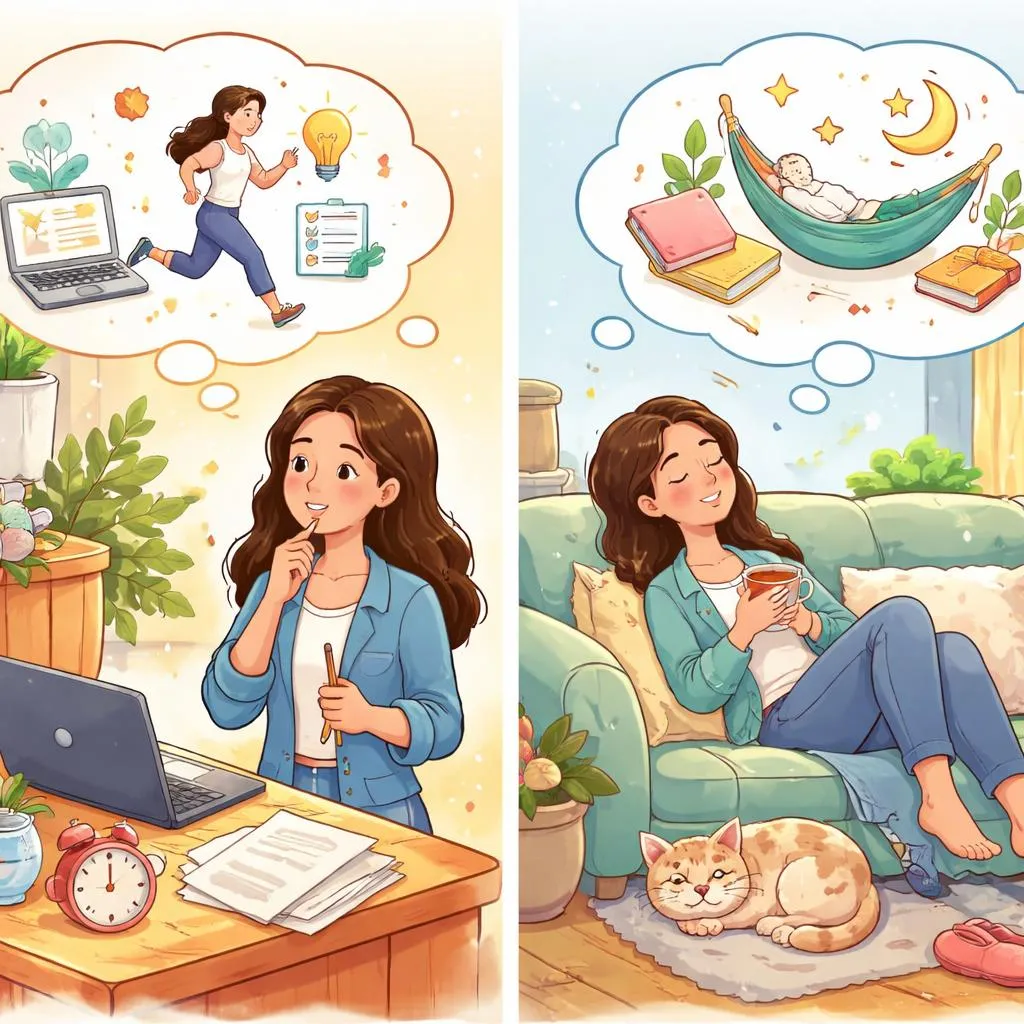
Both involve stopping. But pause is short and alert. Rest is longer and relaxed. Pause happens when something interrupts. Rest happens when you need recovery. Use pause for quick stops. Use rest for tired breaks.
Scene Comparison
Scene One takes place during recess. Sam and Leo play tag. Sam runs toward the slide. He hears the teacher call his name. He stops immediately. He turns to listen. He uses pause to hear the teacher. The moment lasts two seconds. Then he runs again. This is a quick pause.
Scene Two happens after swimming class. Emma swam many laps. Her arms ache. She sits on the pool deck. She sips juice. She closes her eyes. She uses rest to drink juice. She stays seated for five minutes. Her energy returns slowly. This is a tired rest.
Scene Three occurs during a family hike. Ben walks uphill for an hour. He reaches a viewpoint. He sets down his backpack. He takes photos of the valley. He uses rest to take photos. He rests because his legs are tired. He enjoys the view while recovering.
Notice the difference. Pause is quick and alert. Rest is slow and relaxing. Next time you stop, ask yourself. Am I freezing like a paused video? Or am I recharging like a tired robot?
Pitfalls Deep Reminder
Mistake One is saying pause to sleep. Why wrong? Pause is only seconds long. Sleep lasts hours. Funny result? People think you nap standing up. Correct phrase is rest to sleep. Memory trick: Pause is short like a blink. Rest is long like a nap.
Mistake Two is saying rest to answer the phone. Why wrong? Answering the phone is quick. You are not tired. Funny result? Friends imagine you lounging on a sofa to talk. Correct phrase is pause to answer the phone. Memory trick: Rest needs tiredness. Phone calls need speed.
Mistake Three is using pause to eat lunch. Why wrong? Lunch takes time. You sit and enjoy. Funny result? Teacher thinks you eat in two-second bursts. Correct phrase is rest to eat lunch. Memory trick: Big meals need rest. Small bites might pause.
Hidden Trap involves confusing with stop. Stop means end completely. Pause means temporary halt. Rest means break for energy. Always check your feeling. Are you alert or tired? Choose accordingly.
Interactive Exercises
First Level is Word Choice. Read each sentence. Decide which phrase fits best. Remember pause is quick. Rest is tired.
Example: I heard a noise and ___ to listen. (pause/rest)
Answer: pause.
Try these:
I finished my homework and ___ to watch TV. (pause/rest)
She climbed the stairs and ___ to catch her breath. (pause/rest)
He saw a butterfly and ___ to observe it. (pause/rest)
We played outside and ___ to drink water. (pause/rest)
They waited for the bus and ___ to check the schedule. (pause/rest)
Second Level is Mini Theater. Pair up with a friend. Act out these scenes. Use the phrases naturally.
Scene A: The Mysterious Sound
Person A: Shh! Did you hear that?
Person B: Yes! I ___ to listen carefully.
Person A: It sounds like a kitten.
Person B: Let’s go look.
Scene B: The Tired Explorer
Person A: I hiked for miles. My feet hurt.
Person B: Here, sit down. ___ to rest your legs.
Person A: Thanks. I’ll ___ to drink some water too.
Third Level is Spot the Mistake. Read each sentence. Explain why it sounds odd.
Sentence: I pause to sleep every night.
Reason: Sleep is long. Pause is short. Use rest instead.
Sentence: She rested to tie her shoelaces.
Reason: Tying shoes is quick. Use pause instead.
Sentence: We paused to eat our sandwiches.
Reason: Eating takes time. Use rest instead.
Fourth Level is Creative Sentences. Make your own sentences using both phrases.
Use pause to do for a quick stop. Example: I pause to pet the dog.
Use rest to do for a tired break. Example: I rest to read a comic.
Bonus Challenge: Imagine you are playing basketball. You miss a shot. You feel disappointed. Do you pause to think or rest to recover? Answer: rest to recover because you are tired from running.
Homework Task
Pick one activity below. Complete it over the weekend. Record your experience.
Option One is Drawing Journal. Get a small notebook. Draw three pictures. Write a sentence under each.
Picture One: You pause to watch a squirrel. Sentence: I paused to watch the squirrel climb.
Picture Two: You rest to eat an apple. Sentence: I rested to eat a juicy apple.
Picture Three: You pause to hear music. Sentence: I paused to hear the song.
Show your journal to a family member. Explain the differences.
Option Two is Role Play. With a parent, act out daily moments. Use the phrases correctly.
You: Mom, I just paused to tie my shoe.
Parent: Okay, hurry up.
You: Dad, I need to rest to finish my puzzle.
Parent: Take your time.
Practice until it feels natural.
Option Three is Sharing Time. Tomorrow at school, tell a friend. Describe one pause and one rest from your week. Say: Yesterday I paused to look at a rainbow. After soccer, I rested to drink water. Ask your friend about theirs.
Life Practice
Week Challenge: Try these tasks. Choose one. Complete it within seven days. Share your success.
Task One is Observation Log. For three days, notice pauses and rests. Draw symbols.
Day One: Pause to hear a bird. Draw a bird icon.
Day Two: Rest to eat snacks. Draw a cookie icon.
Day Three: Pause to see a bug. Draw a ladybug icon.
Show your log to your teacher. Place it on the classroom wall.
Task Two is Action Demo. Use both phrases in real actions.
Step One: Attach a sticker to your notebook. Say: I pause to stick this star.
Step Two: Sit on your bed. Say: I rest to read my book.
Demonstrate to a sibling. Explain the difference.
Task Three is Social Mission. Visit someone and use the phrases.
Visit Grandma. Say: Grandma, I rested to eat your cookies.
Visit a neighbor. Say: I paused to admire your flowers.
Record a short voice message. Send it to your teacher.
Task Four is Creative Story. Write a short tale. Include both phrases.
Title: The Paused and Rested Adventure.
Story: A boy paused to watch a frog. Then he rested to eat lunch. He learned when to stop.
Share your story in class.
Remember, practice makes perfect. Use these phrases often. Soon they will feel easy.
Rhyme Time
Short stop, use pause. Tired break, use rest. Quick freeze, pause works. Slow recharge, rest is best. Hear a sound? Pause and listen. Legs ache? Rest and glisten. Pause is brief, rest is long. Now you know where they belong.