
Fun Introduction
Last Friday, Lily stood by the ice cream truck. She tapped her foot. The line moved slow. She waited to get her chocolate cone. Later, Tom walked home from school. He saw a stray cat. He stopped. He lingered to pet its soft fur. Both involved stopping. But one was patient waiting. The other was happy staying. Let’s learn the difference.
Word Breakdown
Wait To Do
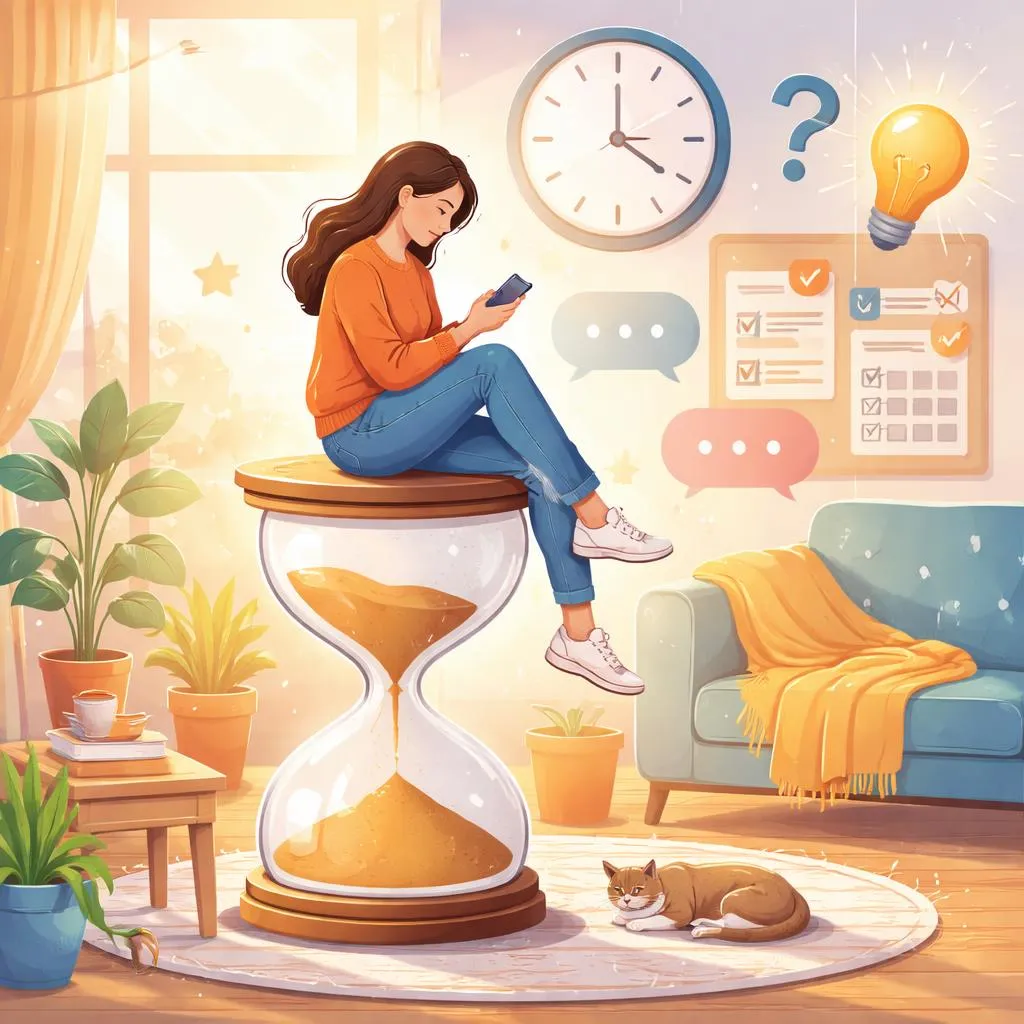
Imagine a sand timer on your desk. The sand falls slowly. You watch it. You are waiting for the sand to run out. That is wait to do. It is neutral and patient. You wait for something to happen. No strong feelings attached.
It feels steady and calm. Like wait to cross the street. Or wait to open a gift. Your body stays ready. Your mind focuses on the event. The memory anchor is a clock’s ticking hand. See it move? That is wait to do.
Linger To Do
Think of a bee stuck in honey. Its legs stick. It can’t fly away fast. It stays there, enjoying the sweet taste. That is linger to do. It carries emotion—joy, sadness, or reluctance. You don’t want to leave.
It feels warm and slow. Like linger to hug grandma goodbye. Or linger to smell fresh cookies. Your body relaxes. Your heart wants to stay. The memory anchor is sticky glue on your shoes. Hard to pull away? That is linger to do.
Advanced Comparison
Wait is neutral patience. Linger is emotional staying. Wait happens when you expect an event. Linger happens when you love the moment. Use wait for plans. Use linger for feelings.
Scene Comparison
Scene One takes place after school. Leo stands by the gate. Sunshine warms his shoulders. He shifts his backpack. Mom is late. He waits to see her red car. He waves when she arrives. “Sorry, buddy,” Mom says. “Traffic was bad.” This is wait to do—patient for an event.
Scene Two happens at Emma’s birthday party. Vanilla cake smells sweet. Mia eats a slice. She plays pin-the-tail-on-the-donkey. When parents come, Mia doesn’t leave. She lingers to blow more bubbles. Emma’s mom laughs. “Stay a bit longer!” This is linger to do—happy to stay.
Scene Three occurs at the supermarket. Ben picks red apples. He stands in line. He waits to pay for snacks. Then he sees the toy aisle. Robots with flashing lights catch his eye. He lingers to look at robot models. Dad says, “Time to go!” This shows both: wait for a task, linger for fun.
Notice the difference. Wait is for expected events. Linger is for loved moments. Next time you stop, ask: Am I waiting for something? Or staying because I want to?
Pitfalls Deep Reminder
Mistake One is saying “I lingered to wait for the delivery.” Why wrong? Linger means reluctant to leave. Delivery is a task to finish. Funny result? People think you love the delivery person. Your friend says, “Do you have a crush on him?” Correct phrase is wait to sign for delivery. Memory trick: Linger sounds like “longer”—stay longer.
Mistake Two is saying “I lingered to leave for the playground.” Why wrong? Linger means stay, not leave. Depart is too formal for kids. Funny result? Classmates think you’re taking a rocket. They ask, “Are you going to space?” Correct phrase is leave to play basketball. Memory trick: Only use depart for planes or ships.
Mistake Three is saying “I waited to say goodbye to grandma.” Why wrong? Goodbye often carries sadness. You don’t want to leave. Funny result? Grandma thinks you can’t wait to go. She says, “Hurry back soon!” Correct phrase is linger to hug grandma. Memory trick: Wait is neutral; linger has feelings.
Hidden Trap: Wait is active focus on an event. Linger is passive enjoyment of a moment. If you’re excited for a movie, wait to watch it. If you love the theater, linger to talk about it.
Interactive Exercises
First Level: Fill in the blanks. Choose wait or linger.
I ___ to get my lunch at school. (wait/linger)
She ___ to smell the roses in the garden. (wait/linger)
We ___ to board the bus for the field trip. (wait/linger)
He ___ to play with the puppy after class. (wait/linger)
They ___ to hear the concert start. (wait/linger)
Answers: wait, linger, wait, linger, wait.
Second Level: Mini Theater. Act with a friend.
Scene A: Waiting for Bus
A: The bus is late. I ___ to see it come.
B: Me too. Let’s check the schedule.
Scene B: Park Stray Cat
A: Look at that cat! I ___ to pet it.
B: Be gentle. It might be scared.
Third Level: Spot the Mistake. Explain why it’s odd.
Sentence: I lingered to buy milk at the store.
Reason: Buying milk is a task. No strong feeling. Use wait instead.
Sentence: I waited to hug my best friend goodbye.
Reason: Goodbye has sadness. Use linger instead.
Sentence: We lingered to start the math test.
Reason: Tests are tasks. Use wait instead.
Fourth Level: Create Sentences. Use both phrases.
Wait to do: I wait to open my birthday presents.
Linger to do: I linger to play with my new LEGO set.
Bonus Challenge: At a friend’s birthday party, you don’t want to leave. Do you wait or linger to say goodbye? Answer: Linger. You’re sad to go.
Rhyme Time
Wait to do, be patient and still.
Linger to do, stay with a thrill.
Wait for events, linger for feels.
Now you know the deals!
Homework Task
Pick one activity. Complete it this weekend. Share with family.
Option One: Drawing Journal. Get a small notebook. Draw three pictures. Write a sentence under each.
Picture One: You wait to get ice cream. Sentence: I waited to get chocolate ice cream.
Picture Two: You linger to play with a dog. Sentence: I lingered to play with the golden retriever.
Picture Three: You wait to board a plane. Sentence: I waited to board the plane to grandma’s.
Show your journal to a parent. Explain the differences.
Option Two: Role Play. With a parent, act daily moments. Use phrases correctly.
You: Mom, I wait to eat dinner until Dad comes home.
Parent: Okay, let’s set the table.
You: Dad, I linger to chat with you after work.
Parent: I love our talks.
Practice until it feels natural.
Option Three: Sharing Time. Tomorrow at school, tell a friend. Describe one wait and one linger. Say: Yesterday I waited to buy a notebook. I lingered to play on the slide. Ask your friend about theirs.
Life Practice
Week Challenge: Try one task. Complete within seven days. Share your success.
Task One: Observation Log. For three days, note wait and linger moments. Draw icons.
Day One: Wait to cross the street. Draw a traffic light icon.
Day Two: Linger to smell fresh bread. Draw a loaf icon.
Day Three: Wait to start the movie. Draw a popcorn icon.
Show your log to your teacher. Place it on the classroom wall.
Task Two: Action Demo. Use both phrases in real actions.
Step One: Hold a gift box. Say: I wait to open this present.
Step Two: Play with a new toy. Say: I linger to play with this robot.
Demonstrate to a sibling. Explain the difference.
Task Three: Social Mission. Use phrases with others.
Wait for a friend at the park. Say: I waited to meet you here!
After a playdate, linger to say goodbye. Say: I lingered to hug you goodbye!
Record a short voice message. Send it to your teacher.
Task Four: Creative Story. Write a short tale. Include both phrases.
Title: The Day I Waited and Lingered.
Story: I waited to ride the roller coaster. Then I lingered to eat cotton candy. I had so much fun!
Share your story in class.
Remember, practice makes perfect. Use these phrases often. Soon they will feel easy.