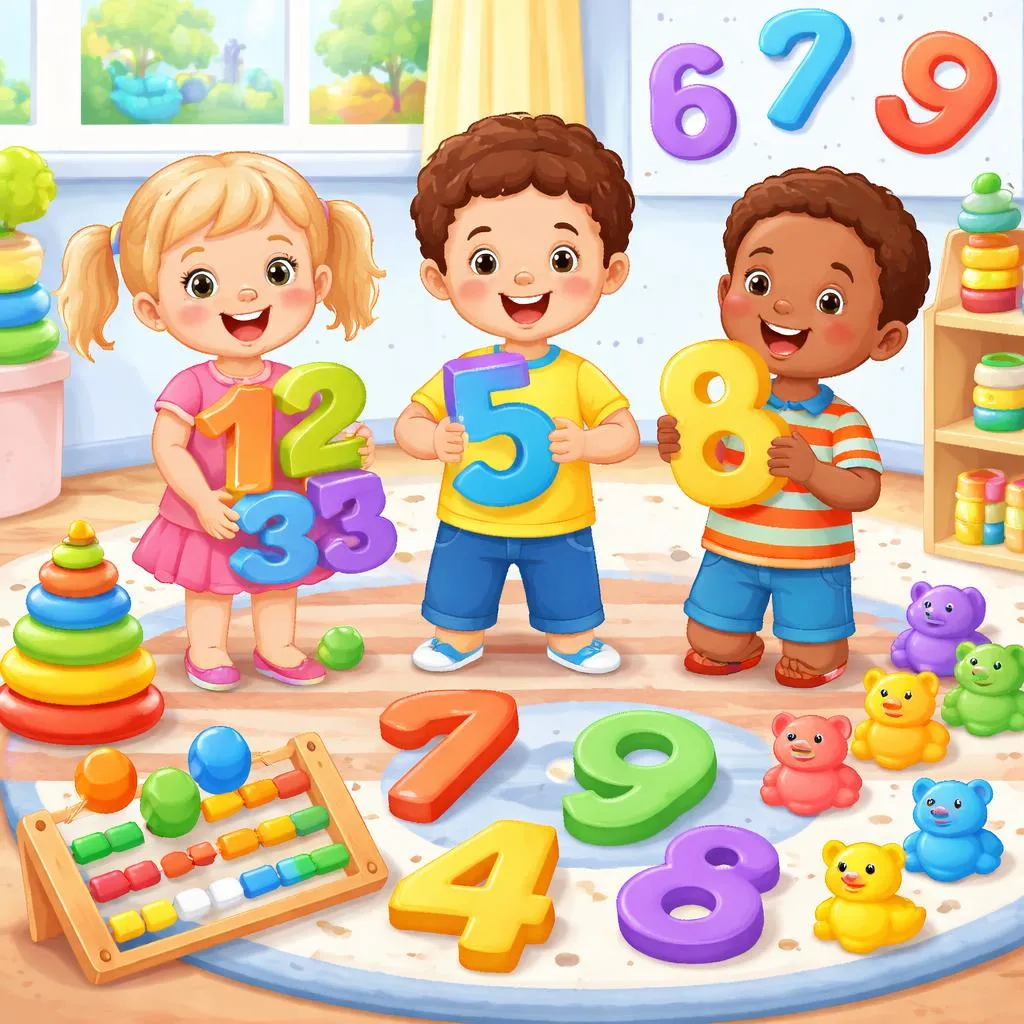

Welcome, learners and teachers! Today, we are starting a foundational adventure in English. We are focusing on learning number. This means mastering the words we use for counting, amounts, and order. Numbers are everywhere in our daily lives. Understanding them in English is a crucial skill. Let's begin counting our way to success together.
What is "Learning Number"? The phrase "learning number" refers to the process of acquiring and understanding numerical vocabulary in English. This includes recognizing the spoken words, connecting them to written symbols (digits), and understanding their value. It starts with the basic counting words: one, two, three. It grows to include larger numbers, and concepts like first, second, third. This is more than math; it is essential language for talking about age, time, quantity, and position. It is a key part of building functional English communication skills.
Meaning and Explanation The meaning behind learning number is about creating a mental map of quantity and sequence. The word "five" is not just a sound. It represents a specific amount, like five fingers. It comes after four and before six in a fixed order. This order is called the number sequence.
We learn that numbers can be cardinal (telling how many: one, two, three) and ordinal (telling order: first, second, third). We also learn that numbers combine to form larger numbers, like twenty-one. The explanation involves connecting the abstract symbol (5) with the spoken word ("five") and the real-world quantity (*****). This three-way connection is the goal of effective number learning.
Categories or Lists We can break down number learning into manageable categories.
Cardinal Numbers (1-20): These are the foundation. One, two, three, four, five, six, seven, eight, nine, ten, eleven, twelve, thirteen, fourteen, fifteen, sixteen, seventeen, eighteen, nineteen, twenty.
Tens (20-100): After twenty, we learn the pattern of tens. Twenty, thirty, forty, fifty, sixty, seventy, eighty, ninety, one hundred.
Ordinal Numbers (1st-10th): These describe position. First (1st), second (2nd), third (3rd), fourth (4th), fifth (5th), sixth (6th), seventh (7th), eighth (8th), ninth (9th), tenth (10th).
Basic Mathematical Vocabulary: Words like plus (+), minus (-), equals (=), count, how many, more, less.
Daily Life Examples Numbers are part of every day. We use them to talk about our age. "I am six years old."
We see them on clocks. "It is three o'clock." We find them on houses. "I live at number twelve."
We use them when playing games. "You rolled a four!" We need them when helping in the kitchen. "We need two eggs." We hear them in stories. "The three little pigs." We count steps, toys, and friends. Pointing out these daily uses shows the practical importance of learning number vocabulary.
Printable Flashcards Flashcards are a classic and effective tool for learning number. Create a set with a large, clear numeral on one side.
On the reverse side, present the number in three ways: the written word ("FOUR"), a visual representation (like four dots ****), and a simple sentence ("I see four birds.").
You can create matching sets: one card with "5" and another with five apples. Or, create sequence cards that children can line up in order from 1 to 10. For ordinal numbers, use cards with "1st" and a picture of a race winner on a podium. These tangible cards make abstract concepts concrete.
Learning Activities or Games Make learning number joyful with these interactive activities.
-
Number Hunt: Hide cards with numerals or dots around the room. Call out a number. "Find number seven!" The child finds the card and brings it back. For older learners, call out simple problems. "Find the number that is five plus two."
-
Counting Collections: Gather small objects like buttons, blocks, or toy cars. Ask the child to count out a specific number. "Please give me eight buttons." This links the number word to the action of counting physical items.
-
"What's Missing?" Sequence Game: Line up number cards in order from 1 to 10. Have the child close their eyes. Remove one card. When they open their eyes, ask, "Which number is missing?" This strengthens number sequence knowledge.
-
Number Bingo: Create bingo cards with numerals instead of words. Call out the number words. "Fifteen!" Players cover the "15" on their card. This practices listening and recognizing the symbol that matches the spoken word.
The journey of learning number in English is a step into greater independence. It allows children to understand prices, follow recipes, tell time, and play new games. Start slowly, celebrate each number mastered, and connect it to play and daily routines. Count everything you see—stairs, crackers, clouds. This constant, gentle practice builds a strong and confident numerical vocabulary foundation for all future learning. Keep counting, keep discovering, and watch how numbers open up a world of understanding.