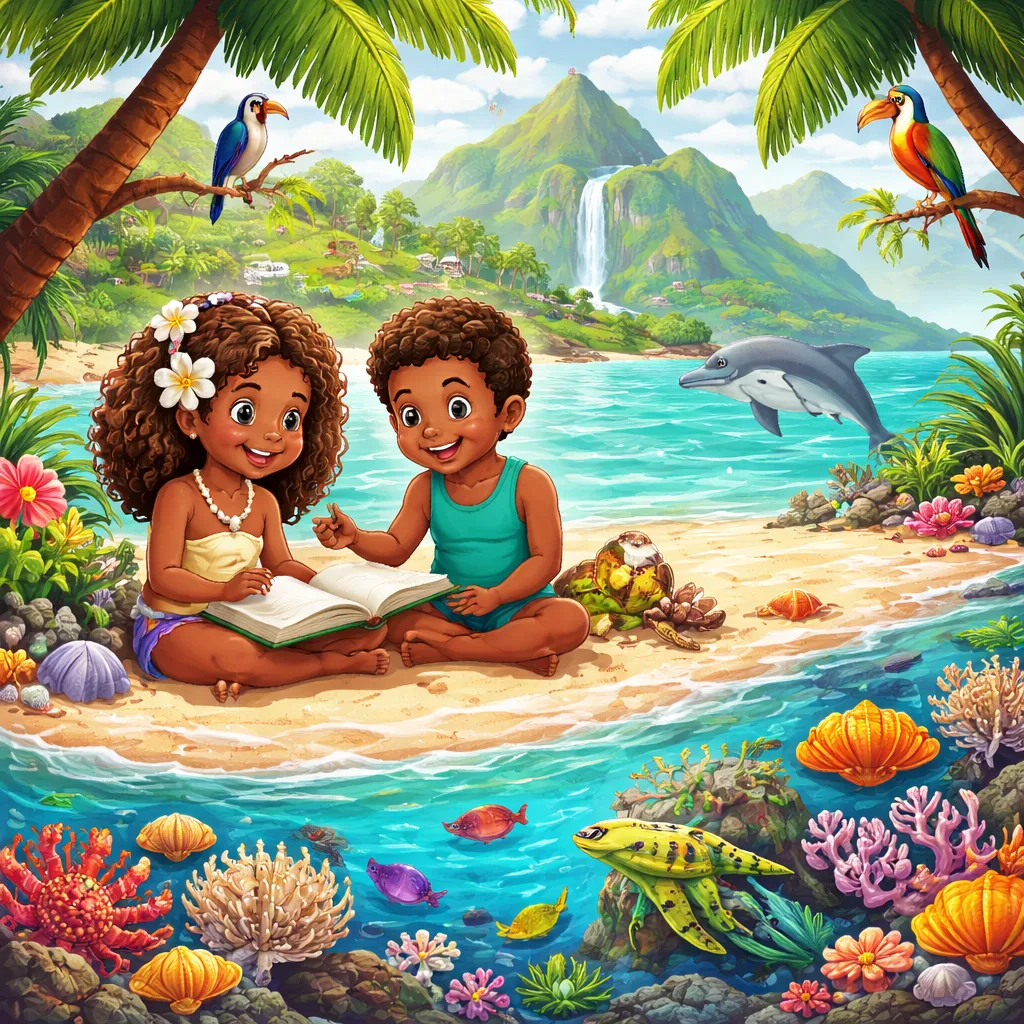

A Friendly Hello and First Impressions
Bula! (BOO-lah). This is the warm, famous "Hello" in Fijian. It also means "life" and "health". Vinaka! (vee-NAH-kah). This is a sincere "Thank you". People say it with a big smile. Learning reading about Fiji starts with this joyful, welcoming word.
Fiji is an island nation. It sits in the heart of the South Pacific Ocean. Its shape looks like a handful of scattered pebbles. The pebbles are 333 islands! The country is in Oceania. Vanuatu and Tonga are its neighbors. The blue ocean surrounds every island. The land is green, mountainous, and beautiful.
People call it the "Soft Coral Capital of the World". The underwater reefs are breathtaking. They are full of colorful, soft corals. Another nickname is the "Land of Bula". The friendly greeting is everywhere. The people are known for their big smiles. Are you ready to say "Bula" to an island adventure?
Deep Dive into Culture and Stories
Echoes of History
A powerful chief united many tribes. His name was Ratu Seru Epenisa Cakobau. He lived in the 1800s. He was a skilled leader and warrior. He brought islands together under his rule. He later gave Fiji to Great Britain. This was to prevent war and chaos. Fiji became a British colony in 1874. His story is a key part of learning reading about Fiji. It is a story of difficult choices for peace.
Another important time was independence. Fiji gained freedom from Britain in 1970. The modern nation is a mix of indigenous Fijian and Indo-Fijian cultures. This mix creates a unique and colorful society. The country values this multicultural identity.
A World of Peacekeepers
Fiji gives the world a model of service. Fijian soldiers are famous as United Nations peacekeepers. They wear blue helmets. They serve in troubled areas around the world. They are known for their calm strength. This role shows Fiji's commitment to global peace. It is a point of great national pride.
A Land of Volcanoes and Reefs
Fiji's geography is mostly volcanic. The larger islands have high, green mountains. The smaller islands are flat with palm trees. The coastlines have sandy beaches. A huge barrier reef surrounds the islands. The landscape is a postcard of tropical beauty.
The climate is tropical marine. It is warm all year. There is a wet season and a dry season. Cyclones can sometimes happen. The environment shapes life. People grow sugarcane, coconuts, and ginger. They also fish in the rich ocean. Traditional houses are called "bures". They are made of wood and straw. They have thatched roofs. Modern houses are often concrete. The main exports are water, sugar, and fish.
A special animal is the banded iguana. It is bright green with blue bands. It lives only in Fiji. The national bird is the collared lory. It is a small, colorful parrot. The national flower is the tagimaucia. It is a red flower with a white center. The coconut tree is vital. It provides food, drink, and shelter.
Landmarks of Faith and Mystery
Visit the Sri Siva Subramaniya Temple. It is in Nadi. It is the largest Hindu temple in the Southern Hemisphere. The temple is incredibly colorful. It has detailed wooden carvings. Gods and goddesses decorate the towers. A fun story says the wood came from sacred forests. The temple is a bright symbol of Fiji's Indian culture.
See the Sawa-i-Lau Caves. They are on the Yasawa Islands. The caves are limestone. You reach them by swimming into a dark opening. Inside, a pool of water is lit by a hole in the roof. The water is cool and clear. A legend says an ancient Fijian chief is buried here. His spirit guards the cave. The caves are mysterious and beautiful.
Another wonder is the Sacred Heart Cathedral in Suva. It is a large Catholic church. It was built in 1902. The architecture is stunning. The inside has beautiful stained glass. The cathedral is a peaceful place in the busy capital.
Festivals of Colour and Sugar
The biggest festival is the Hibiscus Festival. It happens in Suva in August. It is a week-long carnival. There is a parade with floats. There is a music competition. The highlight is the Hibiscus Queen contest. The festival is full of color, food, and fun. It celebrates community and youth.
Another important day is Fiji Day. It is on October 10th. It marks independence from Britain in 1970. There is a military parade. Cultural groups perform dances. People wear traditional dress. The national flag is everywhere. The colors are light blue, white, and red. The British flag and a shield are on it. The day is about national pride and unity.
Food and Flavors
The national dish is Kokoda. It is like ceviche. It is raw fish "cooked" in lime juice. It is mixed with coconut cream, onions, and tomatoes. It is served cold. People eat it as an appetizer. It is fresh, creamy, and tangy. It tastes like the cool ocean.
You must try a Lovo. This is an underground oven. People dig a pit. They heat stones with fire. They wrap food in banana leaves. They put the food on the hot stones. They cover it with earth. The food cooks slowly for hours. The result is a feast. It includes pork, chicken, fish, and vegetables. A lovo meal is smoky, tender, and delicious. It is for big celebrations.
A Culture of Sharing and Song
"Bula" spirit means friendliness. Sharing is very important. The tradition of "sevusevu" is a gift. Visitors present kava root to a village chief. This asks for permission to enter. It shows respect. This culture of welcome is central to learning reading about Fiji.
Music and dance are everywhere. The traditional dance is called "meke". Dancers tell stories with their hands. Drums and singing accompany them. Rugby is the national sport. The national team is called the "Flying Fijians". They are fast and strong. The whole country cheers for them.
Tips for Young Explorers
Cultural Manners Matter
Fijian culture is based on respect. Always be polite. Smile and say "Bula". When entering a village, dress modestly. Cover your shoulders and knees. Remove your hat. This shows respect for the chief.
If invited to a kava ceremony, join in. Sit cross-legged on the floor. Clap once before you receive the cup. Drink the kava in one go. Clap three times after. Say "Bula" or "Vinaka". The drink tastes earthy and makes your tongue tingle.
Always use two hands to give or receive something. This is a sign of respect. Do not touch anyone's head. The head is sacred in Fijian culture.
A Note on Staying Safe
Fiji is a very safe and friendly country. But always be careful in the ocean. Only swim where lifeguards are present. Obey warning flags. Rip currents can be strong. Never swim alone. Always have an adult watching.
The sun is extremely strong. Use a high SPF sunscreen. Reapply it after swimming. Wear a hat and a rash guard. Protect your skin from sunburn.
Be careful with street food. Eat at busy stalls. The food should be cooked fresh. Drink bottled water. It is widely available.
A Tasty Stop
Look for a fruit stall. Try a fresh pineapple. The vendor might sprinkle chili powder on it. It sounds strange, but it is delicious. The mix of sweet, sour, and spicy is amazing. Eat it with a stick. It is the perfect tropical snack.
Healthy and Happy Travels
Drink lots of bottled water. The heat and humidity can dehydrate you quickly. Carry a water bottle. Refill it from large sealed bottles. This keeps you healthy and energetic.
Use insect repellent. Mosquitoes can be annoying, especially at dusk. It helps prevent itchy bites. Wear light, long sleeves in the evening.
Wear waterproof sandals or shoes in the water. Coral can be sharp. Sea urchins hide in rocks. Protect your feet. This lets you explore the reefs safely.
Your Invitation to Explore
Start your journey with a song. Listen to Fijian music. Hear the harmonies and the drums. Try to learn a simple dance move. Or, look at pictures of the soft coral reefs. See the incredible colors. This is a wonderful way of learning reading about Fiji.
Visit a local market. Look for a coconut or fresh ginger. Taste the coconut water. Smell the ginger. Imagine the tropical farms. You can also try making a simple kokoda with cooked shrimp. Taste the mix of lime and coconut. Imagine the ocean breeze.
The world is a big, open book. Each country is a different chapter. Fiji's chapter is about blue oceans, "Bula" spirit, and joyful living. Open it with a smile. Read about its reefs, rugby, and rituals. Your curiosity is your guide.
Fijian families share a lovo from the earth. Villagers gather for a kava ceremony. Children play rugby on the beach. We all know these scenes. We love sharing feasts. We enjoy community gatherings. We play games with friends. Learning about Fiji shows us this. Our global family shares the same joys of togetherness. Keep exploring, one page, one country, at a time. Your adventure has just begun.