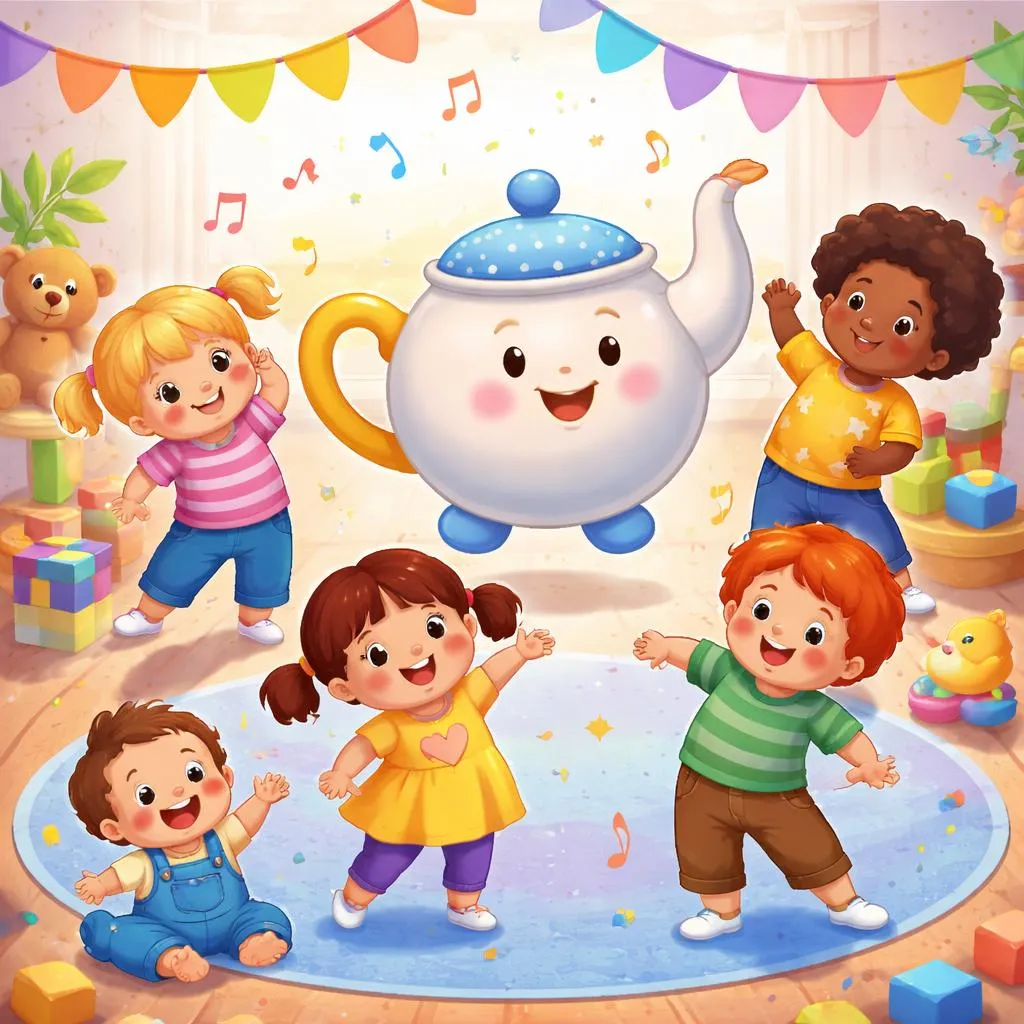

Some songs capture children's hearts and never let go. "I'm a Little Teapot" is one of these timeless treasures. It tells a simple story of a teapot getting ready to pour. Children love the actions. They tip to one side. They shout when the tea pours out. The words to little teapot teach body awareness, following directions, and rhyming words. The song builds vocabulary about kitchen items and actions. Let us discover how to use this classic action song in the young learners' classroom.
What Is the Little Teapot Song? "I'm a Little Teapot" is a beloved American song. It was written in 1939 by George Harry Sanders and Clarence Kelley. The song was created to teach a waltz dance step to children. It became popular immediately and has been sung ever since.
The song is sung from the teapot's point of view. The teapot describes itself. It talks about its handle and spout. When it gets angry and shouts, steam comes out. Then it tips over to pour the tea.
The song has simple actions that children love to do. They stand with one hand on their hip for the handle. They extend the other arm for the spout. When the teapot tips, they lean to one side. When it pours, they tip further.
The song teaches several important skills. Children learn body awareness through the actions. They learn rhyming words through the lyrics. They build vocabulary about kitchen objects. They develop coordination through the movements. All of this happens while having fun.
The Complete Words to Little Teapot Here is the most common version of this classic song. These words to little teapot have been sung for generations.
I'm a little teapot, Short and stout. Here is my handle, Here is my spout.
When I get all steamed up, Hear me shout. "Tip me over And pour me out!"
I'm a very special pot, That is true. Here's an example Of what I can do.
I can turn my handle Into a spout. Tip me over And pour me out!
Some versions have additional verses. The core verses remain the same. Children love the repetition and the actions.
Vocabulary Learning from the Song The song introduces useful vocabulary about kitchen items and actions. Children learn these words in a memorable musical context.
Teapot: A container for making and serving tea. It has a handle and a spout. Tea is poured from the spout.
Short: Not tall. The teapot describes itself as short and stout.
Stout: Wide and solid. This word means thick and strong. Children learn that stout describes shape.
Handle: The part you hold to pick up the teapot. In the song, children put one hand on their hip to make a handle.
Spout: The part where the tea comes out. Children extend one arm to make a spout.
Steamed up: When water boils, it makes steam. The teapot gets steamed up inside. The steam wants to escape.
Shout: To speak very loudly. The teapot shouts when the steam builds up.
Tip: To lean to one side. The teapot tips over to pour the tea.
Pour: To make liquid flow out of a container. Tea pours from the spout.
Special: Different and important. The teapot says it is very special.
Example: A demonstration. The teapot shows what it can do as an example.
Use these words in other contexts. Show a real teapot if possible. Practice pouring water during snack time. Talk about being short and stout compared to tall and thin.
Phonics Points in the Song The song offers excellent phonics practice. The rhyming and repetition highlight specific sounds.
The "out" sound: Stout and shout rhyme. Spout and out rhyme. This word family includes about, pout, and scout. The "ou" pattern makes the same sound in all these words.
The "ort" sound: Short contains this sound. This word family includes fort, port, and sort. Children hear the "or" pattern.
The "ue" sound: True contains this sound. This word family includes blue, glue, and clue. The long "oo" sound appears in many words.
The "andle" sound: Handle contains this sound. This word family includes candle, dandle, and sandal. The "an" pattern is clear.
Syllable counting: Clap the syllables in key words. Teapot has two claps. Handle has two. Spout has one. This builds phonemic awareness.
Initial sounds: Teapot starts with T. Handle starts with H. Spout starts with S. Short starts with Sh, a digraph. Practice saying the first sound of each word.
Rhyming words: The song is full of rhymes. Stout and shout. Spout and out. True and do. Recognizing rhymes is a key reading skill.
Grammar Patterns in the Lyrics The song demonstrates several grammar patterns. Children absorb these through repetition.
Subject pronoun I: "I'm a little teapot" uses the subject pronoun I. The teapot speaks about itself. Children learn that I is for the speaker.
Verb to be: "I'm" is a contraction of I am. "That is true" uses is. Children see the verb to be in action.
Adjectives before nouns: Little teapot, short and stout, very special pot. The adjective comes before the noun. Children internalize this word order.
Prepositional phrases: "Into a spout" shows change. "Over" shows direction. Children learn common prepositions.
Imperatives (commands): "Tip me over" and "pour me out" are commands. The song is telling someone what to do. Children learn this form.
Questions and exclamations: "Hear me shout!" is an exclamation. The song uses exclamation points to show strong feeling.
Pronouns: Me appears in "tip me over" and "pour me out." Children see object pronouns in context.
The song provides rich language input. Children do not need to analyze the grammar. They absorb it through joyful repetition.
Learning Activities with the Song Songs become powerful teaching tools when we add activities. Here are ideas for using the words to little teapot in the classroom.
Action Practice: Teach the classic actions. Stand tall. Put one hand on hip for the handle. Extend the other arm for the spout. When the song says "tip me over," lean to the side. Children love doing this.
Make a Teapot Craft: Create teapots from paper bags or cardboard. Add a paper handle on one side. Add a paper spout on the other. Children hold their teapots while singing.
Tea Party Dramatic Play: Set up a tea party center. Include a teapot, cups, saucers, and pretend tea. Children pour for each other. They practice the words from the song.
Draw the Teapot: Children draw pictures of the teapot. They add a handle and spout. They can add steam coming out. Label the parts together.
Teapot Parade: Children walk around the room while singing. They do the actions as they walk. This adds movement to the music.
Steam Art: Give children paper and white paint or chalk. They draw steam coming out of a teapot picture. They make swirling lines like real steam.
Pouring Practice: In the water table or sensory bin, add cups and pitchers. Children practice pouring. They learn the motor skill while singing.
Printable Materials for Classroom Use Having printable resources makes lesson planning easier. Here are materials to prepare for this song.
Lyric Poster: Create a large poster with the full lyrics. Add simple illustrations of a teapot with handle and spout. Display it during singing time. Children can follow along.
Teapot Parts Cards: Create cards showing the teapot, handle, spout, and steam. Label each part. Children match the word to the part.
Action Cards: Create cards showing each action. Hand on hip for handle. Arm out for spout. Leaning for tip. Children sequence the actions in order.
Teapot Coloring Pages: Design coloring pages showing a teapot. Children color while listening to the song. Add the words for tracing.
Mini Books: Create simple foldable books with the song lyrics. Each page has one line and a picture to color. Children take these home to share.
Teapot Puzzle: Create a teapot picture cut into pieces. Children assemble the puzzle. This builds fine motor skills and problem solving.
Word Cards: Make flashcards for key words. Teapot, short, stout, handle, spout, steam, shout, tip, pour. Use pictures on one side and words on the other.
Educational Games for Deeper Learning Games make learning joyful. Here are games centered around the words to little teapot.
Teapot Says: Play a variation of Simon Says using the song actions. "Teapot says put your hand on your hip." "Teapot says lean to the side." This builds listening and following directions.
Teapot Freeze Dance: Play the song. Children dance and do the actions. When the music stops, they freeze in a teapot pose. Anyone who moves is out.
Match the Part: Give children cards with teapot parts. Handle, spout, lid, steam. Hold up a teapot picture and point to a part. Children hold up the matching word card.
Teapot Memory: Create pairs of teapot picture cards. Children play memory match, finding pairs. When they make a match, they name the part shown.
Pouring Relay Race: Set up two containers with water and cups. Children take turns pouring water from one container to another. They say "pour me out" as they pour.
Teapot Hot Potato: Sit in a circle with a small teapot or teapot picture. Play the song while children pass the teapot. When the music stops, the child holding it must say one line from the song.
Teapot Charades: Act out being a teapot without speaking. Stand with handle and spout. Tip and pour. Children guess what you are. This builds nonverbal communication.
Connecting to Other Learning Areas The song connects naturally to many curriculum areas. Here are ways to extend learning.
Science with steam: Learn about boiling water and steam. Where does steam come from? What happens when water boils? Show steam from a kettle safely. Discuss how steam can tip the teapot.
Cooking and nutrition: Learn about tea. Where does tea come from? How is it made? Have a tea tasting with herbal teas. Discuss healthy drinks.
Shapes and measurement: Teapots come in different shapes. Compare short and stout teapots to tall and thin ones. Measure how much water different containers hold.
History of tea: Learn where tea comes from. Discuss how tea became popular in different countries. Look at pictures of teapots from around the world.
Art and design: Design a teapot. What would it look like? What colors would it have? Draw and paint original teapot designs.
Emotions: The teapot gets "steamed up" and shouts. Discuss what makes people feel steamed up. Talk about healthy ways to express feelings.
Rhyming words: The song is full of rhymes. Make lists of words that rhyme with teapot words. Stout, shout, spout, out. Create new rhyming verses.
Creating New Verses Encourage children to create new verses for the song. This builds creativity and language skills.
New kitchen items: I'm a little kettle, Black and stout. Here is my handle, Here is my spout. When I get all steamed up, Hear me shout. "Tip me over And pour me out!"
New actions: I'm a little jumping frog, Green and small. Here are my long legs, I can jump tall. When I see a tasty fly, I will shout. "I'll catch it now And gobble it up!"
New descriptors: I'm a little teddy bear, Soft and brown. Here are my fuzzy ears, Here is my frown. When you give me a big hug, I will shout. "I love you so much, Let's cuddle about!"
New endings: I'm a little rocket ship, Tall and thin. Here is my pointed top, Here is my fin. When it's time to blast off, I will shout. "Five, four, three, two, one, I'm heading out!"
Children can suggest new ideas. Write their verses on chart paper. Sing them together. This builds ownership and pride in learning.
The words to little teapot have delighted children for over eighty years. The simple song about a kitchen object teaches so much. Children learn body awareness through the actions. They learn rhyming words through the lyrics. They build vocabulary about their world. The song connects to science, art, and emotions. Through this classic tune, children develop skills they will use for years to come. And they do it all while having fun and shouting "pour me out!"