
Opening Introduction
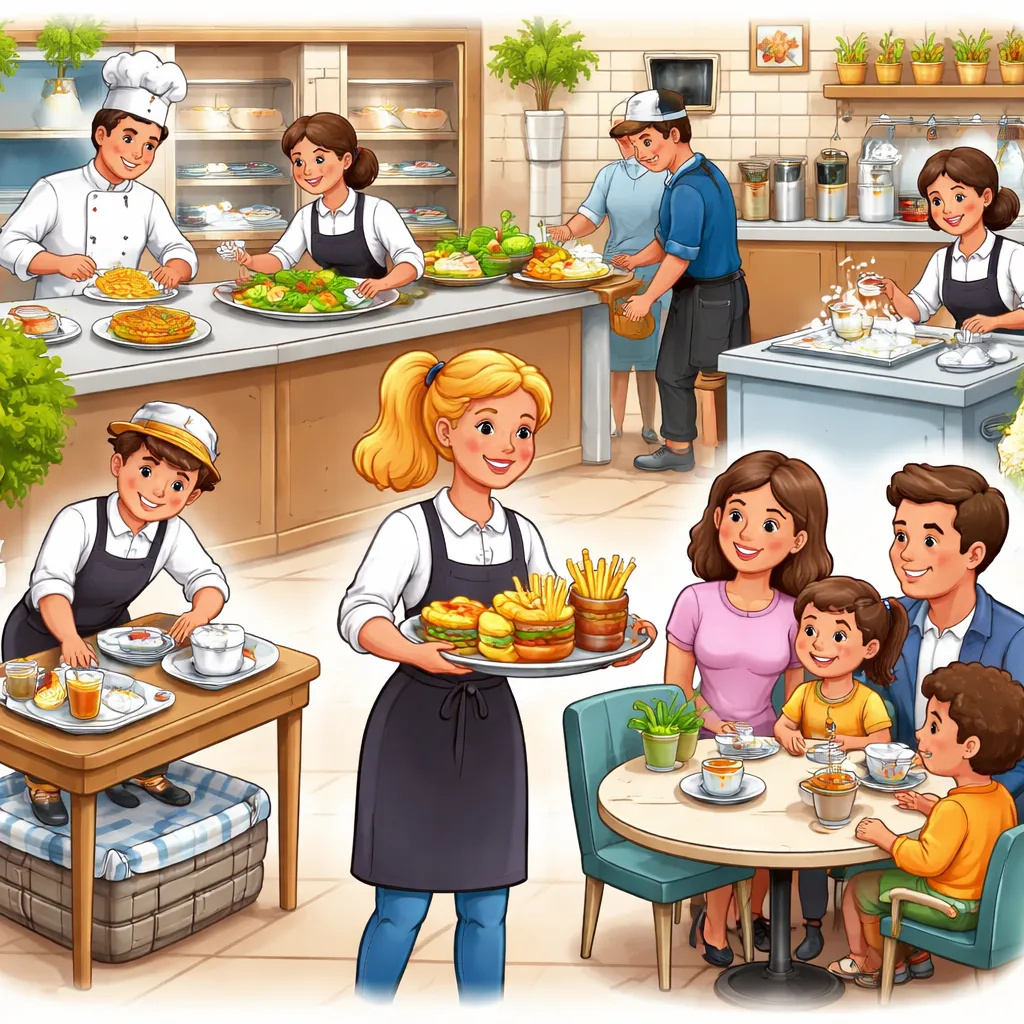
Leo and his family went to a restaurant. A kind lady smiled at the door. "Welcome! A table for four?" she asked. She took them to a table. A young man brought water and menus. Then, a woman came to take their order. Leo could hear clattering and sizzling from a door that swung open. "So many people are working," he whispered to his dad. "Yes," said Dad. "A restaurant is like a stage show. Everyone has a part to play. The meal doesn't just appear! Let's learn about the jobs people do in a restaurant. It's a team that works together to give us a nice time." Leo was fascinated. He wanted to know every person's part in the show. Let's take a peek behind the scenes.
Core Knowledge Explanation
A restaurant is a place where people go to eat food they don't cook at home. It is a busy place. Many people work there, each with a special job. Knowing the jobs people do in a restaurant helps us understand how our food arrives and how to be polite. Let's start at the front. The first person you see is the host or hostess. They stand at the front door. They greet you with a smile. They ask how many people are in your group. They find a clean table for you. They give you menus. They are the first friendly face.
Once you sit down, you meet the server. Some people call them a waiter or waitress. The server is your main helper during the meal. They tell you the specials. They answer questions about the menu. They write down your order. They bring your food and drinks. They check if you need anything else. They bring the bill at the end. Servers are friendly and know a lot about the food.
Now, who makes the food? That happens in the kitchen, or "the back of the house." The head of the kitchen is the chef. The chef is in charge. They create the recipes. They make sure every dish is perfect. They manage the kitchen staff. Working with the chef are the cooks. Cooks follow the chef's recipes. They prepare the food. They chop vegetables, cook meat, and make sauces. They work at hot stoves and ovens. They are fast and careful.
Other important people work in the kitchen too. The dishwasher is very important. They wash all the pots, pans, plates, and glasses. They make sure everything is clean for the next meal. Without them, the restaurant cannot run. Sometimes, there is a food runner. The food runner brings the food from the kitchen to the table. This helps the server when they are busy.
Who manages everything? The manager. The manager makes sure the restaurant runs smoothly. They talk to customers. They solve problems. They order the food and supplies. They make the work schedule. They are the leaders. These are the main jobs people do in a restaurant. From the host to the dishwasher, every job is important. They are a team. If one person is missing, the team has a hard time. Just like a soccer team needs a goalie and a striker, a restaurant needs all its players.
Fun Interactive Learning
Let's play the best game to learn: "Restaurant Role-Play." Set up a restaurant at home. The dining table is the restaurant. The kitchen is, well, the kitchen! You need a notepad, a menu (draw one!), and some play food. Now, choose jobs. One person is the host. They greet the "customers" (your family or toys) and show them to the table. One person is the server. They take the order on the notepad. "Are you ready to order?" One person is the chef. They take the order and pretend to cook. One person is the food runner. They bring the play food to the table. One person is the dishwasher. They pretend to wash the dishes after. Use English sentences. "Welcome to our restaurant!" "I'll have the pizza, please." "The soup is very hot, enjoy!" This game teaches you the jobs people do in a restaurant in a fun, active way.
Another activity is "Job Match." Draw pictures of the different workers. On separate cards, write their job titles: Host, Server, Chef, Dishwasher, Manager. Mix the cards. Now, match the job title to the correct picture. Say a sentence about what they do. "The server brings the food." This helps with reading and matching.
You can also do a "Restaurant Interview." Pretend you are a TV reporter. Interview a family member about their "job" in your pretend restaurant. "Hello, Chef. What are you cooking today?" "Hello, Manager. What is the most important part of your job?" This practices asking questions and speaking in sentences.
Expanded Learning
Restaurants are everywhere in the world. The jobs people do in a restaurant are similar, but sometimes the titles are different. In a fancy French restaurant, the head chef might be called the "Chef de Cuisine." In a diner in America, the server might be called a "waitress" or "waiter." In Japan, you might hear "Itadakimasu" before eating, which means "I gratefully receive." But the jobs of cooking, serving, and cleaning are the same.
Long ago, inns and taverns fed travelers. Today, we have many kinds of restaurants: fast food, cafes, family restaurants, and fancy ones. The team has grown, but the idea is the same: to serve food to people. In some cultures, tipping the server is common to say thank you. In others, it is not. Learning about the jobs people do in a restaurant teaches us about business and service all over the world. Let's make a restaurant chant. Chants are fun and easy to remember.
Welcome, welcome, host so bright, greeting customers with delight! Server, server, quick and neat, bringing customers food to eat! Chef is in the kitchen hot, cooking food in a big pot! Dishwasher with soap and water, cleaning plates for son and daughter! Manager who leads the way, making sure it's a great day! Teamwork, teamwork, that's the key, in a restaurant, as you can see!
What You Will Learn
You are learning about business, service, and teamwork. You are learning the jobs people do in a restaurant: host/hostess, server/waiter/waitress, chef, cook, dishwasher, food runner, manager. You are also learning words like menu, order, bill, kitchen, and customer.
You are learning polite and useful sentences. You can say, "The host will show us to our table." You can explain, "Our server is bringing our drinks." You can ask, "Can I speak to the manager, please?" You are using English to navigate a common real-world situation. This builds confidence and social skills.
You are building important knowledge and abilities. You are building vocabulary about professions and places. You are building an understanding of teamwork. You see how different jobs depend on each other. You are building social awareness. You appreciate the work that goes into a meal out. You are building communication skills. You practice polite restaurant language. You are building empathy. You understand the hard work of the staff.
You are forming an observant and polite habit. The habit of noticing and appreciating the work of others. You learn that a smooth experience is the result of many people doing their jobs well. Learning about the jobs people do in a restaurant makes you a smarter customer and a more appreciative person.
Using What You Learned in Life
Use this knowledge the next time you go to a restaurant. Look for the host. Thank your server. Remember how hard the chef and dishwasher are working. Use polite words like "please" and "thank you." You can even ask your server, "What is your favorite thing on the menu?" It's a nice thing to say.
At home, you can help set the table and serve food. You are being the "server" for your family. You can also draw a menu for a pretend restaurant and play with your toys. When you watch a TV show set in a restaurant, you can name the jobs you see. The more you notice and talk about the jobs people do in a restaurant, the more you will understand and respect the world of service.
Closing Encouragement
You are a restaurant explorer. You are a teamwork expert. You are a polite and curious learner. I am so proud of you. Learning about all the different restaurant jobs shows you have a sharp mind and a kind heart.
Remember to smile and say thank you to the people who serve you. You are learning how people work together to create happy moments, and that is a beautiful lesson.
You are smart, you are observant, and you are learning the language of service and teamwork. Great work, my wonderful dining detective.